

Blog
7 Mistakes You’re Making with A Level Chemistry Exam Technique (and How to Fix Them)


You know the content. You’ve done the A Level Chemistry revision. You’ve spent hours poring over organic mechanisms and memorising electronegativity trends. But somehow, the marks just aren’t appearing on the paper.
Sound familiar? 🙌
Here’s the thing, it’s usually not a lack of knowledge that’s holding you back. It’s exam technique. And honestly? This is actually brilliant news. Because while learning all of chemistry takes years, fixing your exam technique can happen in weeks.
Whether you’re working with an online Chemistry tutor or revising solo from your bedroom in Dubai, these seven mistakes are probably costing you marks right now. Let’s fix them together.
Mistake #1: Treating the Specification Like a Suggestion
I see this constantly. Students revise from textbooks, revision guides, YouTube videos, all fantastic resources, but they never actually sit down with the exam specification itself.
Here’s the truth: your specification isn’t just a list of topics. It’s literally a checklist of everything that can appear on your exam. Nothing more, nothing less.
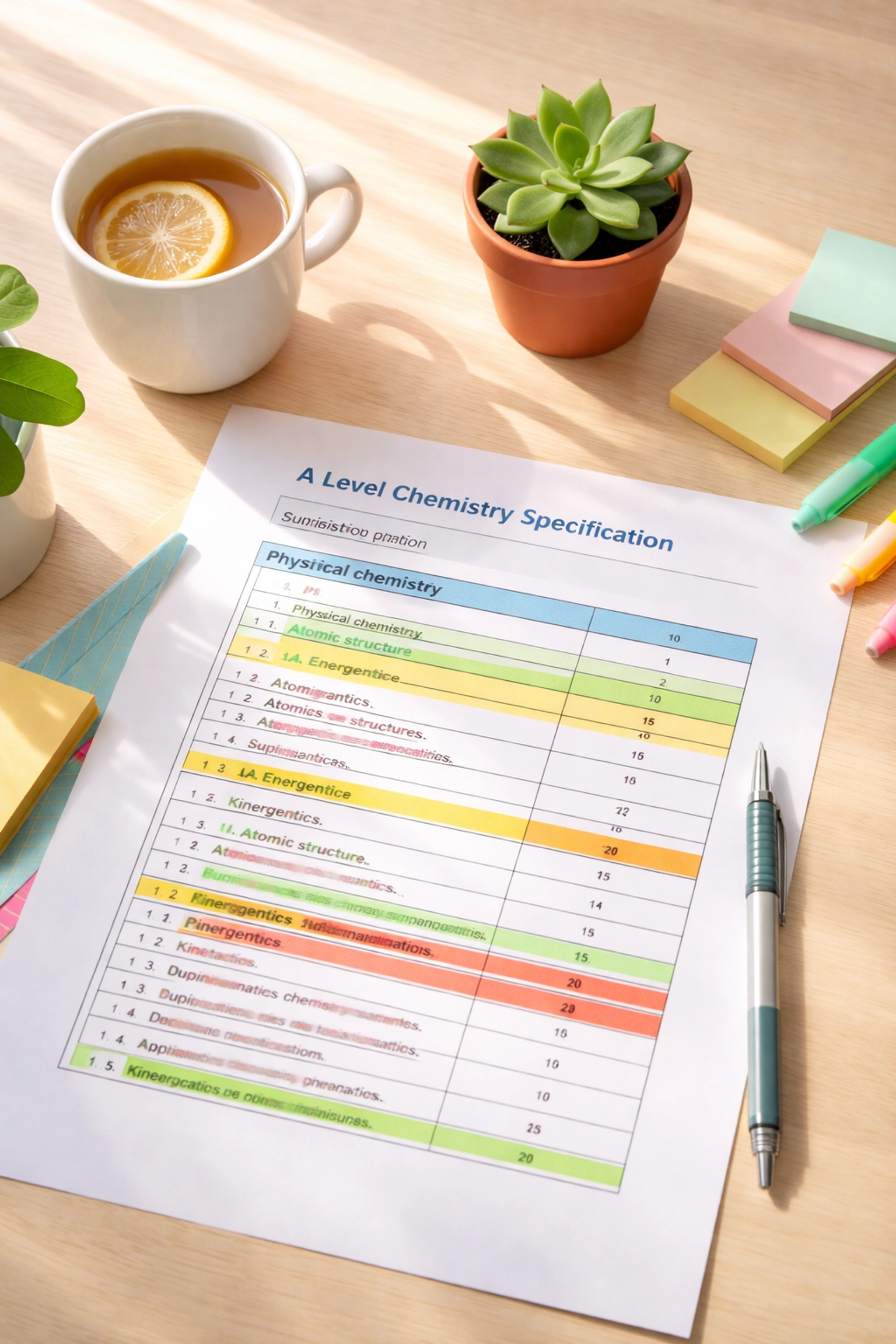
The fix: Download your exam board’s specification today (AQA, OCR, Edexcel, whichever you’re sitting). Print it out. Go through it topic by topic and honestly RAG-rate yourself:
- 🟢 Green: I could teach this to someone else
- 🟠 Amber: I understand it but need more practice
- 🔴 Red: I’m lost here
This transforms your A Level Chemistry revision from “vaguely reviewing everything” to strategically targeting your weak spots. It’s a game-changer, trust me.
Mistake #2: Missing Key Command Words
“Describe” and “Explain” are not the same thing. Neither are “State” and “Suggest.” And yet, students mix these up constantly, and examiners notice.
Let me break this down for you:
- State/Give: Just write the fact. No reasoning needed.
- Describe: Say what happens, step by step.
- Explain: Say what happens AND why it happens (this is where your chemistry knowledge comes in).
- Suggest: Use your knowledge to make an educated guess about an unfamiliar situation.
If a question asks you to “State the trend in atomic radius down Group 2” and you launch into a paragraph about shielding and nuclear charge, you’re wasting precious time. Worse, you might confuse the examiner about what you actually know.
The fix: Before you write anything, underline the command word in the question. Let it guide exactly how much detail you need to include. Simple, but so effective.
Mistake #3: Rounding Too Early in Calculations
This one breaks my heart because it’s such an easy fix, yet it costs students marks in almost every paper.
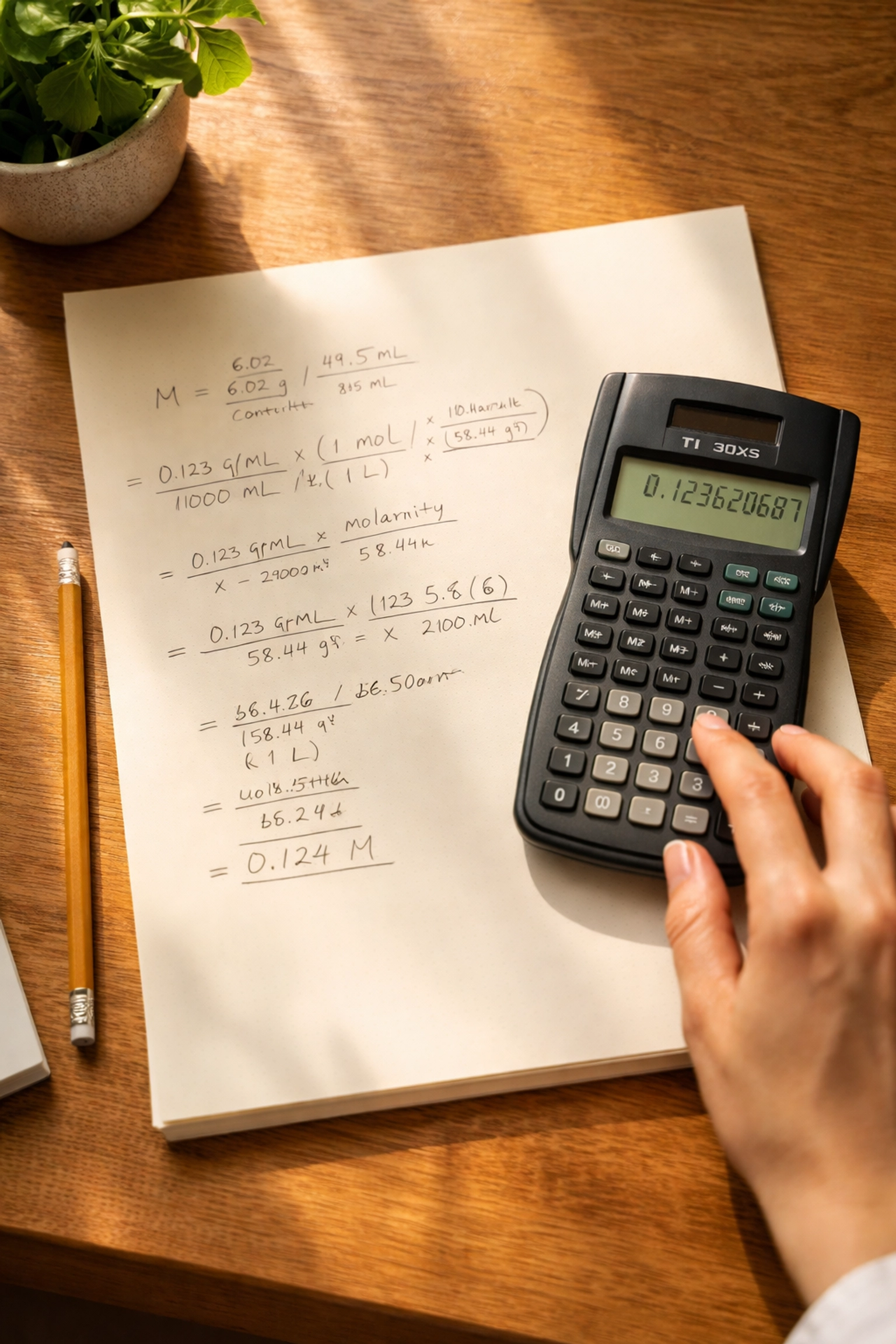
Here’s the scenario: You’re doing a multi-step titration calculation. After step one, you round your answer to 2 decimal places because it looks neater. Then you use that rounded number for step two. By the time you reach your final answer, you’re slightly off, and you’ve just lost the final accuracy mark.
The fix: Keep all your decimal places throughout the calculation. Only round at the very end, to the number of significant figures specified in the question (or matching the data given).
Your calculator is your friend here. Use the ANS button to carry forward full values between steps. And always, always show your working clearly, write each step on a new line so the examiner can follow your logic and award partial credit even if something goes wrong.
If calculations make you panic, you might find this guide on tackling calculations helpful! 🌟
Mistake #4: Using Vague Terminology (The “It” Problem)
Pop quiz: What does “it” refer to in this sentence?
“When it reacts with it, it changes colour.”
Absolutely no idea, right? And neither does your examiner.
This is one of the most common ways students throw away marks. You understand exactly what’s happening in the reaction, but you write things like:
- “It increases”
- “They bond together”
- “This causes it to change”
The fix: Ban the word “it” from your chemistry answers. Every single time you’re tempted to write “it,” replace it with the actual species name:
- ❌ “It increases down the group”
- ✅ “Atomic radius increases down Group 1”
- ❌ “It donates electrons”
- ✅ “The chloride ion donates a lone pair of electrons”
Yes, this makes your answers longer. Yes, it feels repetitive. But examiners love specific terminology, and they reward it with marks.
Mistake #5: Forgetting State Symbols
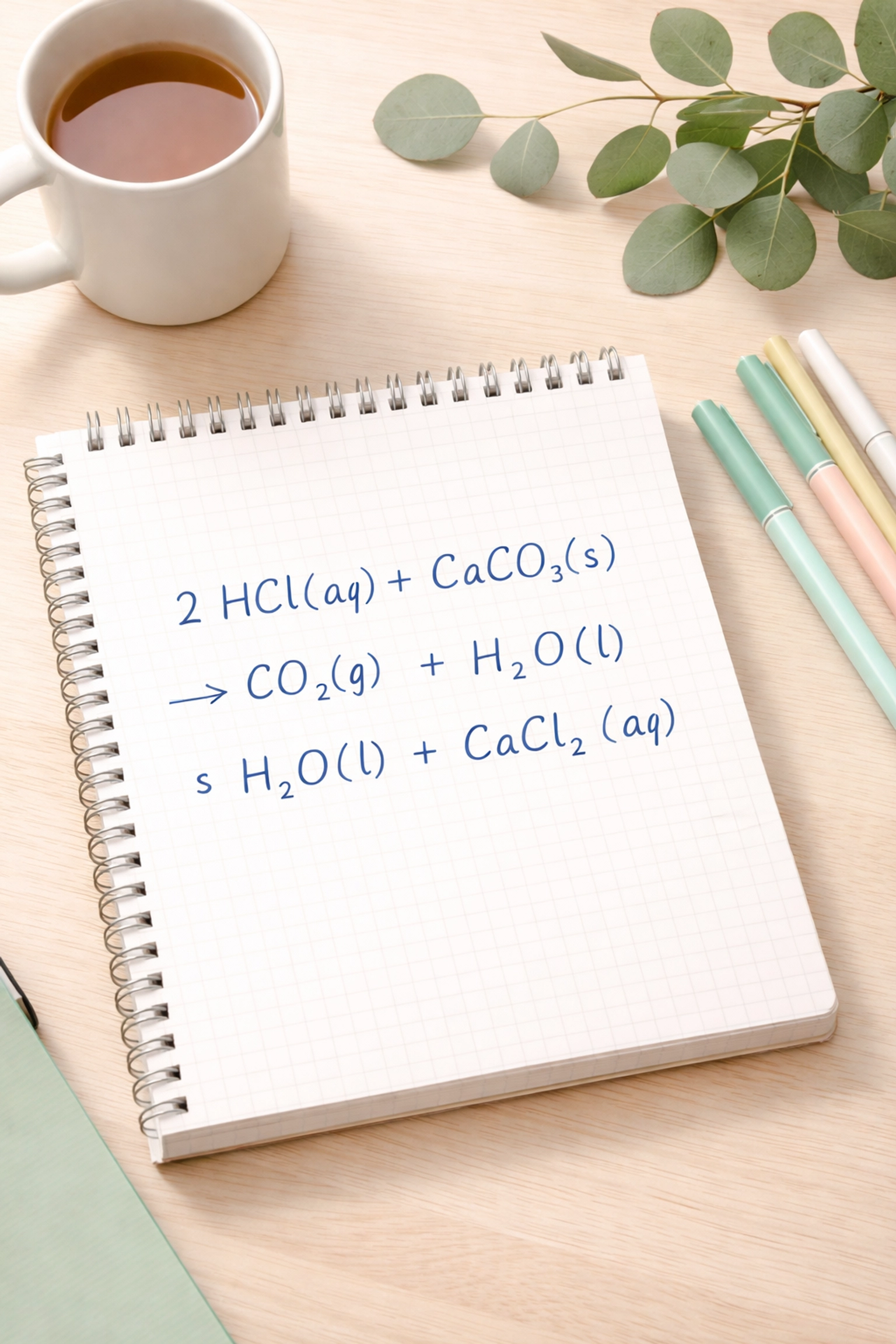
State symbols are often worth one easy mark at the end of an equation question. And yet, so many students leave them out entirely or add them incorrectly.
Quick reminder:
- (s) = solid
- (l) = liquid
- (g) = gas
- (aq) = aqueous (dissolved in water)
The fix: Make state symbols non-negotiable in your practice. Every time you write an equation, whether in your notes, homework, or exam, add state symbols automatically.
Also, write them clearly! Tiny, illegible state symbols squeezed above a formula won’t get you marks. Give them space. Make them obvious. Let the examiner see you know what you’re doing. ❤️
Mistake #6: Getting Stuck and Destroying Your Timing
Picture this: You’re 20 minutes into your exam and completely stuck on a 2-mark calculation. You’ve tried three different approaches. Nothing’s working. Meanwhile, there’s a beautiful 6-mark organic synthesis question on the next page that you’d absolutely nail, but you never get to it because time runs out.
Poor time management is one of the biggest silent killers of A Level grades.
The fix: Know your timing before you walk into that exam hall. As a rough guide:
- 1 mark ≈ 1 minute of writing time
- A 2-mark question shouldn’t take more than 2-3 minutes
- If you’re stuck after that, move on
Circle the question, leave some space, and come back to it at the end. I promise you’ll often find the answer comes to you once you’ve relaxed a bit, or at minimum, you won’t have sacrificed easier marks elsewhere.
During your A Level Chemistry revision, practice papers under timed conditions regularly. Note which question types slow you down and work specifically on those.
Mistake #7: Not Using Mark Schemes to Review Your Work
Here’s a secret that transformed my own students’ results: mark schemes are revision gold.
Most students do a past paper, check their final answers, and move on. But the students who jump from B grades to A*s? They sit with the mark scheme and analyse exactly what examiners wanted to see.
Mark schemes teach you:
- The precise keywords examiners look for
- How marks are allocated across multi-part answers
- Common acceptable alternatives (and what’s specifically rejected)
- The level of detail expected for different question types
The fix: After every past paper, go through the mark scheme with a highlighter. Note any phrases or keywords you missed. Build a personal “examiner vocabulary” document that you review before your actual exam.
This is honestly one of the most valuable things I focus on with my students, whether they’re based in London, working with me as an online Chemistry tutor, or joining sessions from Dubai. Understanding what examiners want is half the battle.
Ready to Turn Your B into an A*?
These seven mistakes are incredibly common, but they’re also incredibly fixable. With the right guidance and focused practice, your Chemistry exam technique can go from “leaking marks everywhere” to “maximising every single point.”
If you’d love some personalised support to nail these skills before your exams, I’d be thrilled to help. My 1-1 and small group sessions focus heavily on these “exam secrets” alongside the actual chemistry content. Whether you need an online Chemistry tutor or you’re searching for a Chemistry tutor in Dubai, we can work together to get you those results you deserve. 🌟
Check out your options and let’s chat →
You’ve got this. Now let’s go prove it on paper.

Oxford-Educated Chemistry Specialist
With over 20 years of teaching experience at some of the UK’s top independent schools, I help ambitious students bridge the gap between hard work and top-tier results. I specialise in GCSE, A Level, and IB Chemistry tuition for students targeting Grade 9s and A*s. Based in the UK but working globally, I provide 1-1 online support for families in South and West London, Dubai, and Hong Kong, ensuring students are perfectly prepared for competitive medical applications and Oxbridge entries.
I’ve helped students achieve top grades from schools such as Alleyn’s, Dulwich College, Tonbridge, Sevenoaks, Brighton College, Wycombe Abbey, Caterham, St Paul’s, Dubai College, Dubai British School and Harrow International School Hong Kong.
Contact me archardchloe@gmail.com to discuss how I can help your child excel in Chemistry.