

Blog
How To Remember All Those Chemistry Ions and Polyatomic Ions (Without Losing Your Mind)

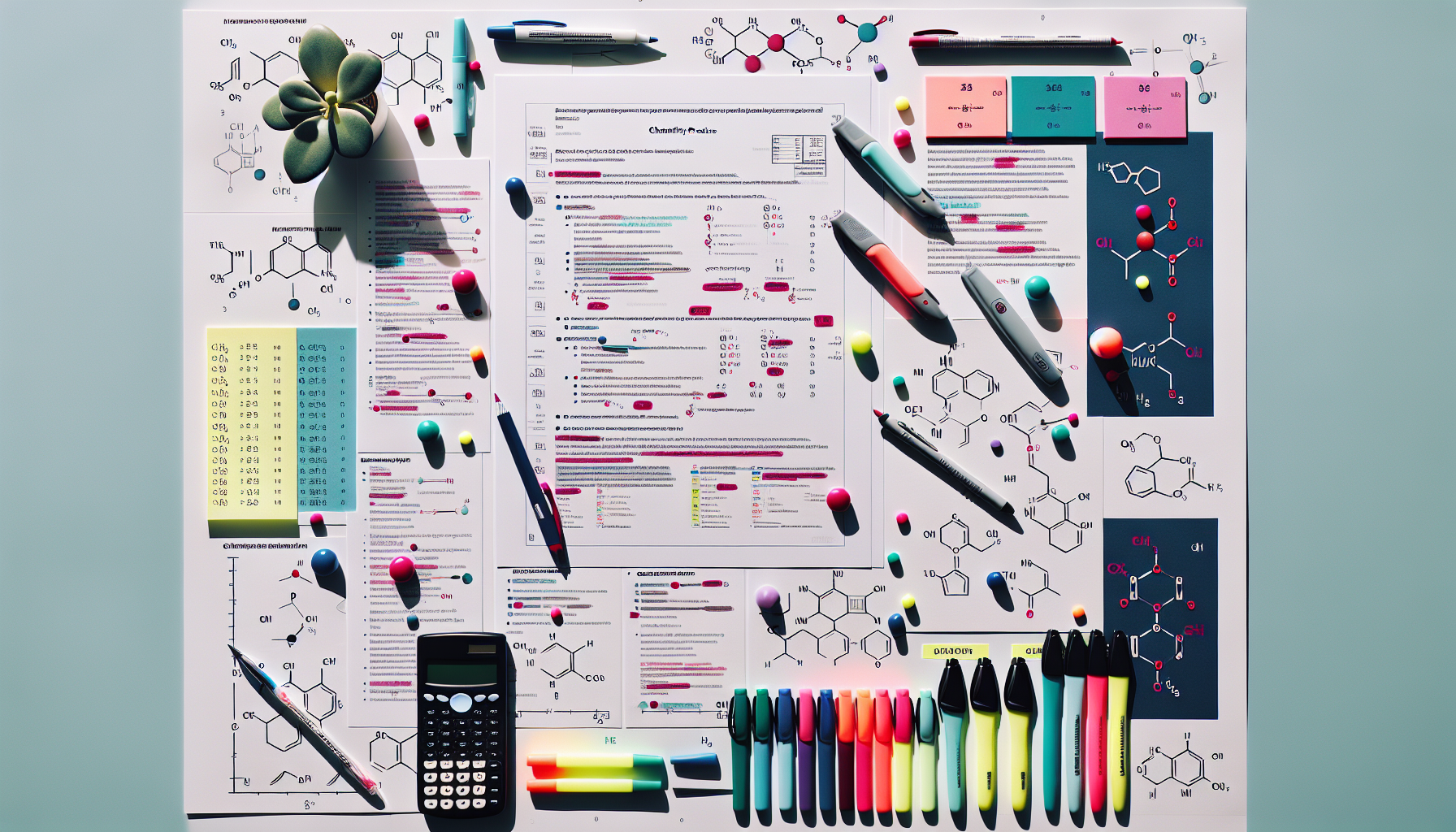
Let’s be honest, staring at a list of ions and trying to memorise them all can feel like learning a foreign language overnight. If you’ve ever looked at your Chemistry notes and thought, “How am I supposed to remember all of this?”, you’re definitely not alone. ?
Here’s the good news: you don’t need a photographic memory to nail this. With the right strategies, a bit of organisation, and some clever tricks, you’ll have those ions locked in your brain way faster than you’d expect. Whether you’re aiming for top marks at GCSE or pushing for that A* at A Level, this guide is for you.
Let’s break it down step by step, no overwhelm, just practical advice that actually works.
Why Ions Trip Up So Many Students
Before we dive into the solutions, let’s talk about why this topic feels so tricky. Ions aren’t just random symbols, they’re combinations of elements, charges, and naming conventions that don’t always follow obvious rules.
Polyatomic ions (ions made of more than one atom bonded together) are especially notorious. Sulfate, nitrate, carbonate, hydroxide… the list goes on. And then there’s the confusion between similar-sounding ions like ammonia vs. ammonium or sulfate vs. sulfite.
The mistake most students make? Trying to memorise everything at once without a system. That’s a recipe for frustration. Instead, let’s build some solid foundations.
Step 1: Know Your Must-Have List
First things first, you don’t need to memorise every ion in existence. Focus on the ones your exam board actually tests. Grab your syllabus, highlight every ion mentioned, and build your personal list from there.
Here’s a solid starting point for GCSE and A Level:
Common Cations (positive ions):
- Sodium: Na?
- Potassium: K?
- Calcium: Ca²?
- Aluminium: Al³?
- Ammonium: NH??
Common Anions (negative ions):
- Chloride: Cl?
- Hydroxide: OH?
- Nitrate: NO??
- Sulfate: SO?²?
- Carbonate: CO?²?
Pro tip: Learn the atomic symbols first, especially for P, N, O, S, C, H, Cl, and Br. This foundation makes recognising ion patterns much easier later on.

Step 2: Spot the Patterns (This Is a Game-Changer!)
Here’s where things get exciting. Most polyatomic ions follow predictable patterns, and once you spot them, memorisation becomes so much simpler.
The “-ate” and “-ite” Rule
Polyatomic ions ending in “-ate” contain more oxygen atoms than their “-ite” counterparts:
- Sulfate (SO?²?) has 4 oxygens ? Sulfite (SO?²?) has 3 oxygens
- Nitrate (NO??) has 3 oxygens ? Nitrite (NO??) has 2 oxygens
The charges usually stay the same within each family. Once you know sulfate, you basically know sulfite too!
The A-I-D-E Method
For chlorine-based ions, use the mnemonic A-I-D-E to remember the naming pattern:
- Ate = Chlorate (ClO??)
- Ite = Chlorite (ClO??)
- De = Chloride (Cl?)
- hypo + E = Hypochlorite (ClO?)
This pattern works for other halogen families too. Learning rules beats memorising random facts every single time. ?
Step 3: Use Mnemonics That Actually Stick
Your brain loves stories, silly sentences, and weird associations. Let’s use that to your advantage!
“Nick the Baby Camel”
This classic mnemonic helps you remember eight common polyatomic ions:
Nick the Baby Camel Is Carrying Coffee Sweetly Please
- Nitrate (NO??)
- Bromate (BrO??)
- Carbonate (CO?²?)
- Iodate (IO??)
- Chlorate (ClO??)
- Chromate (CrO?²?)
- Sulfate (SO?²?)
- Phosphate (PO?³?)
Sounds ridiculous? Perfect, that’s exactly why you’ll remember it.
Make Your Own Silly Sentences
For sulfate (SO?²?), try: “Silly Owls 4get 2 fly”
The sillier the sentence, the better it sticks. Spend five minutes creating your own mnemonics for tricky ions, it’s time well invested.

Step 4: Organise by Charge (Not Alphabetically!)
Here’s a strategy that reduces cognitive overload massively: group your ions by charge rather than trying to learn them in a random order.
+1 Ions:
- Na?, K?, NH??, H?
+2 Ions:
- Ca²?, Mg²?, Cu²?, Zn²?
-1 Ions:
- Cl?, OH?, NO??
-2 Ions:
- SO?²?, CO?²?, O²?
When ions are organised this way, you start noticing patterns. Your brain naturally groups related information together, making recall faster and more reliable.
Step 5: Flashcards Done Right
Flashcards are brilliant, but only if you use them properly. Here’s how to maximise their effectiveness:
Colour-code by element family:
- All bromine-based ions on blue cards
- All sulfur-based ions on yellow cards
- All nitrogen-based ions on green cards
Format each card:
- Front: Ion name (e.g., “Carbonate”)
- Back: Formula AND charge (e.g., “CO?²?”)
Test both directions:
- Look at the name ? write the formula
- Look at the formula ? say the name
This builds confidence for both multiple-choice questions AND longer written answers. ??
Step 6: Spaced Repetition Is Your Secret Weapon
Cramming the night before? We’ve all been there. But little and often beats marathon sessions every time.
Spaced repetition means reviewing material at increasing intervals, today, tomorrow, three days later, a week later. This moves information from short-term to long-term memory without endless repetition.
Practical ways to do this:
- Use apps like Anki or Quizlet with built-in spaced repetition
- Keep a pocket list of ions and quiz yourself on the bus or during lunch
- Stick Post-it notes around your room with tricky formulas
Even five minutes a day adds up to serious results over a few weeks.

Common Mistakes to Avoid
Let’s tackle the confusion zones before they trip you up in an exam:
Ammonia vs. Ammonium
This one catches out so many students!
- Ammonia (NH?) = a neutral gas molecule (not an ion!)
- Ammonium (NH??) = a positive ion found in salts
Remember: Ammonium has that extra hydrogen and a positive charge. If you see it in an ionic compound, it’s always ammonium.
Forgetting Charges
Writing SO? instead of SO?²? loses you marks. Always include the charge: it’s part of the ion’s identity.
Mixing Up Similar Names
Sulfate vs. sulfite, nitrate vs. nitrite, chlorate vs. chloride… these are designed to confuse you! Use the patterns we discussed earlier, and write them out side-by-side until the differences are crystal clear.
Real-World Chemistry: Why This Actually Matters
Ions aren’t just exam fodder: they’re everywhere in your daily life:
- Sodium ions (Na?) in table salt keep your nerves and muscles working
- Carbonate ions (CO?²?) create the fizz in your drinks
- Ammonium compounds appear in cleaning products and fertilisers
- Calcium ions (Ca²?) build your bones and teeth
When you connect Chemistry to the real world, it stops feeling like abstract memorisation and starts making sense. Get curious about where these ions show up: it genuinely helps your brain hold onto the information.
Exam Day Tips
Feeling nervous? Here’s what to do:
Before you start answering questions: Jot down the ions you’ve memorised on your blank planning paper. Get them out of your head while your mind is fresh: before calculations and mechanisms crowd your thoughts.
If you blank on a formula: Think about the element family, the charge pattern, and any mnemonics you created. Often, the answer will come back to you.
Double-check your charges: A quick scan at the end can save you silly dropped marks.
You’ve Got This! ?
Memorising ions feels overwhelming at first, but with the right system, it becomes manageable: even straightforward. Start with your must-know list, use patterns and mnemonics, organise by charge, and practice with spaced repetition.
The confidence comes with every step you take.
If you’re feeling stuck or want someone to walk you through the tricky bits, I’d love to help. Whether it’s a one-to-one session or joining a small revision group, we can focus your effort for maximum marks: and minimum panic.
You can absolutely do this. Now grab those flashcards and get started!

Oxford-Educated Chemistry Specialist
With over 20 years of teaching experience at some of the UK’s top independent schools, I help ambitious students bridge the gap between hard work and top-tier results. I specialise in GCSE, A Level, and IB Chemistry tuition for students targeting Grade 9s and A*s. Based in the UK but working globally, I provide 1-1 online support for families in South and West London, Dubai, and Hong Kong, ensuring students are perfectly prepared for competitive medical applications and Oxbridge entries.
I’ve helped students achieve top grades from schools such as Alleyn’s, Dulwich College, Tonbridge, Sevenoaks, Brighton College, Wycombe Abbey, Caterham, St Paul’s, Dubai College, Dubai British School and Harrow International School Hong Kong.
Contact me archardchloe@gmail.com to discuss how I can help your child excel in Chemistry.