

Blog
The Green Revolution: Why the Best Sustainability Careers Start with Chemistry A Level

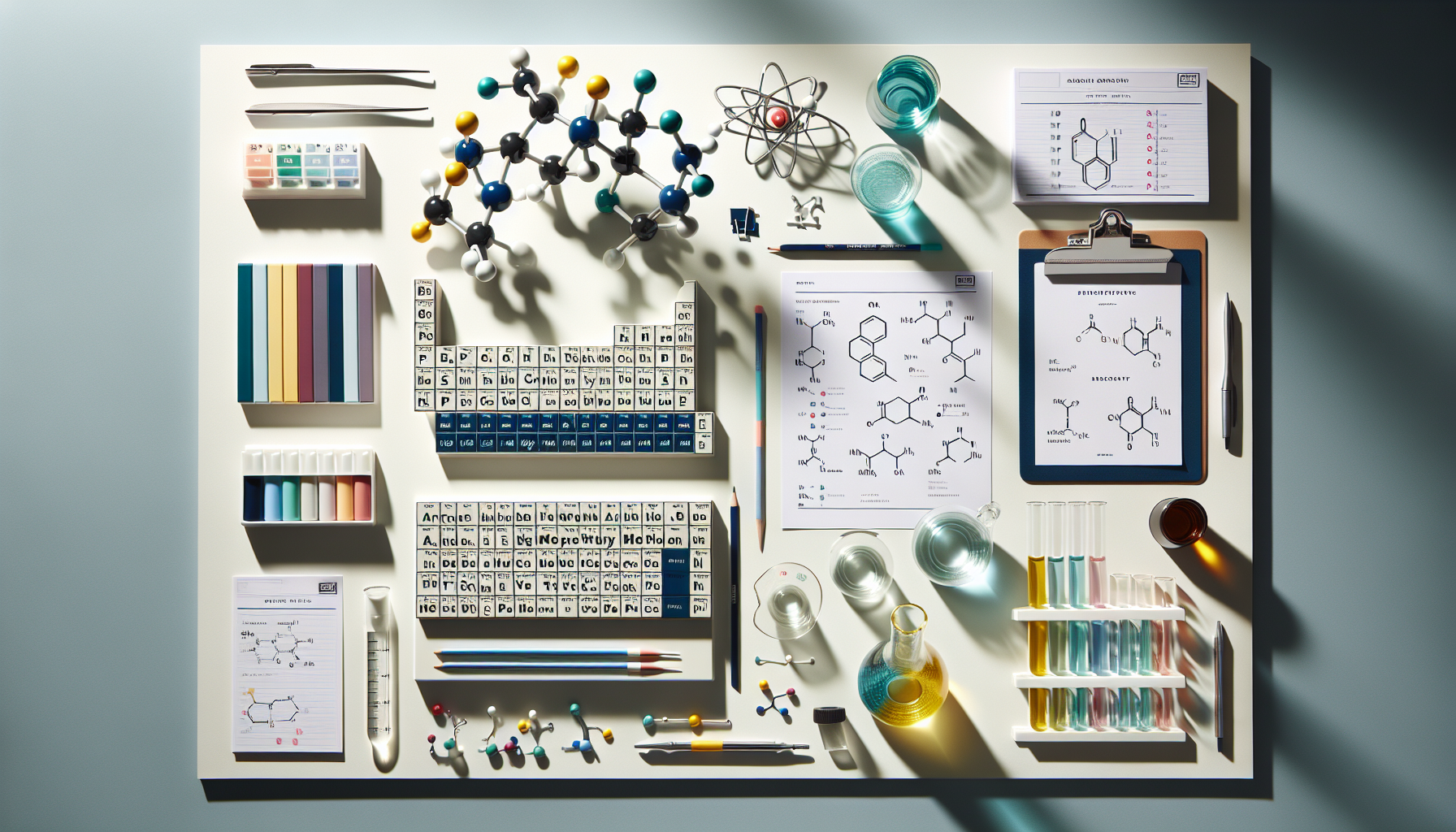
If your teenager is passionate about the environment, you’ve probably heard them talk about studying geography or environmental science. These are wonderful subjects, and they help us understand the scale and urgency of the climate crisis. But here’s something worth considering: if your child wants to be the person who actually solves these problems rather than just studies them, they need to look at Chemistry.
It might seem counterintuitive at first. After all, wasn’t chemistry partly responsible for creating environmental challenges in the first place? The original Green Revolution of the 1960s relied heavily on synthetic nitrogen fertilizers and chemical pesticides, innovations that transformed agriculture but also led to soil degradation, water pollution, and biodiversity loss. But that’s precisely why we need the next generation of chemists: to design the solutions that undo that damage and build a genuinely sustainable future.
The Engine Room of the Green Revolution
When we talk about solving climate change, we’re really talking about chemistry problems. Every environmental headline, from “Scientists develop new battery technology” to “Researchers create enzyme that breaks down plastic”, is fundamentally a story about molecular innovation.
Geography can tell us where the pollution is. Environmental science can measure its impact. Policy can regulate it. But Chemistry? Chemistry is where we actually change the materials, reactions, and processes that created the problem in the first place.

Consider electric vehicles. Everyone knows we need to transition away from petrol and diesel, but the real barrier isn’t desire or policy, it’s battery technology. Current lithium-ion batteries are expensive, have limited range, and require rare earth metals that create their own environmental concerns. The breakthrough that will make electric vehicles truly viable for everyone won’t come from a government initiative or a marketing campaign. It will come from a chemist’s laboratory, where someone develops a new electrode material or electrolyte that stores more energy, charges faster, and uses abundant, sustainable materials.
This is where the genuine green revolution happens: in the quiet, methodical work of understanding how atoms bond, how electrons move, and how we can manipulate these processes to create something entirely new.
From Plastic Crisis to Molecular Solution
The plastic pollution crisis offers another clear example. We’ve all seen the images of ocean gyres filled with waste, and heard calls to simply use less plastic. That’s helpful, but it doesn’t address the millions of tonnes already in our environment, nor does it solve the fundamental challenge: plastics are chemically stable, which is exactly why we use them, and exactly why they persist for centuries.
Recently, researchers have been developing enzymes, biological molecules that act as catalysts, capable of breaking down certain plastics into their constituent parts. These can then be reused to create new materials, potentially creating a genuine circular economy. This isn’t environmental policy or recycling awareness. This is molecular biology meeting organic chemistry, solving a problem that exists at the level of carbon-carbon bonds and polymer chains.
Your teenager might feel overwhelmed by the scale of environmental challenges, but chemistry offers something powerful: the ability to work at the fundamental level where change actually occurs.

Careers in Sustainable Innovation
Let’s talk about where this knowledge leads. The sustainability sector isn’t just about working for environmental charities or government agencies, though those are valuable paths. The most significant environmental impact is increasingly happening in:
Renewable Energy Development: Solar panel efficiency is a chemistry problem. Wind turbine materials need to withstand decades of stress while remaining recyclable, that requires expertise in polymer chemistry and materials science. The hydrogen economy everyone discusses depends entirely on developing better catalysts for water splitting and fuel cells.
Carbon Capture and Storage: If we’re going to limit warming to 1.5 degrees, most climate models suggest we’ll need to actively remove CO? from the atmosphere. Chemical engineers are developing new materials that can selectively absorb carbon dioxide, then release it when heated, creating a cycle that can be repeated indefinitely. Understanding thermodynamics and reaction kinetics isn’t optional for this work, it’s the foundation.
Green Manufacturing: Every product we use, from clothing to electronics, requires chemical processes to manufacture. Reimagining these processes to use less energy, generate less waste, and rely on renewable feedstocks rather than petroleum is one of the largest sustainability challenges we face. Chemical engineers and industrial chemists are leading this transformation.
Sustainable Agriculture: Remember those environmental problems from the original Green Revolution? The next generation needs to develop fertilizers that plants can actually absorb efficiently (reducing runoff pollution), design pest management approaches based on understanding insect biochemistry rather than broad-spectrum toxins, and create soil amendments that restore rather than deplete.
These aren’t niche academic roles. Major consultancies, technology companies, pharmaceutical firms, and manufacturing giants are all actively recruiting chemistry graduates to help them meet sustainability targets. The analytical rigor, problem-solving approach, and technical precision that chemistry develops are exactly what these organisations need.
Why GCSE Mastery is the First Step
We often tell students (and their parents) that GCSE Science is about getting grades. That’s true, of course, you need those grades to keep options open for A-Level and beyond. But there’s something more fundamental happening when we properly master GCSE Chemistry.
You cannot invent a new, more efficient fuel if you don’t genuinely understand thermodynamics, not just memorizing that exothermic reactions release heat, but understanding why bonds breaking and forming leads to energy transfer, and how we can measure and manipulate that.
You cannot design better batteries without understanding redox reactions at a deep level, seeing how oxidation states change, how electrons transfer, why certain metals work as electrodes and others don’t.
You cannot develop carbon capture materials without first grasping the basics of bonding, structure, and intermolecular forces that you encounter in Year 10 and 11.

This is why we focus so much on the “why” behind the science in our teaching. We see students all the time who can recite facts for exams but haven’t built the conceptual framework that makes those facts useful. They know that increasing temperature speeds up reactions, but they haven’t really understood the collision theory that explains it, which means they can’t apply that knowledge flexibly or build on it later.
When we work with GCSE students, we’re not just drilling exam technique (though that’s important). We’re helping them build that foundation of genuine understanding that transforms them from memorisers into people who can actually use scientific knowledge to solve problems. That’s the difference between a student who achieves a Grade 7 by memorization and one who achieves a Grade 8 or 9 because they genuinely understand the material.
The Easter Course: Bridging Theory and Impact
Our four-day intensive revision course in Dulwich this Easter is designed with this bigger picture in mind. Yes, we’ll ensure your child is thoroughly prepared for their AQA or Edexcel exams. Yes, we’ll cover exam technique, question styles, and mark scheme requirements. That’s important, and we take it seriously.
But we also show students that their GCSE syllabus isn’t just an arbitrary collection of facts to memorize and forget. It’s actually a toolkit for understanding the world and, potentially, changing it. When we teach stoichiometry, we mention that this is exactly the calculation process used to scale up a laboratory discovery into an industrial process. When we cover energy profiles, we discuss how chemical engineers use exactly these diagrams to design more efficient manufacturing processes that waste less energy.
We’ve found that when students can see the connection between what they’re learning and real-world impact, their engagement changes completely. They’re no longer just trying to remember something long enough to write it in an exam. They’re building knowledge they find genuinely interesting and valuable.
The course runs from 7th to 10th April 2026 at Harris Boys Academy in East Dulwich. We keep the groups small and focused, allowing us to work with students at the pace they need and address their specific areas of uncertainty. Some students come to us feeling overwhelmed by the volume of content; others are already achieving well but want to push for those highest grades that will keep all their options open. We support both approaches with equal care.

Making the Choice
If your teenager talks about wanting to work in sustainability, that ambition is worth taking seriously. This generation will inherit environmental challenges previous generations created, and they’re right to want to be part of the solution.
The question is how they can be most effective in that work. Chemistry offers something powerful: the ability to work at the fundamental level where environmental solutions actually happen. It’s not the only path, certainly, but for students who enjoy problem-solving, who like understanding how things work at a detailed level, and who want their career to have tangible impact, it’s worth serious consideration.
Building that path starts with solid foundations at GCSE. If this feels like the right approach for your child, we’d be very happy to support them through our Easter revision course. You can find more information and secure a place at https://success-in-stem.com/courses.
The green revolution your teenager wants to be part of isn’t just coming. It’s happening now, in laboratories and research facilities, driven by people who understand chemistry deeply enough to reshape how we interact with our environment at a molecular level. With the right foundation, your child could be part of that work.


Oxford-Educated Chemistry Specialist
With over 20 years of teaching experience at some of the UK’s top independent schools, I help ambitious students bridge the gap between hard work and top-tier results. I specialise in GCSE, A Level, and IB Chemistry tuition for students targeting Grade 9s and A*s. Based in the UK but working globally, I provide 1-1 online support for families in South and West London, Dubai, and Hong Kong, ensuring students are perfectly prepared for competitive medical applications and Oxbridge entries.
I’ve helped students achieve top grades from schools such as Alleyn’s, Dulwich College, Tonbridge, Sevenoaks, Brighton College, Wycombe Abbey, Caterham, St Paul’s, Dubai College, Dubai British School and Harrow International School Hong Kong.
Contact me archardchloe@gmail.com to discuss how I can help your child excel in Chemistry.