

Blog
Natural Sciences at Cambridge: Is Chemistry the Right Route for Your Child?

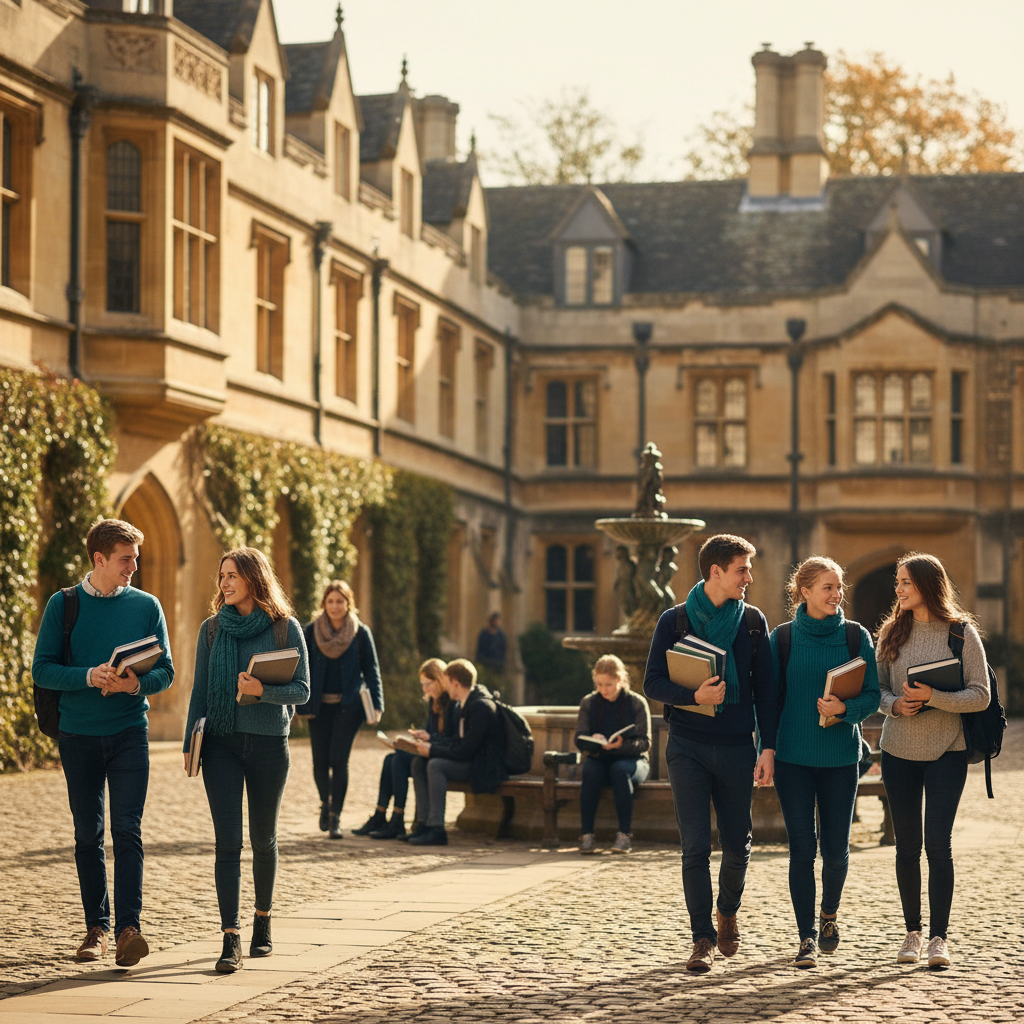

Every year, I have conversations with parents in Hong Kong, Dubai, and London who ask the same question: “Is Natural Sciences at Cambridge the right path for my child?” And it’s a brilliant question to ask, because the answer genuinely matters.
The reason parents ask this is because Cambridge Natural Sciences is positioned somewhere between pure Chemistry and broader science — and it can feel uncertain. Will my child who loves organic mechanisms be bored by biology and physics requirements? Will they miss out on advanced physical chemistry? Will they regret not doing straight chemistry at another university?
After 20 years of teaching chemistry, and having coached students through Cambridge Natural Sciences applications from schools in Sevenoaks, Alleyn’s, and Bancroft’s, I can tell you this: it’s the perfect course for a specific type of student. And I’ll explain exactly who that is.
What Is Cambridge Natural Sciences, Actually?
Natural Sciences at Cambridge is not a general science degree. It’s a highly specialised honours programme where chemistry is genuinely central, but where students choose their own path through the subject areas.
In years 1 and 2, all Natural Sciences students study a broad foundation: chemistry, physics, and biology. But here’s the critical part — you don’t have to do all three. You can take chemistry with only one other subject. And in year 2, you narrow down even further.
So if your child is thinking “I want chemistry as my main subject, but I also want to understand the biology of how drugs work” or “I want to study how climate science connects to atmospheric chemistry”, this is exactly what Natural Sciences allows.
Think of it as bespoke education within a world-class institution.
The Chemistry is Genuinely Advanced
One concern I hear from chemistry-focused students is: “Will the chemistry be watered down because I’m also doing physics?”
The honest answer is no. Cambridge Natural Sciences chemistry is equivalent in depth to a standalone chemistry degree for the first two years. The difference is you’re learning it in context — alongside the physics of quantum mechanics that underpins bonding, and the biology of how cellular chemistry actually works in living systems.
In fact, I’ve found that many of my students who do Natural Sciences end up understanding chemistry more deeply because they see the connections to physics and biology immediately. The uncertainty principle becomes real when you’re learning it alongside orbital theory. Enzyme kinetics makes sense when you understand both the chemistry of reaction mechanisms and the biology of protein structure.
This is chemistry in context, taught by world experts who have space and time to make the connections obvious.
The Admissions Process: What Cambridge Actually Wants
Cambridge Natural Sciences admissions are highly competitive. They typically admit around 200 students per year from over 2,000 applicants globally. So what are they actually looking for?
First, evidence of genuine scientific curiosity beyond the syllabus. This is not “I got an A* at GCSE”. It’s: “I’ve read about polymorphism in cocoa butter, and I’m fascinated by how crystal structure determines physical properties.” Or: “I’ve been following the debate about carbon capture technology and understand the thermodynamic limitations.”
Your child needs to show they’ve gone beyond the exam specification and thought independently. This is where the interview comes in.
Second, genuine enjoyment of A Level chemistry — not just achieving the grade, but actually thinking chemistry. Cambridge interviewers are extraordinarily skilled at spotting the difference. They ask questions designed to take you beyond memorisation: “Why do you think this bond angle is slightly different from what VSEPR would predict?” or “If you had to design a buffer for this biological system, what would you choose and why?”
Third, evidence that you understand what Natural Sciences actually is. So many candidates treat it as “chemistry at Cambridge, but with extra subjects forced in.” The admissions tutors can spot this instantly. The successful candidates are genuinely interested in the connections between disciplines.
The A Level Chemistry You Need to Prepare
Here’s what’s critical: your preparation for Cambridge Natural Sciences starts with mastery of your exam board’s A Level chemistry specification — whether that’s AQA, Edexcel, OCR A, or IB.
But it doesn’t stop there. The interview questions assume you understand:
- Thermodynamics beyond the syllabus — entropy, Gibbs free energy, and why some reactions happen spontaneously while others don’t, even when ΔH is negative. Your exam board covers this, but interview questions go deeper.
- Reaction mechanisms in detail — not just knowing that an electrophilic substitution happens, but understanding rate-determining steps, intermediate stability, and how the mechanism changes if you change the solvent.
- The chemistry of real biological systems — enzyme kinetics, acid–base chemistry in blood buffering, the role of metal ions in proteins. These aren’t on your exam syllabus, but they will be discussed in the interview.
- Current chemistry research — what’s happening at the frontier of the subject. Can you discuss battery chemistry, carbon capture, or drug design at a level that shows genuine understanding?
This is why preparation matters so much. It’s not about reaching a higher grade. It’s about building understanding that goes beyond the specification, so that when you walk into the Cambridge interview room, you can engage genuinely with the interviewer’s questions.
Who Is Natural Sciences Right For?
Let me be honest about this. Natural Sciences at Cambridge is not the best choice if:
- Your child wants pure, deep chemistry and is worried about distractions. (Then straight chemistry at Oxford, Cambridge, or Imperial might be better.)
- Your child has weak physics or finds it genuinely unappealing. (You’ll need to engage with quantum mechanics and electromagnetism — these aren’t optional.)
- They’re applying mainly for the Cambridge name and haven’t thought about what the course actually is.
But Natural Sciences is perfect if:
- Your child loves chemistry and is genuinely curious about how it connects to biology and physics.
- They want flexibility — the option to specialise in chemistry for year 3, but also the freedom to explore.
- They’re interested in applied chemistry: drug design, materials science, environmental chemistry, energy storage. These fields require understanding beyond pure chemistry.
- They excel at interviews and genuine scientific discussion. (Cambridge interviews reward curiosity and thinking, not just knowledge.)
- They want to keep their options open. Natural Sciences alumni go into pure chemistry careers, medicine, research, industry — the degree opens all doors.
The Interview: Where It Gets Real
This is the part that matters most, and it’s where genuine preparation shows.
Cambridge Natural Sciences interviews last 20 minutes and are taken by two tutors. They’re designed to explore your scientific thinking, not to catch you out. A typical interview might start with a question about something slightly beyond the syllabus: maybe an unfamiliar reaction, or a data set about a chemical process you haven’t seen before.
The tutors are watching for: Can you think through a problem systematically? Do you know when you don’t know something, and can you reason your way to an answer? Can you change your mind if given new information?
I had a student from Sevenoaks a few years ago who was asked about the reactivity of silicon versus carbon in the interview. She hadn’t memorised the answer. But she said: “Silicon is larger than carbon, so its orbitals are bigger. That might make it harder to form pi bonds. Can I think about that?” And she reasoned her way to the right explanation. She got in.
That’s what Cambridge wants.
If Your Child is Interested: How to Prepare
If Natural Sciences at Cambridge feels right for your child, here’s what I recommend:
1. Master the exam specification completely. Know your AQA / Edexcel / OCR specification inside out. Not just the facts, but the reasoning. Why is this true? What assumptions are we making?
2. Read beyond the specification. Chemistry textbooks, research papers (even if you don’t understand everything), TED talks about chemistry research. Build genuine interest and knowledge.
3. Work through interview practice questions. Cambridge publishes specimen interview questions. Work through them, ideally with someone who can push back and ask follow-up questions.
4. Develop your personal statement carefully. This is your chance to show why Natural Sciences specifically excites you, and what connections you’ve made between chemistry and other sciences.
5. Get expert interview preparation. This is genuinely worth the investment. Someone who knows how Cambridge interviews work can teach your child to think and communicate at the level Cambridge expects.
A Final Word
Cambridge Natural Sciences is an extraordinary degree. It’s genuinely challenging, taught by world-leading researchers, and it opens doors to every possible chemistry career (and many others).
But it’s only right if your child genuinely wants it — not because it sounds prestigious, but because they’re fascinated by how chemistry connects to the world.
If your child is in year 12 or 13, preparing for Cambridge Natural Sciences, or reconsidering their university path, I offer specialised interview coaching and advanced chemistry tutoring tailored to what Cambridge wants to see. I teach globally online — early morning UK time slots work perfectly for students in Hong Kong, Singapore, and Dubai.
Book a free consultation call: chemistrywithchloe.com
Chloe Archard is an Oxford Biochemistry graduate and online Chemistry tutor with 20+ years of experience at the UK’s leading independent schools. She specialises in A Level Chemistry, Oxbridge interview preparation, and helping ambitious students understand chemistry at the depth Cambridge expects.
📄 Free OCR A Level Chemistry A Revision Guides
⬇ Component 01: Periodic Table & Physical Chemistry ⬇ Component 02: Synthesis & Analysis

Oxford-Educated Chemistry Specialist
With over 20 years of teaching experience at some of the UK’s top independent schools, I help ambitious students bridge the gap between hard work and top-tier results. I specialise in GCSE, A Level, and IB Chemistry tuition for students targeting Grade 9s and A*s. Based in the UK but working globally, I provide 1-1 online support for families in South and West London, Dubai, and Hong Kong, ensuring students are perfectly prepared for competitive medical applications and Oxbridge entries.
I’ve helped students achieve top grades from schools such as Alleyn’s, Dulwich College, Tonbridge, Sevenoaks, Brighton College, Wycombe Abbey, Caterham, St Paul’s, Dubai College, Dubai British School and Harrow International School Hong Kong.
Contact me archardchloe@gmail.com to discuss how I can help your child excel in Chemistry.