

Blog
How I Plan and Personalise Every Single Tutoring Session — My Process Explained

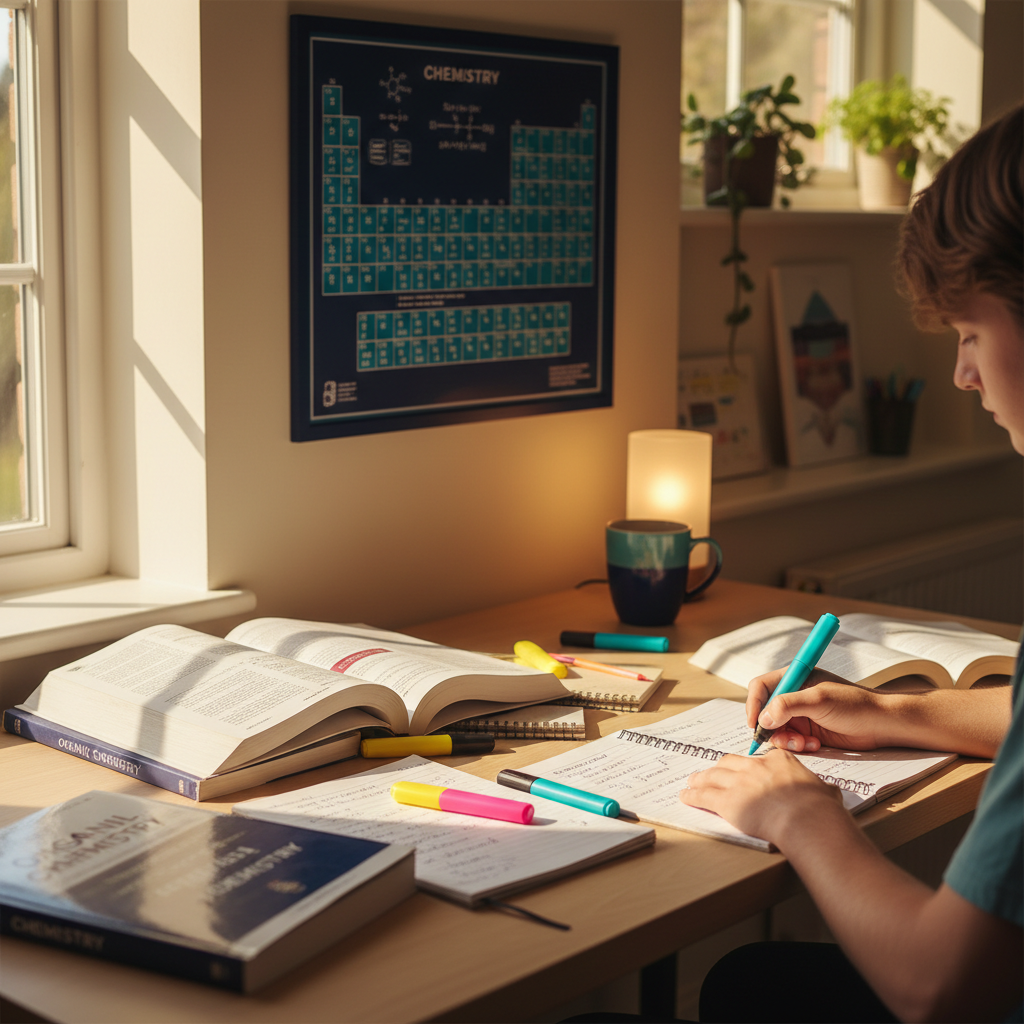

Every single tutoring session I run is different. Not because I wing it — but because I plan meticulously.
After 20+ years of teaching at Sevenoaks, Alleyn’s and Bancroft’s, and now tutoring students across London, Hong Kong, Singapore and Dubai, I’ve learned that the difference between a tutoring session that changes a student’s confidence and one that just fills time comes down to personalisation.
Today, I want to walk you through my process — exactly how I plan each lesson to make sure every student, at every level, walks away understanding something they didn’t before.
Step 1: Understanding the Student Before the First Session
Before a student ever sits down with me, I ask detailed questions.
Not generic questions like “Are you struggling with chemistry?” — that tells me nothing. I ask:
- What specific topic has confused you?
- What does your current predicted grade look like?
- Are you an exam board on AQA, Edexcel, or OCR?
- What’s your learning style — do you prefer visual explanations, working through problems, or both?
- What’s the one thing that would make the biggest difference to your confidence right now?
I write everything down. This information shapes every single session that follows.
If a student says “I understand the concepts but panic in exams,” that’s completely different from “I don’t understand how mechanisms work.” One needs exam technique and time pressure practice. The other needs deeper conceptual understanding first.
Step 2: Mapping the Student’s Current Knowledge
In the first session, I don’t launch straight into teaching. I assess.
I might ask:
- “Walk me through an equilibrium problem you recently did.”
- “Show me how you’d approach this organic synthesis question.”
- “Explain what a Born–Haber cycle is — not perfectly, just how you understand it.”
This isn’t to catch them out. It’s to understand exactly where the gaps are. Often, a student thinks they don’t understand redox, but actually they understand oxidation states perfectly — they just can’t write half-equations in the right order. That’s a completely different problem to solve.
Step 3: Building a Personalised Learning Plan
Now I know their level, I build a 4–8 week learning plan specific to them.
This is NOT the same for every student. Here’s why:
- A student targeting a B grade might focus on the most highly-examined topics (equilibrium, mechanisms, transition metals).
- A student targeting an A* might spend time on the trickier application questions from past papers.
- A student preparing for an Oxbridge or medical interview gets a completely different curriculum — more depth, more discussion of real-world applications.
I share this plan with them before we start. They see exactly where we’re going.
Step 4: Every Session Has a Clear Objective
Before each lesson, I set one primary objective. Just one.
It might be:
- “Understand how Le Chatelier’s principle applies to three specific reaction types.”
- “Master the mechanism of nucleophilic addition in aldehydes & ketones.”
- “Confidently interpret IR spectra from past exam papers.”
Not “cover equilibrium” or “do organic chemistry.” One specific outcome.
I know the lesson is successful when the student can articulate what they’ve learned and apply it to a new problem they haven’t seen before.
Step 5: Structuring the Actual Lesson
My lessons follow a consistent structure that works for every learning style:
Minutes 0–5: Context
Why does this topic matter? How does it connect to what they already know? What does the exam board actually test here?
Minutes 5–20: Deep explanation
I explain the concept in multiple ways — visually, using molecular diagrams, through analogy, and mathematically. I pause constantly to check understanding.
Minutes 20–40: Guided practice
We work through exam-board-specific questions together. I don’t just give answers — I walk through the thinking process. “What does the question asking for? What do we know? What do we need to find?”
Minutes 40–50: Independent practice
They try a similar question alone, with me watching. This is where I see if they’ve actually understood, or if they were just following along.
Minutes 50–55: Reflection & next steps
We talk about what clicked, what to review, and what we’re doing next week.
Step 6: Customising for Their Exam Board
AQA, Edexcel and OCR A Level Chemistry are not the same. The same topic is tested completely differently.
For example, redox:
- AQA loves half-equations and electrode potentials.
- Edexcel loves oxidation number calculations and industrial context.
- OCR A loves structured questions and practical application.
I know every exam board’s style, their favourite questions, and their mark schemes. Every worked example I use is from their actual past papers.
Step 7: Homework That Actually Builds Understanding
I don’t just say “do questions 1–10 from your textbook.”
I set targeted homework that:
- Reinforces what we covered (one easier question to build confidence).
- Extends the concept slightly (one medium question to deepen thinking).
- Prepares for next week (one challenging question to get their brain ready).
They submit it before the next session. I read every answer, give written feedback, and tailor the next lesson based on what I see.
Step 8: Tracking Progress and Adjusting
I keep detailed notes on every student:
- Topics they find easy vs. hard.
- Their favourite learning methods.
- Gaps that need revisiting.
- Questions they’ve mastered.
Every 4 weeks, I reassess. Are they ready to move on, or do they need more time on this topic? Is the learning plan still working, or do we need to adjust?
This is why my students see consistent improvement. It’s not luck — it’s intentional, data-driven personalisation.
Why This Matters for You
Whether your child is studying in London, Hong Kong, Singapore or Dubai, chemistry tutoring should be this thoughtful.
If they’re with a tutor who teaches the same way to every student, or who doesn’t have a clear plan, they’re wasting both time and money.
Every student is different. Their learning style is different. Their exam board is different. Their goals are different.
A good tutor sees that and personalises ruthlessly.
If you’d like to see this approach in action, I offer a free introductory call to chat about your child’s specific needs. No pressure — just a conversation about what would actually help.
Book at chemistrywithchloe.com
Chloe Archard is an Oxford Biochemistry graduate who has taught Chemistry at leading UK independent schools for over 20 years. She now tutors A Level, IGCSE and IB Chemistry online to students globally.
📄 Free AQA A Level Chemistry Revision Guides
📄 Free OCR A Level Chemistry A Revision Guides
⬇ Component 01: Periodic Table & Physical Chemistry ⬇ Component 02: Synthesis & Analysis

Oxford-Educated Chemistry Specialist
With over 20 years of teaching experience at some of the UK’s top independent schools, I help ambitious students bridge the gap between hard work and top-tier results. I specialise in GCSE, A Level, and IB Chemistry tuition for students targeting Grade 9s and A*s. Based in the UK but working globally, I provide 1-1 online support for families in South and West London, Dubai, and Hong Kong, ensuring students are perfectly prepared for competitive medical applications and Oxbridge entries.
I’ve helped students achieve top grades from schools such as Alleyn’s, Dulwich College, Tonbridge, Sevenoaks, Brighton College, Wycombe Abbey, Caterham, St Paul’s, Dubai College, Dubai British School and Harrow International School Hong Kong.
Contact me archardchloe@gmail.com to discuss how I can help your child excel in Chemistry.