

Blog
Chemistry at Imperial College London: Courses, Entry Requirements and What Students Say

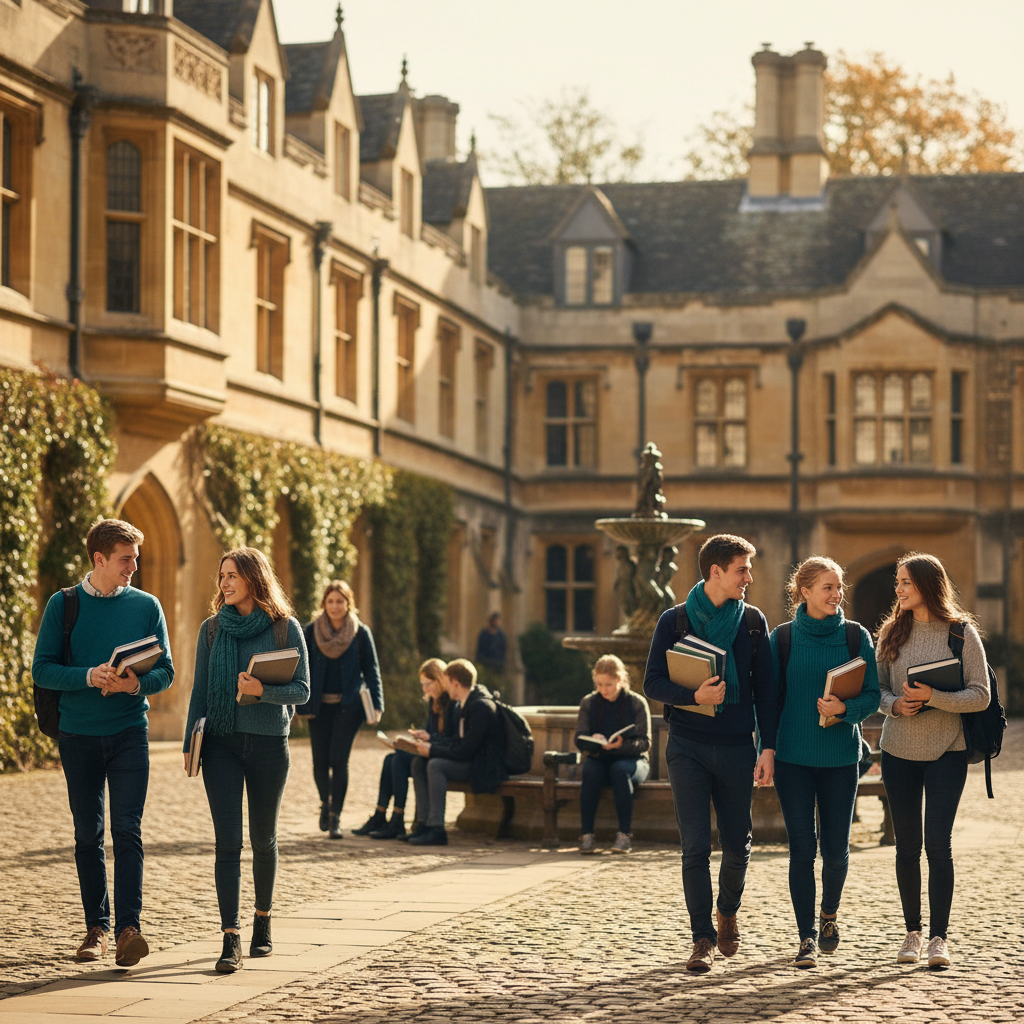

If your child is dreaming of studying chemistry at Imperial, you’ve chosen one of the world’s most prestigious universities. But what does an Imperial chemistry degree actually look like? And what does it really take to get in?
I’ve spent 20 years teaching some of the brightest chemistry students in the UK’s top independent schools – and several of them have gone on to Imperial. In this post, I’ll give you the real picture: the entry requirements, the actual experience, what current students say, and how I help students prepare for this incredibly competitive path.
The Imperial Chemistry Advantage
Imperial College London sits alongside Cambridge, Oxford and MIT in the global chemistry rankings. The Chemistry Department at Imperial is world-leading in research and consistently ranks in the top 3 in the UK.
But here’s the thing: Imperial chemistry isn’t just about excellent teaching (though it is). It’s about being part of an intensely academic community where every single student in your year is exceptionally bright, ambitious, and chemically curious. Your class of ~100 first-year chemists will contain some of the top chemistry A Level students in the country.
This is both exciting and demanding. The course is rigorous, the workload is substantial, and the competition between peers is real. Students I’ve worked with say the environment is incredibly stimulating – you’re surrounded by people who genuinely love chemistry – but it requires real resilience.
Entry Requirements: What You Actually Need
Imperial’s official Chemistry A Level requirement is three A*s, with A*A*A* in Chemistry, Physics and Maths being the standard.
But let me be direct: A*A*A* is increasingly the baseline, not the maximum. Recent statistics show the average successful applicant has A*A*A*A* (including at least one further subject). Many successful students have straight A*s across four subjects.
Here’s what matters:
- Chemistry: Must be A*. Non-negotiable. Typically 230+ out of 256 marks (89%+). If your child is getting high As in their practice papers, they need to close that gap significantly.
- Physics: Must be A*. Similar requirement – typically 230+/256. This is where many students slip up. Imperial assumes physics students really know their physics.
- Maths: Must be A*. Many students find Maths the hardest hurdle because they’ve relaxed once they got an A. Don’t. Imperial Maths is genuinely challenging, and they expect perfection.
- Further Maths: Not officially required, but strongly preferred. If your child is doing Further Maths, an A* here signals serious mathematical ability.
Beyond the grades, Imperial looks for evidence of chemical curiosity. Are you a student who reads chemistry beyond the curriculum? Have you done chemistry enrichment (Science Olympiad, Chemistry Olympiad, summer schools)? Can you articulate why you want to study chemistry, not just “I’m good at science”?

The Actual Course: What Students Study
Imperial’s Chemistry BSc is a three-year programme structured as follows:
Year 1: Foundation chemistry across all branches. Students study general chemistry principles, organic chemistry, inorganic chemistry, physical chemistry, and analytical chemistry. There’s also compulsory mathematics and physics. The first-year exams count toward your final degree classification, so it’s not a gimme – students tell me Year 1 feels immediately serious.
Year 2: Deeper specialisation. You begin to choose modules. Options might include pharmaceutical chemistry, environmental chemistry, materials chemistry, or specialised organic synthesis. The organic chemistry in Year 2 becomes substantially harder – multi-step syntheses, complex mechanisms, retrosynthetic analysis. This is where strong A Level organic knowledge really pays off.
Year 3: Individual research project (worth 20% of final degree) plus advanced optional modules. Students conduct genuine research in an Imperial laboratory alongside their dissertation. This is hugely attractive to employers and essential if you’re thinking about PhD study.
There’s also a mandatory placement year option (MChem with Industrial Experience), which gives students a real-world chemistry job experience.
The Workload & Teaching Style
Let’s be honest: Imperial’s workload is significant. Expect 40–50 contact hours per week (lectures, tutorials, labs) plus substantial independent study. Problem sheets are set weekly and are genuinely challenging – not just routine calculations, but problems that require real chemical thinking.
The teaching style emphasises independent learning. You won’t be spoon-fed. Lecturers expect you to read the literature, work through problems yourself, and ask questions in tutorials. Students who thrived at top independent schools (like Sevenoaks, Alleyn’s, Dulwich) typically adapt well because they’re used to this level of intellectual independence.
That said, Imperial has excellent support. Tutorials are small (typically 6–8 students per group), and academics have drop-in office hours. If you’re struggling, help is available – but you have to ask for it.
What Current Students Say
I regularly ask my former students at Imperial how they’re getting on. Here’s what I hear repeatedly:
“It’s hard, but the people are amazing. Everyone in your year is chemistry-obsessed in the best way.”
“The labs are incredible – we’re using equipment and techniques that industry uses. That’s the Imperial difference.”
“Time management is everything. The workload is manageable if you stay on top of it, but if you slip behind, it’s hard to catch up.”
“The organic chemistry in Year 2 was a shock. A Level didn’t prepare me for how deep it goes. But once I adjusted, it clicked.”
And importantly: “The investment was worth it. The degree opened doors – both to employers and to further study. PhD places, investment banking, consulting, pharmaceutical companies – Imperial Chemistry opens those doors.”
How I Help Students Get There
If your child is aiming for Imperial, the preparation doesn’t start in Year 13. It starts now.
In my tutoring, I work with Imperial-track students to:
- Master the fundamental chemistry concepts that underpin the A Level course – because Imperial assumes you know these inside-out
- Develop problem-solving skills beyond exam technique. Imperial questions are different – they test genuine understanding, not memorisation
- Build confidence with unfamiliar chemistry. Imperial loves questions on topics you haven’t explicitly learned, that test whether you can apply core principles
- Prepare for the rigour of university chemistry. We work on extended problem sets that feel like university tutorials
- Develop independent learning habits. I teach students how to teach themselves – a skill essential at Imperial
I also help students prepare personal statements that stand out. Imperial receives thousands of applications. A personal statement that shows genuine chemical curiosity, evidence of enrichment, and thoughtful reflection on why chemistry matters to you personally makes a real difference.
Imperial Is Within Reach
If your child is ambitious, loves chemistry, and is willing to put in the work, Imperial is absolutely within reach. It requires:
- A* grades in Chemistry, Physics and Maths (and ideally beyond)
- Deep understanding of core chemistry concepts, not just exam technique
- Evidence of chemical curiosity – enrichment, independent reading, genuine interest
- Strong independent learning skills and resilience
If any of these feel like a gap, that’s where I come in. I work with students globally – based in the UK but teaching students in Hong Kong, Singapore, and Dubai with early morning UK slots that fit school schedules perfectly. Whether you’re in London or abroad, if your child is aiming for Imperial, I’d love to help.
Book a free introductory call to discuss how we can prepare your child for Imperial. Let’s talk about where they are now, where they need to be, and how to bridge that gap.
Chloe Archard is an Oxford Biochemistry graduate and online Chemistry tutor with 20+ years of experience at the UK’s leading independent schools. She specialises in A Level, IGCSE and IB Chemistry tuition, with particular expertise in university preparation and chemistry for medicine.

Oxford-Educated Chemistry Specialist
With over 20 years of teaching experience at some of the UK’s top independent schools, I help ambitious students bridge the gap between hard work and top-tier results. I specialise in GCSE, A Level, and IB Chemistry tuition for students targeting Grade 9s and A*s. Based in the UK but working globally, I provide 1-1 online support for families in South and West London, Dubai, and Hong Kong, ensuring students are perfectly prepared for competitive medical applications and Oxbridge entries.
I’ve helped students achieve top grades from schools such as Alleyn’s, Dulwich College, Tonbridge, Sevenoaks, Brighton College, Wycombe Abbey, Caterham, St Paul’s, Dubai College, Dubai British School and Harrow International School Hong Kong.
Contact me archardchloe@gmail.com to discuss how I can help your child excel in Chemistry.