

Blog
A Level Chemistry Exam Dates 2026: How to Plan Your Revision Around Paper Order (And Why It Matters)

Look, I’m going to be honest with you. Most Year 13 students treat their exam timetable like it’s just a list of dates to panic about. But here’s the thing: the order of your A Level Chemistry papers is actually one of the best gifts the exam boards have given you – and most students don’t even realise it.
So let’s talk strategy. Because if you’re aiming for that A or A*, you need to stop seeing June as “exam month” and start seeing it as three distinct revision windows that you can actually plan around.
The Big Dates: AQA A Level Chemistry 2026 📅
Let’s start with the facts. If you’re sitting AQA Chemistry (7405) – which most of my UK and Dubai students are – here’s what you’re looking at:
- Paper 1 (Inorganic & Physical Chemistry): Monday, 2nd June, 2 hours
- Paper 2 (Organic & Physical Chemistry): Monday, 9th June, 2 hours
- Paper 3 (Practical & Synoptic): Monday, 15th June, 2 hours
Notice something? You have a full week between each paper. That’s not an accident. That’s your strategic advantage.
For those of you on OCR Chemistry A, your dates are identical (2nd, 9th, and 15th June), though Paper 3 is slightly shorter at 90 minutes. Edexcel students – same story, same dates. Even CIE students in Dubai get their own structured timeline, with Paper 4 on 7th May and Paper 5 on 18th May.
The point? Every exam board knows you need recovery time. They’ve built it into the schedule. The question is: are you going to use it wisely, or waste it scrolling through TikTok in a post-exam haze?
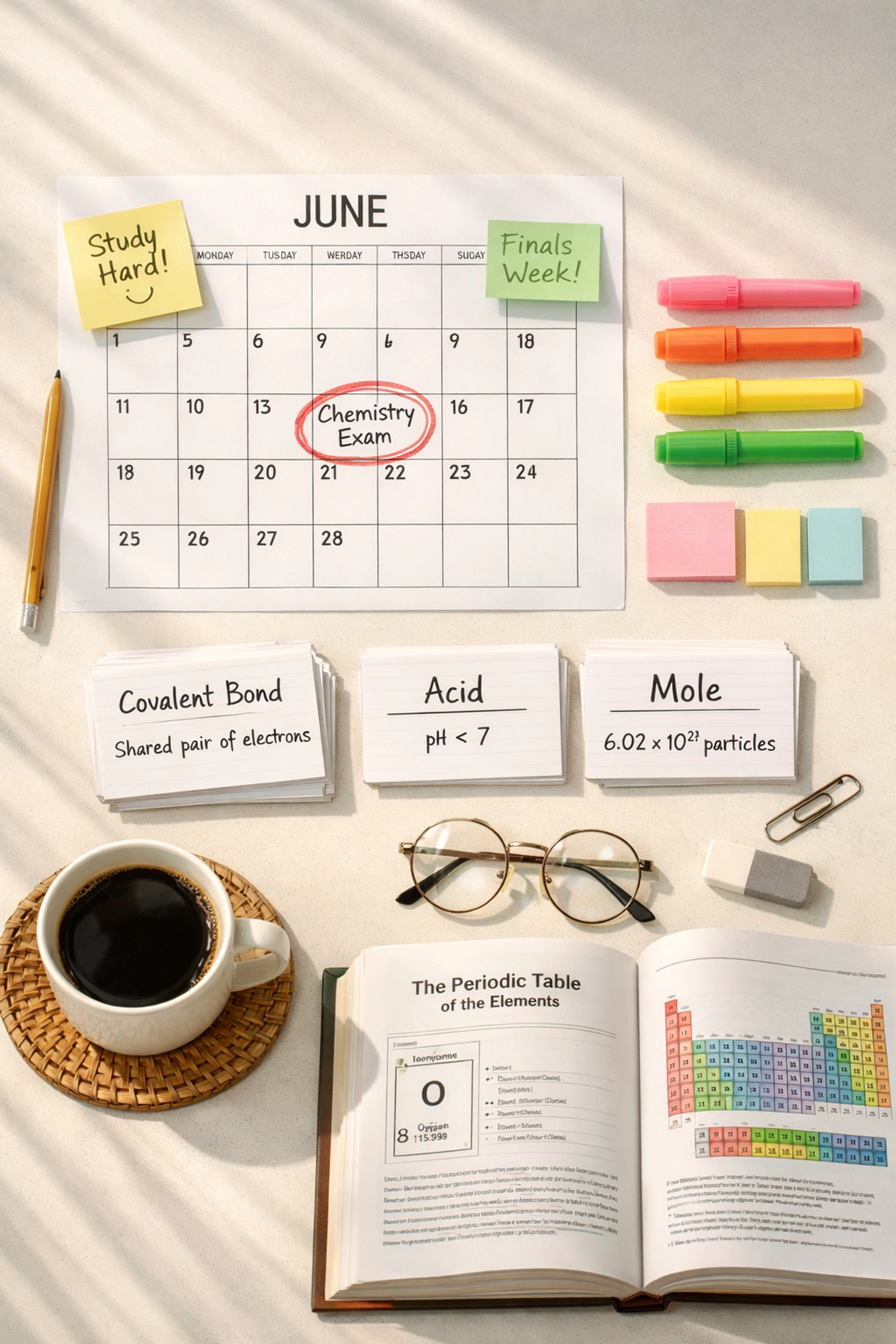
Why the Paper Order Is Actually Brilliant (Yes, Really)
Here’s what I tell every single one of my students in March: the exam order is your revision blueprint.
Think about it. Paper 1 hits Inorganic and Physical Chemistry first. That means Atomic Structure, Bonding, Energetics, Kinetics, Equilibria, and the Periodic Table. These are your foundation topics – the ones that underpin literally everything else.
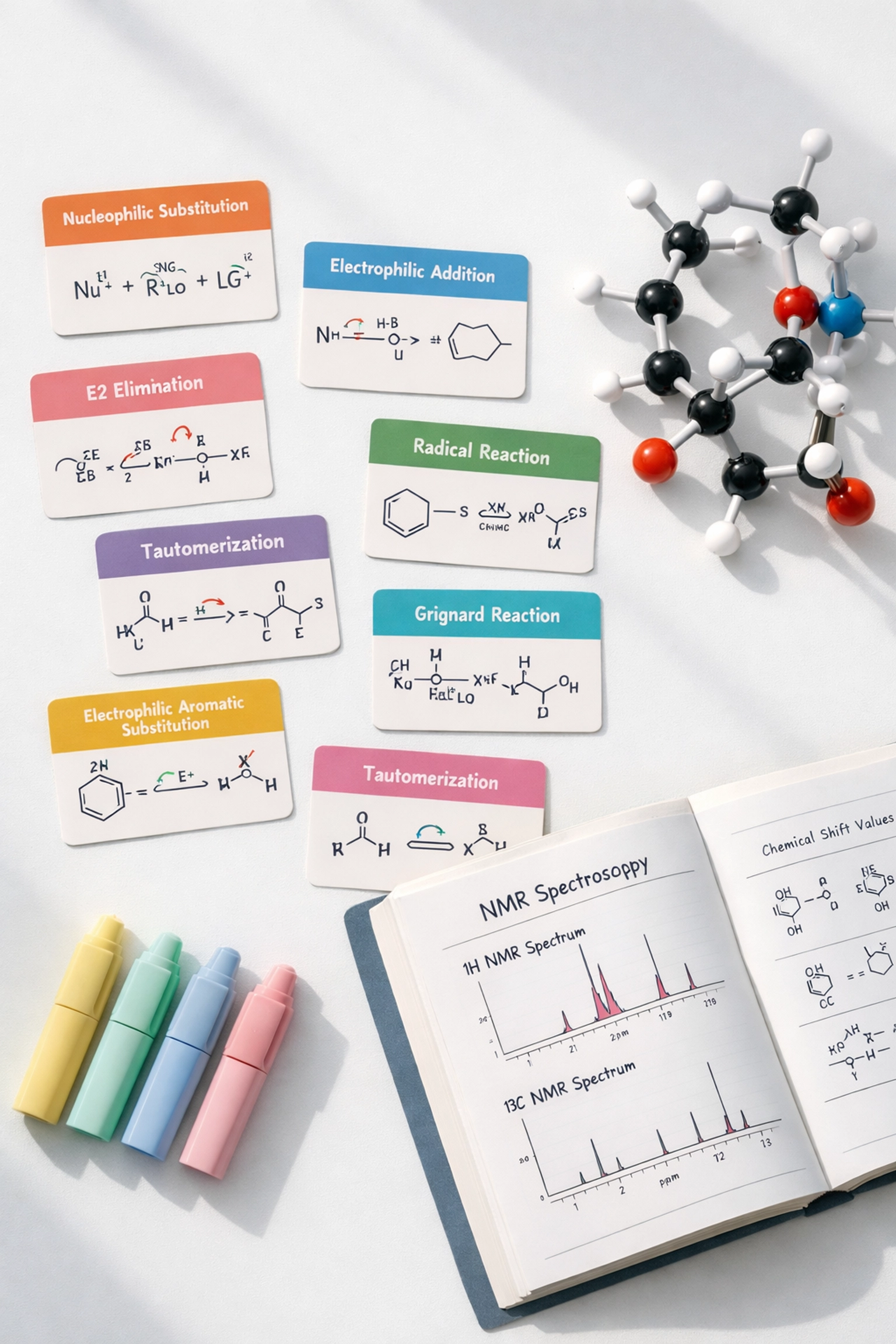
Then comes Paper 2 with Organic Chemistry and more Physical concepts. This is where Mechanisms, NMR, Mass Spec, and Polymers live. It’s the detail-heavy paper, the one where you need to remember thirty different reactions and conditions.
Finally, Paper 3 brings it all together with Practical Skills and Synoptic content. This is where the exam board tests whether you actually understand chemistry or whether you’ve just memorised a bunch of equations.
The genius of this order? You get to build your knowledge logically, revise in focused chunks, and peak at exactly the right time for each paper.
Planning the Gap Weeks: Your Secret Weapon
Let me break down how to actually use those 7-day windows between papers. Because here’s the truth: most students don’t plan for the gaps, and it costs them grades.
Leading Up to 2nd June: Master the Fundamentals
From now until Paper 1, your life is all about Inorganic and Physical Chemistry mastery. That means:
- Atomic Structure and the Periodic Table (especially Group 2 and Group 7 trends)
- Bonding and structure (don’t you dare mix up your types of bonding in the exam)
- Energetics (Hess’s Law, Born-Haber cycles, enthalpy changes)
- Kinetics and Equilibria (rate equations, Kp, Kc, Le Chatelier’s Principle)
- Redox and Electrode Potentials
This is not the time to be “having a quick look” at organic mechanisms. Stay focused. Paper 1 is worth 35% of your final grade. You need to walk into that exam room on 2nd June feeling like you could teach these topics yourself.
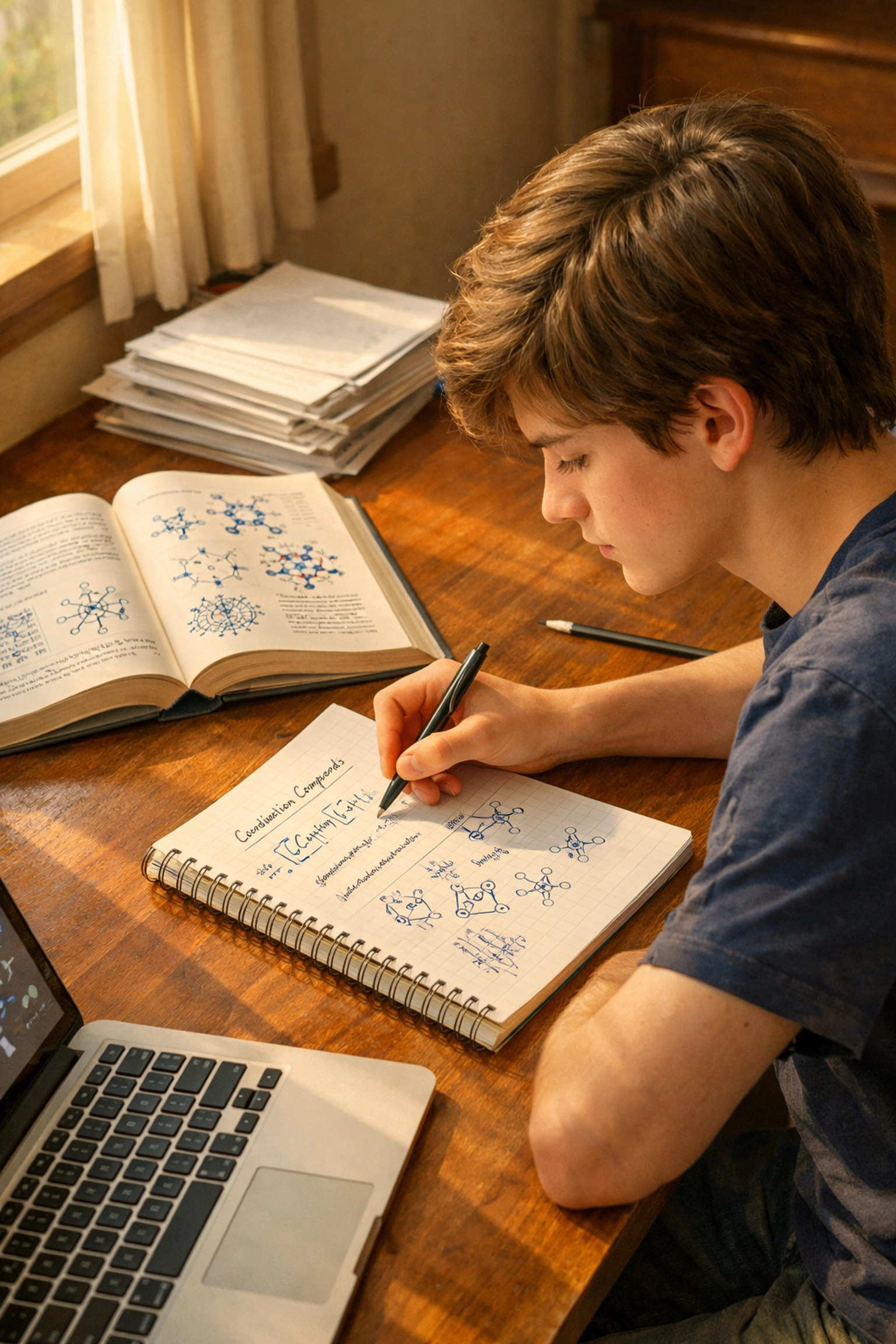
The 2nd–9th June Gap: Welcome to Organic Week 🧪
Right. You’ve just finished Paper 1. Your brain feels like mush. Your friends want to “celebrate” by doing absolutely nothing academic for three days.
Don’t do it.
Here’s the reality: you have exactly seven days to become an Organic Chemistry machine. This is your “Organic Week,” and it’s non-negotiable if you want that top grade.
During this week, you should be:
- Drilling every single organic mechanism until you can draw them in your sleep
- Memorising reagents and conditions (because Paper 2 loves to test those)
- Practicing NMR and Mass Spec interpretation (these are easy marks if you know what you’re doing)
- Reviewing Polymers, Amino Acids, and any remaining Physical topics on Paper 2
Pro tip: Don’t touch Inorganic Chemistry during this week. I know it’s tempting to “keep it fresh,” but your brain needs to switch gears completely. Trust the process.
The 9th–15th June Gap: The Everything Paper
This is where it gets interesting. Paper 3 is the synoptic paper – it tests everything, but with a heavy focus on practical skills and data analysis.
Between 9th and 15th June, you need to:
- Review all 12 Required Practicals (or 16 if you’re OCR) – know the methods, the errors, the improvements
- Practice interpreting unfamiliar data (this is where Paper 3 separates the A* students from everyone else)
- Revisit any weak topics from Papers 1 and 2 (because Paper 3 can test anything)
- Do at least three full Paper 3 past papers under timed conditions
This is also when you need to stay mentally sharp. Paper 3 is at the end of exam season. You’re tired. Everyone’s tired. But this paper rewards students who can still think critically and apply their knowledge in new contexts.
The “Paper 3 Trap” (And How to Avoid It)
Let me tell you what happens to most students by mid-June. They’re exhausted. They’ve done Papers 1 and 2. They’ve probably had Maths and Biology exams mixed in there too. And suddenly, Paper 3 feels like a mountain they can’t be bothered to climb.
I’ve seen so many talented students lose 10-15 marks on Paper 3 simply because they ran out of steam. They didn’t practice the practicals. They didn’t review data analysis. They walked in hoping their general knowledge would carry them.
Spoiler: it doesn’t.
Here’s how to avoid the trap:
1. Schedule rest days – You need at least one full day off between each paper. Not a “study lightly” day. An actual day off. Your brain needs recovery time.
2. Front-load your hardest revision – Don’t leave your weakest topics until the Paper 3 week. That’s too late. Tackle them in April and May when you still have energy.
3. Build in accountability – Whether that’s a study group, a tutor (hi 👋), or just a parent checking in, you need someone making sure you’re actually doing the work during those gap weeks.
4. Practice Paper 3 early – Don’t wait until June 10th to attempt your first Paper 3 past paper. Start them in May so you know what’s coming.
A Note for Dubai and International Students 🌍
If you’re sitting Cambridge International A Level Chemistry (9701), your dates look slightly different:
- Paper 4 (A Level Structured Questions): 7th May
- Paper 5 (Planning, Analysis and Evaluation): 18th May
The good news? The same strategy applies. You get an 11-day gap between your major papers, which is even more generous than the UK boards. Use that time wisely.
The crucial thing for Dubai students: confirm your exam timetable with your school or exam center. Start times can vary, especially for CIE exams, and the last thing you want is to show up at the wrong time (yes, I’ve seen it happen).
But regardless of your exact dates, the principle remains the same: the paper order is your friend. Use the gaps strategically.
Your Calendar Is a Tool, Not Just a List of Deadlines
Look, I know this all sounds intense. And yeah, June is going to be tough. But here’s what I want you to understand: the students who plan around their exam dates consistently outperform the students who just “revise generally” and hope for the best.
You have a clear structure. You know what’s being tested when. You have built-in recovery time between papers.
Use it.
Create a revision timetable that respects the paper order. Schedule your mock exams to mirror the real thing. And for the love of chemistry, don’t try to cram everything the night before Paper 1.
This is your A Level. This is what gets you into your dream university. Treat the timeline with the respect it deserves.
Ready to Make Your Revision Count?
If you’re reading this and thinking, “Okay, I get the strategy, but I have no idea how to actually implement it,” that’s exactly why I run my A Level Chemistry revision courses and 1-1 tuition sessions.
We don’t just cover content. We build exam-specific strategies for each paper, we practice under timed conditions, and we make sure you’re peaking at exactly the right time – not burning out in May.
Don’t leave your revision to chance. If you’re serious about that A or A*, and you want someone in your corner who actually knows how to navigate the AQA, OCR, or Edexcel specifications, let’s chat.
Because June 2nd is coming whether you’re ready or not. Let’s make sure you’re ready. 🧪✨


Oxford-Educated Chemistry Specialist
With over 20 years of teaching experience at some of the UK’s top independent schools, I help ambitious students bridge the gap between hard work and top-tier results. I specialise in GCSE, A Level, and IB Chemistry tuition for students targeting Grade 9s and A*s. Based in the UK but working globally, I provide 1-1 online support for families in South and West London, Dubai, and Hong Kong, ensuring students are perfectly prepared for competitive medical applications and Oxbridge entries.
I’ve helped students achieve top grades from schools such as Alleyn’s, Dulwich College, Tonbridge, Sevenoaks, Brighton College, Wycombe Abbey, Caterham, St Paul’s, Dubai College, Dubai British School and Harrow International School Hong Kong.
Contact me archardchloe@gmail.com to discuss how I can help your child excel in Chemistry.