

Blog
A Level Chemistry & “Forever Chemicals”: How Photocatalysts are Breaking the Unbreakable

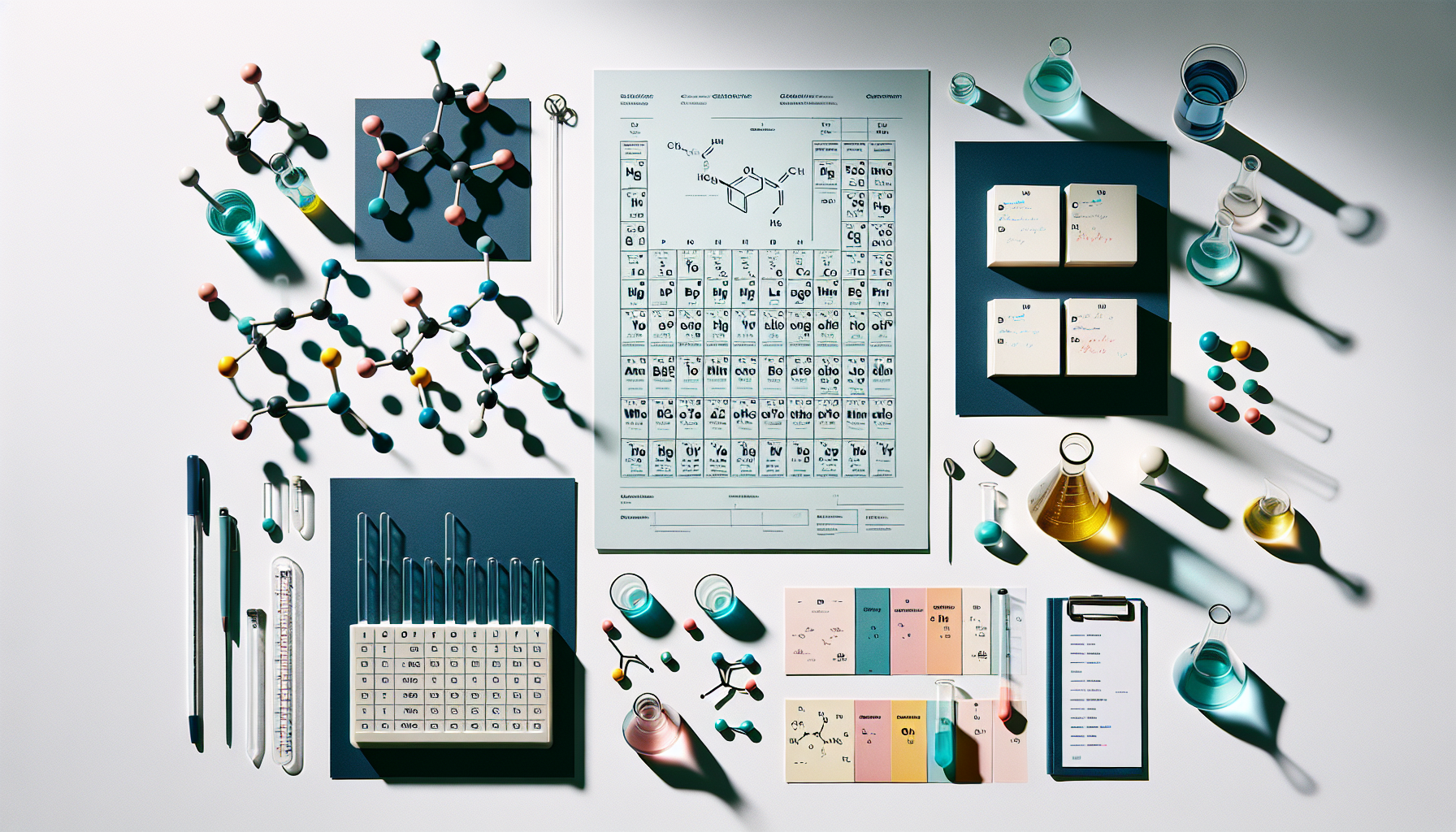
If you’ve spent any time scrolling through the news lately, you’ve probably seen the term “Forever Chemicals” popping up everywhere. It sounds like something out of a sci-fi villain’s lab, doesn’t it? But for us in the world of A Level Chemistry, these substances: properly known as PFAS (per- and polyfluoroalkyl substances): are a masterclass in bonding, kinetics, and environmental persistence.
As an Online Chemistry Tutor, I’m always looking for ways to take the theory you learn in the classroom and apply it to the massive, real-world problems humans are trying to solve right now. Why? Because this is exactly how you stand out in a competitive university interview for Medicine, Engineering, or Natural Sciences at places like Oxford or Cambridge.
Today, we are diving into a massive breakthrough from early 2026 involving photocatalysts. We’re going to look at how researchers are finally “breaking the unbreakable” and how your knowledge of enthalpy and catalysis explains the whole thing.
Why are they “Forever”? (The Year 12 Recap)
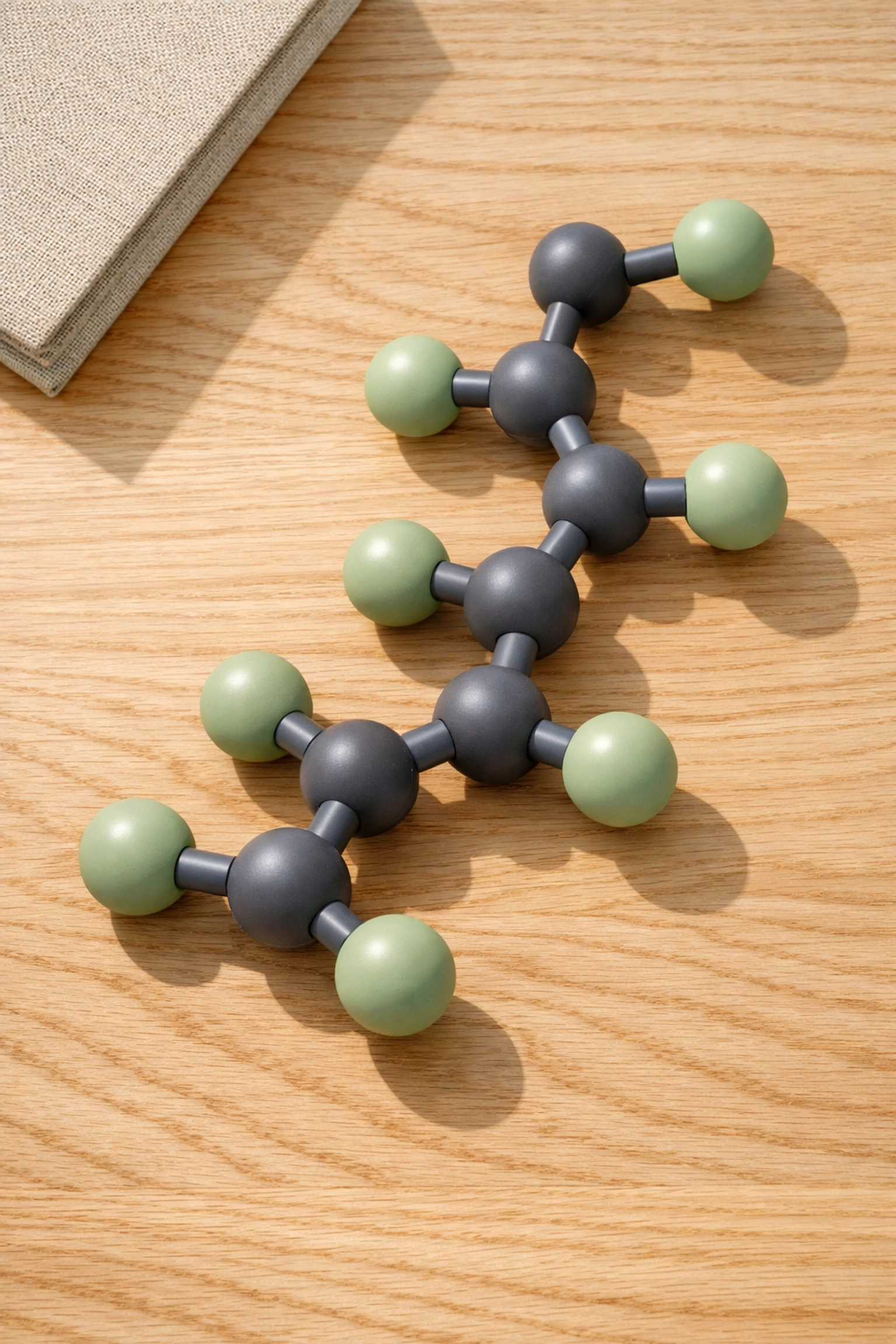
First, let’s talk about the chemistry of a “forever” bond. PFAS are chains of carbon atoms completely surrounded by fluorine atoms. If you remember your Group 7 trends and Periodicity, you know that Fluorine is the most electronegative element on the periodic table.
When Carbon and Fluorine bond, they don’t just share electrons; Fluorine hugs them tight. This creates a very short, very strong covalent bond.
In A Level terms, we are talking about Bond Enthalpy. The C-F bond enthalpy is roughly 467 kJ/mol. To put that in perspective, a C-H bond is about 413 kJ/mol, and a C-C bond is only 347 kJ/mol. Because the C-F bond is so incredibly strong, bacteria can’t eat it, heat doesn’t easily break it, and water just slides right off.
This stability is why PFAS are in everything from non-stick pans to waterproof mascara. But it’s also why they accumulate in our soil, our water, and our bodies. They don’t degrade. They just… stay. 🍀
The 2026 Breakthrough: Photocatalysis to the Rescue
Breaking a C-F bond usually requires massive amounts of energy: think extreme heat or high-pressure systems that are expensive and difficult to scale. However, recent research published in Nature Water and led by teams at the University of Bath has changed the game using something called photocatalysis.
What is a Photocatalyst?
A catalyst, as you know, is a substance that increases the rate of a chemical reaction by providing an alternative reaction pathway with a lower activation energy ($E_a$), without being used up itself.
A photocatalyst is a special type of catalyst that is activated by light energy.
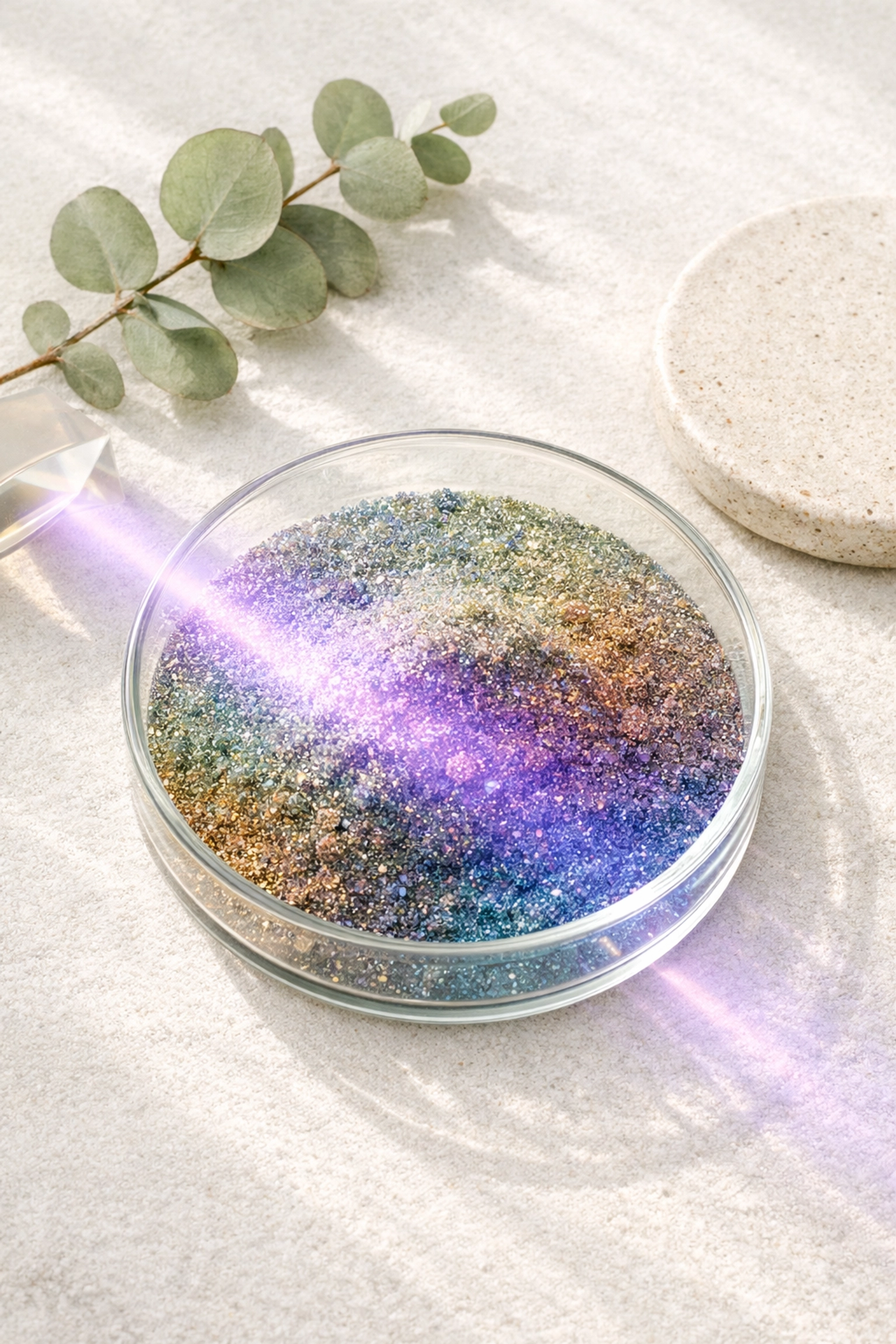
In the latest 2026 studies, scientists developed a new system using materials like CuInS and BiOCl (Copper Indium Sulfide and Bismuth Oxychloride) and twisted carbon-based catalysts. These catalysts can absorb specific wavelengths of light: often in the purple or UV spectrum: and use that energy to “kick” an electron into a higher energy state.
How it Works: The Mechanism You Need to Know
For my students in Dubai or those working with me as their Chemistry Tutor Dubai, we often talk about reaction mechanisms. This is where your A Level knowledge turns into “University-style” thinking.
The process of breaking down PFAS via photocatalysis follows a heterogeneous catalysis model. Let’s break it down into the steps you’d need to explain in an exam (or an interview!):
- Adsorption: The PFAS molecules (the reactants) bond to the surface of the solid photocatalyst.
- Photo-excitation: Light hits the catalyst. This provides the energy needed to promote an electron from the valence band to the conduction band.
- Electron Transfer (Redox): The high-energy electron is “injected” into the C-F bond of the PFAS molecule. This is a reduction step.
- Bond Cleavage: The extra electron destabilizes the C-F bond, causing it to break, leaving behind a harmless fluoride ion and a smaller carbon fragment.
- Desorption: The products leave the surface of the catalyst, leaving the active sites free for the next molecule.
This entire process happens at room temperature (or around 40°C), which is mind-blowing when you consider the bond enthalpy we discussed earlier. By using light to provide the energy, we don’t need to blast the chemicals with heat. 🌟
Thinking Like a University Applicant
If you were sitting in an interview at a top-tier university and the tutor asked, “How would you tackle the accumulation of unreactive organic pollutants in the environment?”, they don’t want you to just say “filters.”
They want you to link the concepts.
You could talk about:
- Kinetics: How the concentration of the catalyst affects the rate (zero-order vs. first-order).
- Thermodynamics: Why the reaction is non-spontaneous without the input of light energy.
- The Arrhenius Equation: How lowering the Ea through catalysis mathematically increases the rate constant (k). (Check out my guide on beating the Arrhenius Equation for more on this!).
Top universities are looking for students who can see a news headline and immediately think: “What’s the enthalpy change there? What’s the oxidation state of that catalyst?”
The Roadblocks: Why Haven’t We Fixed the Planet Yet?
In the real world, chemistry is messy. The research from the University of Science & Technology of China and Colorado State University shows that while these catalysts work beautifully in a controlled lab setting, they struggle in water.
Why? Because water itself can interfere with the electron transfer process. Designing a catalyst that is water-stable and highly efficient is the current “Holy Grail” of environmental chemistry.
As an A Level Chemistry Tutor, I love discussing these limitations with my students because it shows that chemistry isn’t a finished subject. There are still massive problems waiting for you to solve them. Whether you want to study Chemical Engineering to build these reactors or Medicine to treat the health effects of PFAS, you need a rock-solid foundation in these core principles.
How I Can Help You Master the “Why”
I know that A Level Chemistry can sometimes feel like a mountain of facts to memorize. But when you start seeing the links between electron sub-shells, bond enthalpies, and global pollution crises, the subject becomes vibrant and alive.
Whether you are looking for an Online Chemistry Tutor to help you untangle the mess of organic mechanisms or a Chemistry Tutor Dubai to give you that extra edge for your medical school application, I am here to help you transform your understanding.
I’d love to invite you to explore my Ultimate Guide to Rates of Reaction to see how these kinetic concepts show up in your exams.
Let’s embark on this journey together. You are more than capable of mastering the complexities of this course. Sometimes, you just need someone to help you see the “beautiful” logic behind the symbols and numbers. ❤️
If you’re ready to stop just “surviving” your chemistry lessons and start thriving, I’m here to guide you every step of the way.
Reach out via the contact page to book a session. Let’s make sure you’re the one breaking the “unbreakable” problems in your next exam!
Key Takeaways for your Revision:
- PFAS Stability: Due to high C-F bond enthalpy (~467 kJ/mol).
- Photocatalysis: A form of heterogeneous catalysis where light lowers the Ea for bond cleavage.
- Interviews: Practice linking bonding (Year 12) to kinetics and redox (Year 13) to show depth of knowledge.
Stay curious, keep questioning, and remember: chemistry is the future-proof degree that opens every door. 🌟🙌

Oxford-Educated Chemistry Specialist
With over 20 years of teaching experience at some of the UK’s top independent schools, I help ambitious students bridge the gap between hard work and top-tier results. I specialise in GCSE, A Level, and IB Chemistry tuition for students targeting Grade 9s and A*s. Based in the UK but working globally, I provide 1-1 online support for families in South and West London, Dubai, and Hong Kong, ensuring students are perfectly prepared for competitive medical applications and Oxbridge entries.
I’ve helped students achieve top grades from schools such as Alleyn’s, Dulwich College, Tonbridge, Sevenoaks, Brighton College, Wycombe Abbey, Caterham, St Paul’s, Dubai College, Dubai British School and Harrow International School Hong Kong.
Contact me archardchloe@gmail.com to discuss how I can help your child excel in Chemistry.