

Blog
Beyond the Syllabus: Why You Should Tackle the UK Chemistry Olympiad (And How to Survive It)


Let’s be honest: A Level Chemistry is already tough enough. So why on earth would you voluntarily sign up for something even harder? 🤔
Because the UK Chemistry Olympiad (UKChO) isn’t just another exam, it’s the ultimate boss level of school chemistry. Run by the Royal Society of Chemistry, it’s prestigious, it’s challenging, and yes, it’s designed to make your brain hurt a little. But here’s the thing: it’s also one of the smartest moves you can make if you’re serious about Oxbridge, top-tier universities, or just proving to yourself that you can handle the really tricky stuff.
In over 20 years of teaching (and surviving my own time at Oxford), I’ve seen how tackling something like the Olympiad transforms students. Not just their chemistry knowledge, but their confidence, resilience, and ability to think on their feet. So let’s break down what this competition actually involves, why you should consider entering, and how to survive it without losing your mind.
The “Jigsaw Puzzle” Mindset: This Isn’t About Memorizing Facts
Here’s what makes the Chemistry Olympiad different from your standard A Level papers: it’s not testing what you know, it’s testing how you think.
The questions are deliberately designed to look impossible at first glance. They’ll throw unfamiliar chemistry at you, concepts you’ve never seen before, data that seems random. But here’s the secret: you don’t need to have memorized everything. Instead, you need to piece information together like a jigsaw puzzle, spot patterns, make analogies to what you do know, and refuse to give up.
The RSC’s own guidance says it beautifully: “Success is often achieved by sheer determination and not giving up.” This is chemistry as problem-solving, not fact-regurgitation. It’s the kind of thinking you’ll need at university and beyond, which is exactly why top universities love to see it on your application.
Case Study: The Sherbet Lemon Question (Or: How One Sweet Can Teach You Stereochemistry)
Let me show you what I mean with a real example from the 2006 Round 1 paper. The question starts innocently enough: calculate the energy released when you burn a sherbet lemon sweet.
Part 1: The Easy Bit (Combustion & Calories)
You’re given that sucrose has a standard enthalpy change of combustion of –5644 kJ mol⁻¹, and each sweet contains 6.70 g of sucrose. Standard moles calculation, right? You work out that burning one sweet releases 111 kJ of energy.
Then comes the fun part: how many sherbet lemons would you need to eat to meet your daily calorie requirement of 2500 dietary calories?
The answer? Nearly 95 sweets. (Please don’t try this at home, your dentist will not thank me.) 🍬
So far, this is very doable for any good GCSE or Lower Sixth student. You’re feeling confident. You’ve got this.
Part 2: The Sting in the Tail
Then the question evolves. You’re asked to calculate the masses of tartaric acid and sodium hydrogencarbonate needed to produce 6.00 cm³ of CO₂ in the sherbet fizz reaction. This requires you to deduce from the systematic name that tartaric acid (2,3-dihydroxybutanedioic acid) produces two acidic H⁺ ions. Not impossible, but you need to think.
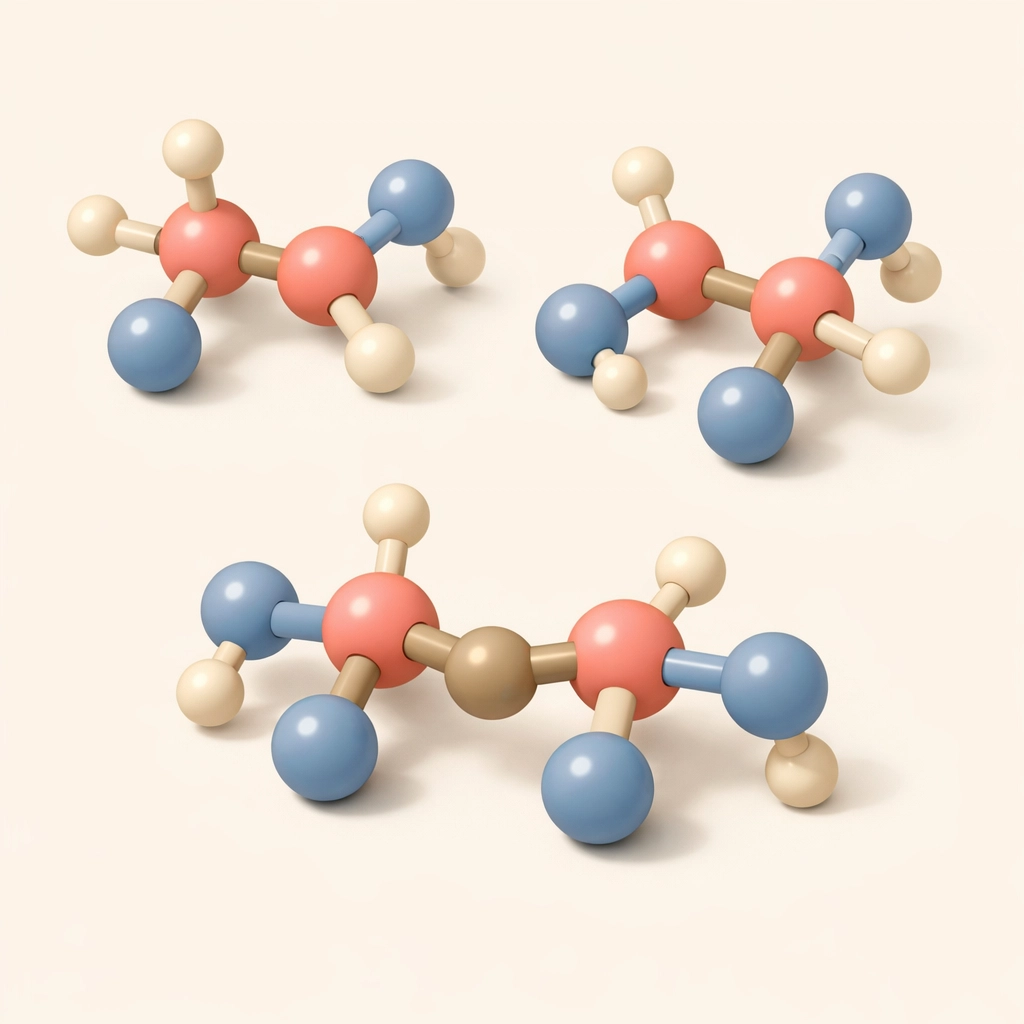
And finally, the real test: draw all the stereoisomers of tartaric acid.
Suddenly you’re dealing with chiral centres, enantiomers, planes of symmetry, and three-dimensional molecular structures. The question actually teaches you about stereoisomerism in the preamble, then asks you to apply it immediately to an unfamiliar molecule. Many students will have never covered this content. But that’s the point. Can you read, understand, and apply new information under exam conditions?
This is the Olympiad in a nutshell: start with something familiar, then ramp up the difficulty until you’re thinking at undergraduate level.
Why Bother? Three Compelling Reasons
1. Oxbridge & Top Universities Are Watching 👀
Let’s talk about university applications. Whether you’re applying for Natural Sciences at Cambridge, Chemistry at Imperial, or even Medicine at UCL, having “UK Chemistry Olympiad participant” on your UCAS form is gold dust.
It’s the ultimate super-curricular. In your personal statement, you can write about the specific concepts you encountered, maybe you’ll reference the stereoisomerism question, or how you tackled equilibrium in lateral flow tests. In interviews, you’ve got brilliant material to discuss. It shows intellectual curiosity, ambition, and willingness to go beyond the syllabus.
2. You’ll Build the “Grit” You Need for University-Level Science
University science isn’t like A Level. No one spoon-feeds you exam-style questions. You’re given unfamiliar problems and expected to figure them out using first principles. The Olympiad trains you for exactly this.
When I was at Oxford, the students who thrived weren’t necessarily the ones who’d memorized the most. They were the ones who could stay calm when faced with something they’d never seen before, break it down, and work through it systematically. The Chemistry Olympiad teaches you that skill.
3. It’s Actually Fun (Yes, Really!) 🎉
If you make it through Round 1, you’re invited to a four-day residential camp at the University of Cambridge. You’ll meet other chemistry-obsessed students from across the UK, attend lectures on quantum mechanics and advanced kinetics, do hands-on lab work, and compete for a place on the UK team for the International Chemistry Olympiad.
The international final brings together nearly 300 students from around 70 countries. It’s chemistry, travel, and making friends with people who actually understand your periodic table jokes. What’s not to love?

How to Prepare: Three Essential Tips
Tip 1: Start Early (Lower Sixth Students, This Means You!)
The competition is open to both Lower Sixth and Upper Sixth students. If you’re in Year 12, enter anyway. Treat it as a practice run. You’ll get exposure to the question style, build your confidence, and be in a much stronger position when you enter again next year.
I always encourage my students to have a go in Lower Sixth: even if they don’t expect to medal, the experience is invaluable.
Tip 2: Use the Right Resources
The Royal Society of Chemistry provides a brilliant Chemistry Olympiad Support Booklet packed with past questions and worked solutions. This isn’t just exam practice: it’s a teaching resource that shows you how to think through unfamiliar problems.
The solutions are written by different teachers, so you get varied approaches. Sometimes you’ll spot an analogy. Sometimes you’ll piece together data like a detective. This booklet is your best friend for preparation.
You can also find more past papers on the RSC website (www.rsc.org/olympiad). Work through them systematically, and don’t skip the questions that look scary: they’re the ones you’ll learn most from.
Tip 3: Don’t Panic When Questions Look Impossible
This is crucial: Olympiad questions are designed to look impossible at first glance. That’s not a bug, it’s a feature.
When you open the paper and see something completely unfamiliar, take a breath. Read the question carefully. Look for clues. What have they told you? What do you already know that might help? Can you break it into smaller parts?
The students who do best aren’t the ones who know everything: they’re the ones who stay calm, think logically, and refuse to give up.
The “Chloe” Edge: How I Help Students Crack These “Impossible” Puzzles
After 20+ years of teaching and my own time at Oxford, I’ve developed a bit of a sixth sense for how to decode Olympiad-style questions. I know which topics come up repeatedly (stereochemistry, thermodynamics, kinetics). I know the question patterns. And I know exactly how to train students to think like a university chemist rather than an exam robot.
When I work with students on Olympiad preparation, we don’t just practice questions: we build the underlying skills. How to read a question strategically. How to spot the hidden hints. How to construct a logical argument when you’re not 100% sure of the answer.
It’s not about cramming more facts into your head. It’s about training your brain to work differently.
If you’re a Chemistry Tutor Dubai student learning online, or an A Level student anywhere in the UK looking for an edge, Olympiad-specific coaching can make all the difference between feeling overwhelmed and feeling ready to tackle anything they throw at you.
Be Ambitious and Enter! 🚀
Look, the UK Chemistry Olympiad isn’t easy. It’s not supposed to be. But if you’re the kind of student who gets excited by a good puzzle, who wants to see what you’re really capable of, who’s aiming for a top university or just loves chemistry for its own sake: this is for you.
You’ll learn more. You’ll think harder. You’ll prove to yourself (and to admissions tutors) that you can handle genuinely challenging material. And who knows? You might even end up representing the UK on the world stage.
Ready to give it a go? If you’d like one-to-one coaching to help you prepare: whether you’re tackling stereoisomerism for the first time or fine-tuning your approach for Round 2: I’d love to help. Get in touch and let’s turn that “impossible” question into your next victory. ✨
Because the best way to survive the Chemistry Olympiad? Go in prepared, stay curious, and absolutely refuse to give up.

Oxford-Educated Chemistry Specialist
With over 20 years of teaching experience at some of the UK’s top independent schools, I help ambitious students bridge the gap between hard work and top-tier results. I specialise in GCSE, A Level, and IB Chemistry tuition for students targeting Grade 9s and A*s. Based in the UK but working globally, I provide 1-1 online support for families in South and West London, Dubai, and Hong Kong, ensuring students are perfectly prepared for competitive medical applications and Oxbridge entries.
I’ve helped students achieve top grades from schools such as Alleyn’s, Dulwich College, Tonbridge, Sevenoaks, Brighton College, Wycombe Abbey, Caterham, St Paul’s, Dubai College, Dubai British School and Harrow International School Hong Kong.
Contact me archardchloe@gmail.com to discuss how I can help your child excel in Chemistry.