

Blog
Beyond the Textbook: Using Oxbridge “Brain-Teasers” to Unlock Your Child’s Potential in GCSE and A Level Chemistry


Ever wondered why some students seem to get science while others just memorise it? The secret often lies in how they handle questions that don’t have an obvious answer in a textbook. At the highest level, like an Oxbridge interview, these are called “brain-teasers.” At GCSE, we call them the key to an A*.
The difference isn’t about natural talent or hours spent revising. It’s about the way a student approaches a problem they’ve never seen before. And the good news? This is a skill that can be taught, practised, and developed, often with surprisingly enjoyable results.
The Problem with Rote Learning
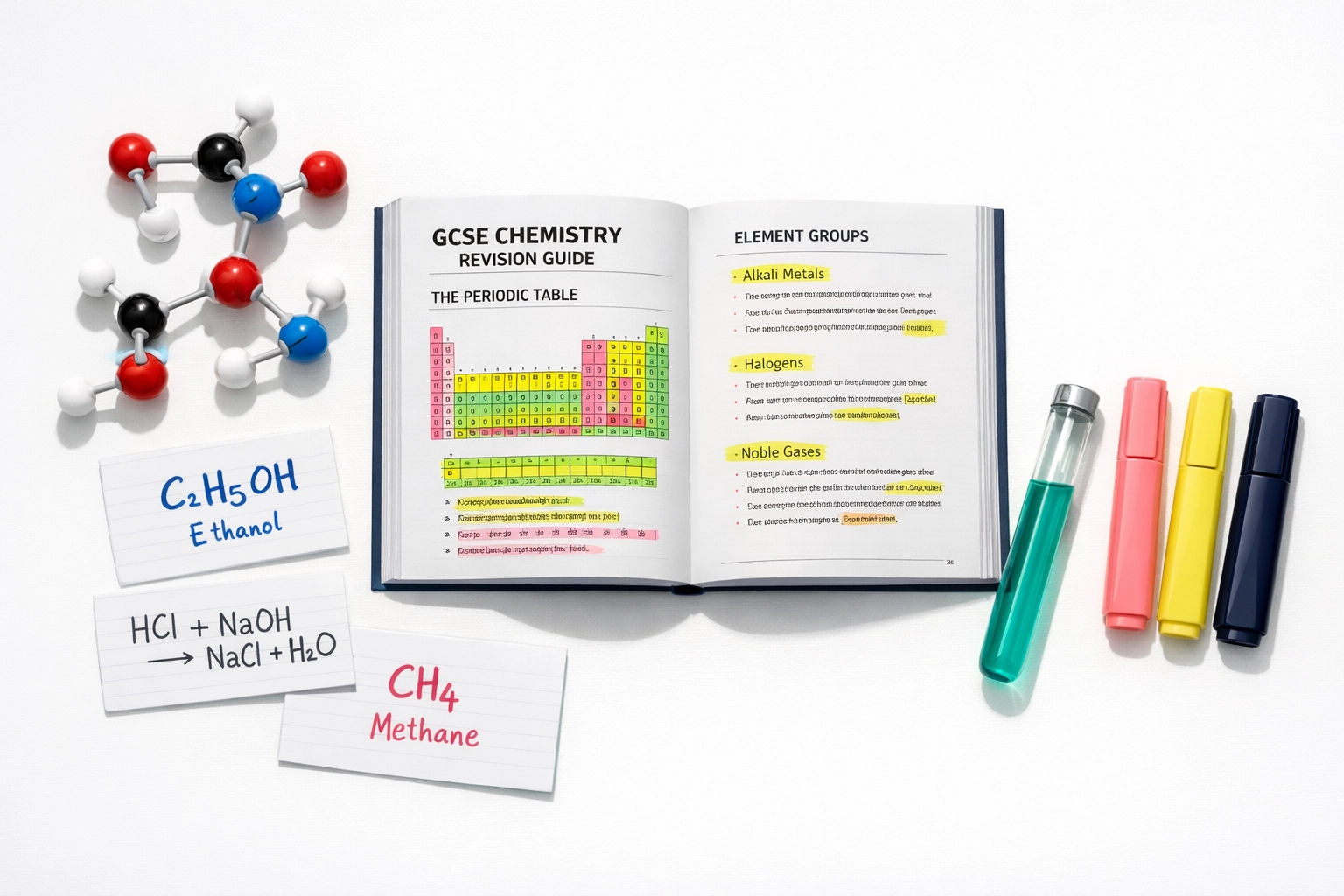
Let’s be honest: memorising the periodic table is useful. Knowing that sodium is in Group 1 and chlorine is a halogen forms the foundation of chemistry knowledge. But here’s what we see time and again with GCSE students, memorisation alone stops working when the questions get interesting.
Consider a student who has diligently learned that copper compounds produce green flames in a flame test. They can recall this fact perfectly in a straightforward question. But what happens when an exam paper asks them to explain why the flame is green? Or to predict what might happen with a compound they’ve never encountered?
This is where rote learning hits its limit.
The same applies to those wonderful estimation questions that appear in higher-tier papers and, more importantly, in real scientific thinking. “How many atoms are in a teardrop?” isn’t a question you can answer by flipping to the right page in a revision guide. It requires a student to connect different pieces of knowledge, about Avogadro’s number, about the molecular structure of water, about reasonable assumptions regarding the size of a teardrop, and weave them together into a logical chain of reasoning.
We find that students who rely purely on memorisation often freeze when faced with these questions. Not because they lack knowledge, but because they’ve never been taught how to use that knowledge flexibly. They’re looking for a formula to plug numbers into, rather than building an understanding from first principles.
Thinking Like a Scholar
At Oxbridge interviews, tutors deliberately ask questions that can’t be answered from memory. They want to see how a young person thinks when the path forward isn’t obvious. Questions like “Why don’t fish freeze?” or “Why are explosions a risk in flour mills?” aren’t designed to catch students out, they’re designed to reveal how minds work under gentle pressure.
The fascinating thing is that these questions typically require only A-level or even GCSE-level knowledge. The challenge isn’t the content; it’s the presentation. When a familiar concept appears in an unfamiliar wrapper, students have to genuinely understand it to respond well.
We’ve adopted this principle in our teaching, not to make things harder, but to make them deeper.
When we work with GCSE students, we introduce questions like:
- “How many molecules are in a glass of water?”
- “Why does the boiling point of water rise when salt is dissolved in it?”
- “Why do we blow on soup to cool it down?”
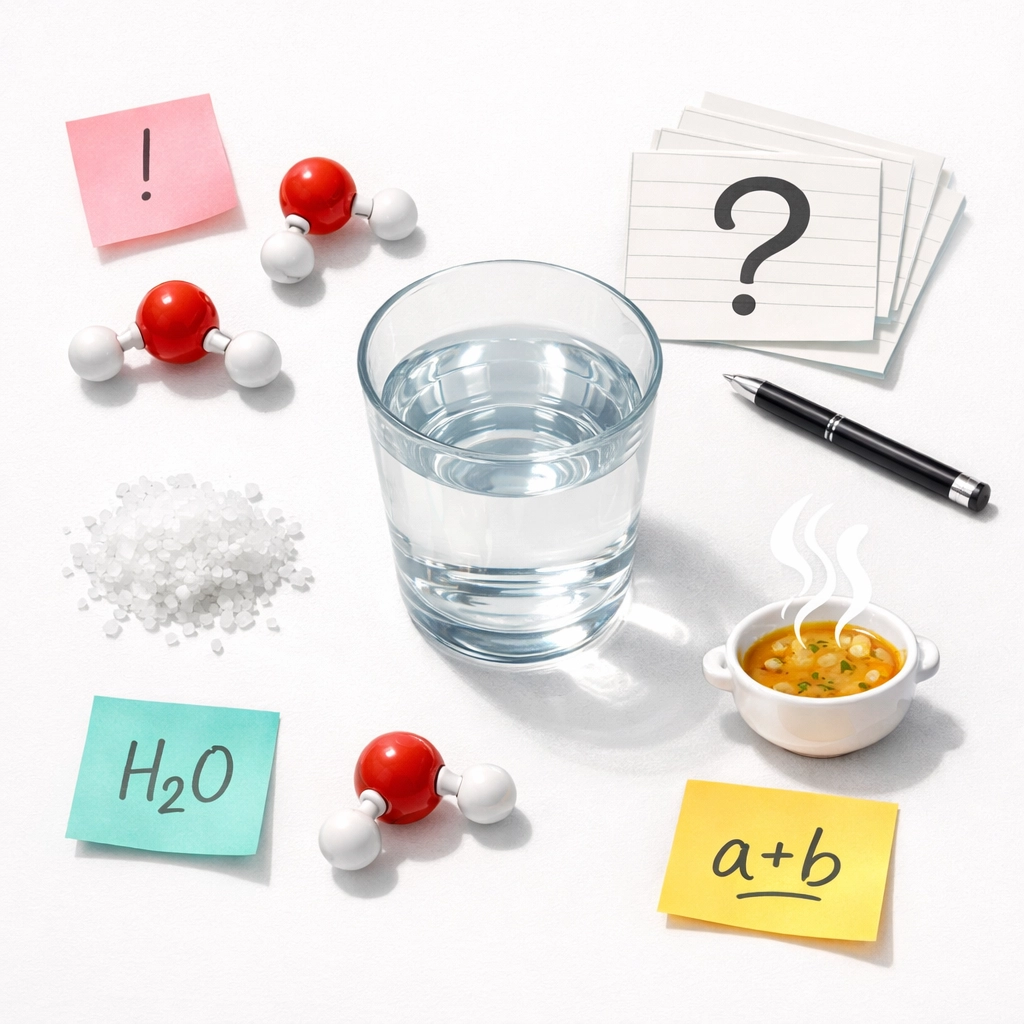
These aren’t trick questions. They’re invitations to think. And interestingly, once students get comfortable with this style of questioning, they often find it more engaging than traditional revision. There’s something satisfying about working through a puzzle rather than simply recalling a fact.
The key insight from Oxbridge interview research is worth sharing with your child: interviewers care more about your thought process than getting the “right” answer immediately. This principle applies equally at GCSE level. Examiners reward students who can show their working, articulate their reasoning, and demonstrate genuine understanding, even if they don’t arrive at a perfect answer.
Unlocking Potential Through First Principles
When a student learns to unpick a complex problem using first principles, something remarkable happens. They stop saying “I haven’t learned this” and start saying “How can I figure this out?”
This shift in mindset is, in many ways, more valuable than any individual piece of knowledge. It’s the difference between a student who feels defeated by an unexpected exam question and one who sees it as an interesting challenge.
We encourage students to vocalise their reasoning as they work through problems. This isn’t just a teaching technique, it’s a habit that helps them organise their thoughts and identify exactly where their understanding might need strengthening. When a student can explain each step aloud, they’re doing the same thing a scientist does when presenting research: making the invisible process of thinking visible and testable.

One approach we find particularly effective is encouraging students to embrace uncertainty. If they get stuck, the goal isn’t to panic or give up, it’s to identify which step is unclear and propose what might work next. This keeps them engaged with the problem rather than abandoning it, and it’s precisely the quality that impresses examiners (and, later, university interviewers).
The effectiveness of brain-teasers lies not in memorising answers to specific questions, though practising variations certainly helps build adaptability. It lies in developing the habit of breaking unfamiliar problems into manageable steps using foundational knowledge. This skill deepens chemistry understanding across all topics, from atomic structure to organic reactions.
The Easter Advantage
Our 4-day GCSE Science Revision Course this Easter isn’t simply a syllabus crawl. While we certainly ensure students are confident with the core content they need, we also bring that high-level academic rigour into the classroom, showing them the “why” that makes the “how” easy.
With tutors like Chloe (formerly of Alleyn’s School), Ruth, and Kate, students experience teaching that goes beyond textbook repetition. We ask the kinds of questions that stretch thinking, build confidence, and prepare students not just for their GCSE exams, but for the A-levels and university applications that follow.
The course takes place at Harris Boys Academy in East Dulwich, a local venue that’s easy to reach for families across South London. Running from 7th to 10th April 2026, it offers an intensive but supportive environment where students can make meaningful progress during the Easter break.
We keep our groups small deliberately. This ensures every student receives individual attention and has the space to ask questions, work through problems, and build the kind of deep understanding that transforms exam performance.
A Different Kind of Confidence
There’s a particular kind of confidence that comes from knowing you can figure things out. It’s different from the confidence of having memorised everything, because no one can memorise everything, and exams have a habit of including questions that feel unfamiliar even to the most prepared students.
When your child develops the ability to approach an unexpected question with curiosity rather than anxiety, they’re building a skill that will serve them far beyond their GCSEs. Whether they go on to study chemistry at A-level, pursue medicine or engineering, or take an entirely different path, the capacity to think clearly under pressure is invaluable.
This is what we mean by “unlocking potential.” It’s not about pushing students to achieve grades they’re not capable of. It’s about helping them access the understanding they already have, and teaching them to apply it with flexibility and confidence.
Give Your Child the Academic Edge This Easter
If this approach resonates with you, we’d love to welcome your child to our Easter revision course.
GCSE Science Revision Course
Dates: 7th–10th April 2026
Venue: Harris Boys Academy, East Dulwich
We keep availability limited to ensure every student receives the attention they deserve. You can find full details and book a place on our courses page.
If you have any questions about whether the course would be a good fit for your child, please do get in touch. We’re always happy to have a conversation and help you decide what’s right for your family.

Chloe Archard | Oxford-Educated Chemistry Specialist
With over 20 years of teaching experience at some of the UK’s top independent schools, I help ambitious students bridge the gap between hard work and top-tier results. I specialise in GCSE, A Level, and IB Chemistry tuition for students targeting Grade 9s and A*s. Based in the UK but working globally, I provide 1-1 online support for families in South and West London, Dubai, and Hong Kong, ensuring students are perfectly prepared for competitive medical applications and Oxbridge entries. Contact me archardchloe@gmail.com to discuss how I can help your child excel in Chemistry.