

Blog
Can You Weigh a Molecule with a Ruler? Mastering the Art of the ‘Estimation Question’ in Chemistry Oxford Interviews


Here’s a question that makes most GCSE students freeze: “How would you weigh a single water molecule using only a ruler?”
There’s no formula sheet that helps. No worked example in the textbook. And if your child’s instinct is to say, “That’s impossible,” they’re not wrong, but they’re also missing the point entirely.
This is what’s called an estimation question (or a Fermi problem, named after the physicist Enrico Fermi who loved these brain-teasers). And if your teen has their sights set on Oxbridge, Imperial, or any other top-tier university, they’re going to encounter questions like this in interviews. The good news? These questions aren’t designed to catch students out. They’re designed to reveal how a student thinks.
At Success in STEM, we see this gap all the time. Students arrive with flawless exam technique, perfect recall, neat notes, practiced equations. But when faced with something they haven’t seen before, they panic. That’s because GCSE Science, for all its depth, rewards accuracy and memorisation. Oxbridge interviews reward intellectual bravery.
So let’s break down what these estimation questions are really asking for, and how we teach students to tackle them with confidence.
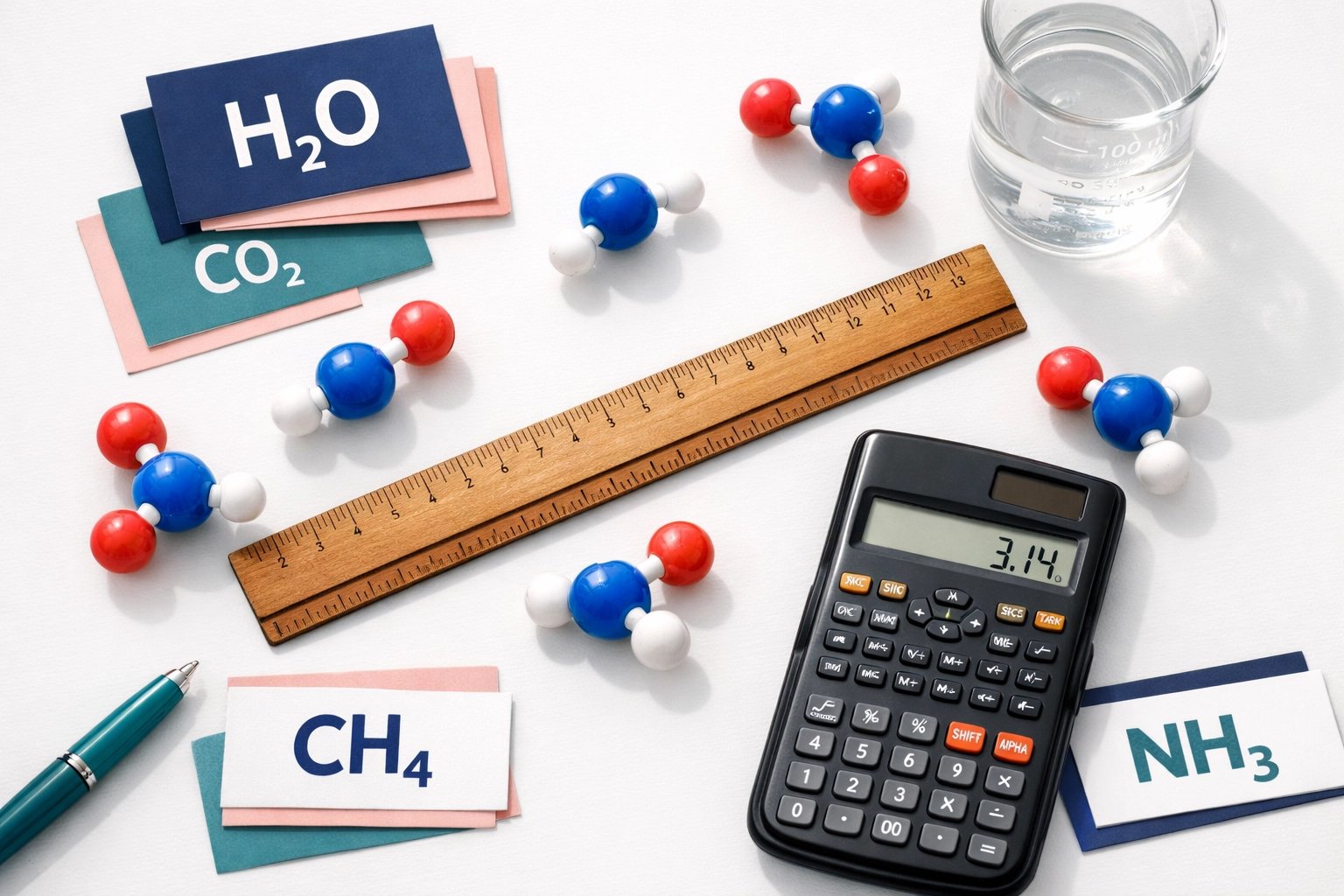
What is an Estimation Question, Really?
An estimation question isn’t about getting the “right” answer. It’s about showing your working, thinking aloud, and demonstrating that you can apply foundational knowledge to unfamiliar problems.
Let’s return to our water molecule. A student hearing this question for the first time might think it’s a trick. But here’s the key: it’s not about the ruler. It’s about using what you already know from Chemistry and Physics to bridge the gap between the macroscopic world (things we can measure) and the molecular world (things we can’t).
A strong answer might go something like this:
“Well, I can’t weigh a single molecule directly with a ruler, but I could estimate its mass if I think about the density of water and the volume of a single molecule.”
Already, this student has done three things Oxbridge tutors love:
- Acknowledged the limits of the question (you can’t literally do this)
- Reframed the problem into something solvable
- Identified which scientific principles might help (density, volume, Avogadro’s number)
From here, the student might sketch out a rough calculation:
- The density of water is 1 g/cm³ (GCSE knowledge)
- A mole of water (H₂O) has a mass of 18 g and contains 6.02 × 10²³ molecules (also GCSE knowledge)
- If I had a cube of water 1 cm on each side, it would contain about 3.3 × 10²² molecules
- Therefore, one molecule weighs roughly 3 × 10⁻²³ grams
Notice what’s happening here. The student isn’t reaching for obscure university-level physics. They’re using GCSE Chemistry content: molar mass, Avogadro’s constant, density: and applying it in a new way. That’s the skill Oxbridge is testing for.
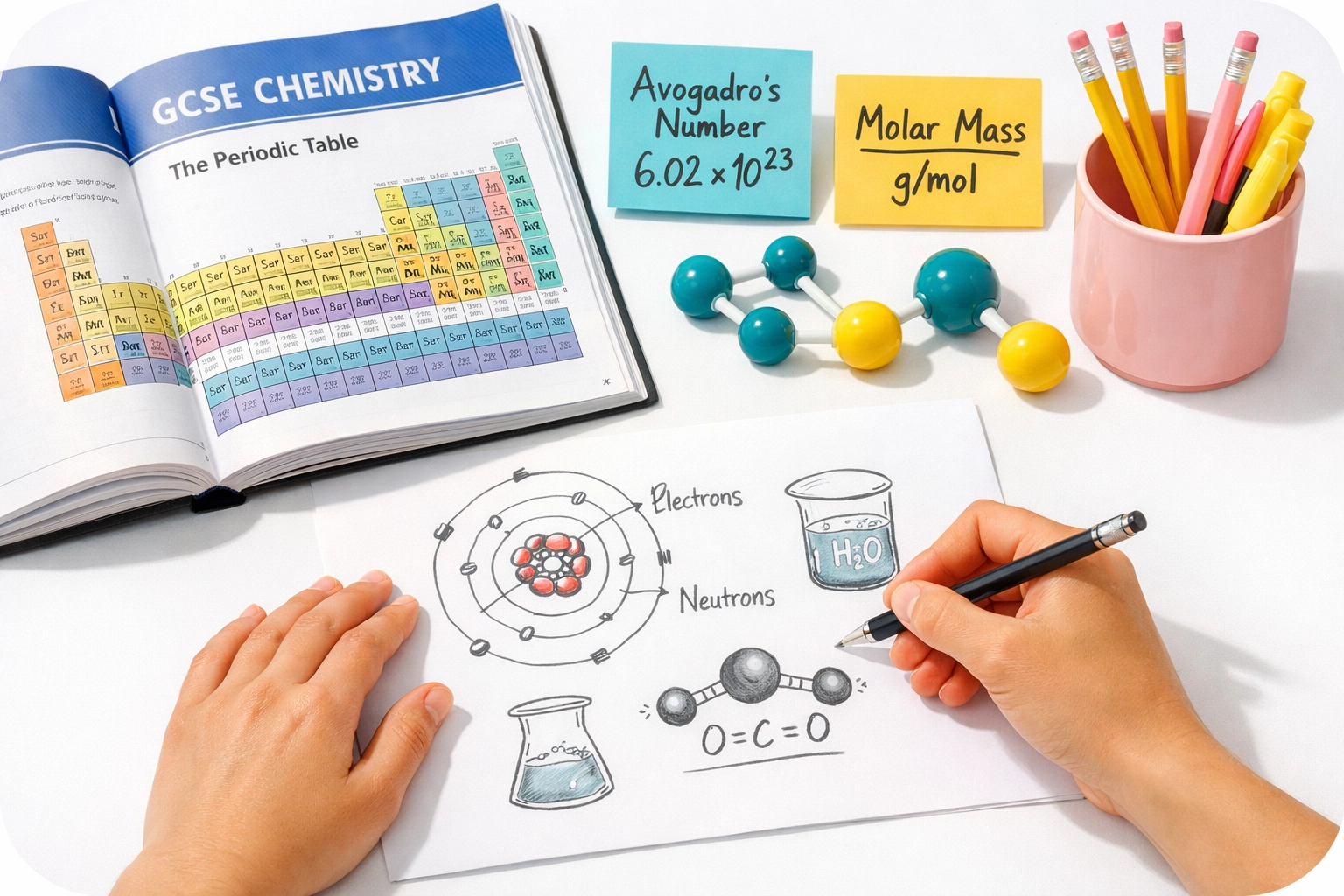
Why Do Top Universities Love These Questions?
Admissions tutors at Oxford, Cambridge, and Imperial aren’t trying to humiliate students. They’re trying to see how a young person handles uncertainty, collaborates in real-time, and applies their knowledge beyond the predictable structure of an exam paper.
These estimation questions reveal:
- Lateral thinking: Can the student reframe an “impossible” question into something solvable?
- Scientific intuition: Do they know which principles matter and which don’t?
- Resilience: How do they react when they don’t know the answer immediately?
- Intellectual curiosity: Do they engage with the problem, or do they shut down?
Ruth, one of our tutors who studied Chemistry at Cambridge, puts it beautifully: “The interview isn’t about showing you’re perfect. It’s about showing you’re teachable.”
And that’s a skill we can absolutely develop: even at GCSE level.
The Gap Between GCSE and Oxbridge Thinking
Here’s the challenge: most GCSE Science teaching focuses on what you need to know, not how to think with it. Students learn the ideal gas equation, the structure of the atom, the energy changes in reactions. They’re tested on recall, application to familiar scenarios, and calculation accuracy.
All of that is essential. But it doesn’t prepare students for the moment when an Oxbridge interviewer says, “Estimate how many air molecules are in this room right now.”
Suddenly, the student needs to:
- Decide which variables matter (room dimensions, atmospheric pressure, molar volume)
- Make reasonable assumptions (the room is roughly 4m × 5m × 3m; air is mostly nitrogen and oxygen)
- Estimate an order of magnitude (not an exact answer)
- Communicate their reasoning clearly
This is where many bright students stumble: not because they lack knowledge, but because they’ve never been taught to play with that knowledge in this way. They’ve been trained to find the right answer. They haven’t been trained to think aloud through uncertainty.
At Success in STEM, we start building this habit early. Even with Year 10 students working towards their GCSEs, we introduce “Why?” questions that go beyond the specification. Not to overwhelm them, but to stretch their thinking.
How We Teach Estimation Thinking at GCSE Level
You don’t need to wait until A-Level or university interviews to develop this skill. In fact, GCSE is the perfect time to start: because students already have the foundational knowledge they need.
Here’s how Kate, Chloe, and Ruth approach this in our GCSE Science Revision Course in South London:
1. Start with “What Do We Already Know?”
Before jumping into a tricky question, we help students list out the relevant principles. For the water molecule question, that might be:
- Density of water
- Molar mass of H₂O
- Avogadro’s number
- The concept of volume
This step alone builds confidence. Students realise they do know something useful.
2. Break the Problem Into Chunks
Estimation questions feel overwhelming because they seem impossibly large. We teach students to break them down:
- What’s the first thing I can calculate?
- What assumption do I need to make to move forward?
- What’s a reasonable approximation here?
This mirrors the way scientists actually work. Real-world problems rarely have neat, textbook-style solutions.
3. Celebrate “Good Enough” Answers
One of the hardest mindset shifts for high-achieving students is accepting that estimation questions don’t have a single correct answer. An answer that’s within an order of magnitude is excellent.
If a student estimates a water molecule weighs 10⁻²³ grams and the “real” answer is 3 × 10⁻²³ grams, that’s not wrong: it’s scientifically sound reasoning.
We see this confidence gap often with students from schools like Alleyn’s or JAGS, who are used to aiming for 100% accuracy. Learning to be comfortable with approximation is a skill in itself.
Why This Matters for Grade 9 Students
If your child is aiming for Grade 9s in GCSE Science: or planning to take Science at A-Level and beyond: this kind of thinking is essential. Not just for university interviews, but for understanding science at a deeper level.
The difference between a Grade 7 student and a Grade 9 student often isn’t knowledge. It’s the ability to:
- Apply familiar concepts to unfamiliar contexts
- Spot connections between different topics
- Explain why an answer makes sense, not just what the answer is
These are exactly the skills we focus on in our GCSE Science Revision Course in Dulwich. Over four days at Harris Boys’ Academy (April 7–10), students don’t just revise content: they learn to think like scientists.
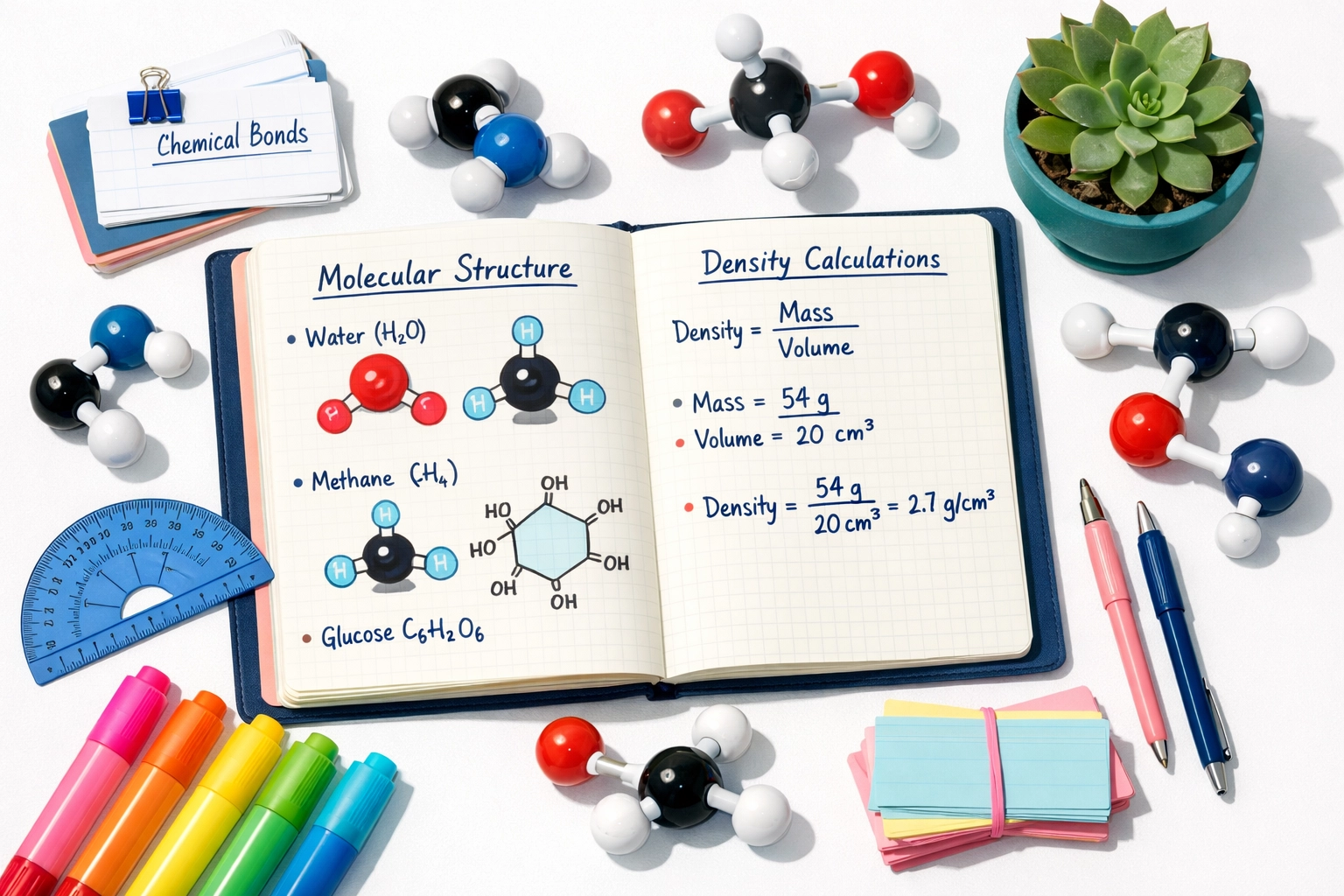
The Real Answer: You Can’t Weigh a Molecule with a Ruler (But You Can Estimate It)
Here’s the punchline: in real laboratories, scientists don’t use rulers to weigh molecules. They use sophisticated techniques like mass spectrometry, which can measure molecular mass to within 1 Dalton. They use gel permeation chromatography to separate molecules by size, or light scattering detection to infer molecular weight from the way particles interact with light.
But here’s what’s interesting: all of these techniques rest on the same foundational principles students learn at GCSE. Density. Volume. Molar mass. The relationship between the macroscopic and the molecular.
An Oxbridge interviewer asking about the ruler isn’t testing whether a student knows about mass spectrometry. They’re testing whether a student can think their way from the known (GCSE principles) to the unknown (a seemingly impossible question).
And that’s a skill we teach.
Building These Habits Early
Parents often ask us: “When should my child start preparing for Oxbridge interviews?”
Our answer is always the same: right now. Not because they need to cram years of extra content, but because the habits of mind: curiosity, resilience, lateral thinking: take time to develop.
The GCSE Science Revision Course in London isn’t just about securing Grade 9s (though it absolutely helps with that). It’s about laying the groundwork for the kind of scientific thinking that opens doors later.
When Kate works through an exam question with students, she doesn’t just check the answer. She asks, “How did you know to do that step?” or “What would happen if we changed this variable?” Small shifts in approach, but they completely change how students engage with the subject.

What to Expect from Our Dulwich Revision Course
If this style of teaching sounds like what your child needs, we’d be very happy to welcome them to our GCSE Science Revision Course in South London this April.
Over four focused days at Harris Boys’ Academy (April 7–10), students will:
- Revise the core GCSE content they need for Grade 9s
- Practise high-level exam questions that go beyond rote recall
- Develop the “why?” thinking that tutors at top universities value
- Build confidence in tackling unfamiliar problems
Kate, Chloe, and Ruth bring years of experience supporting students from Dulwich, Alleyn’s, JAGS, and other local schools. They understand the pressure these students are under: and they know how to help them perform at their best.
Classes are small, supportive, and focused. This isn’t about cramming information. It’s about refining understanding, sharpening exam technique, and building intellectual confidence.
If this feels like the right fit for your child, you can find out more and book a place here: GCSE Science Easter Revision Course.
So, can you weigh a molecule with a ruler? Not literally. But with the right approach, a curious mind, and a solid grasp of GCSE principles, you can estimate it: and in doing so, demonstrate exactly the kind of thinking that opens doors to the best universities in the country.
That’s the skill we teach. And it starts long before the interview room.

Oxford-Educated Chemistry Specialist
With over 20 years of teaching experience at some of the UK’s top independent schools, I help ambitious students bridge the gap between hard work and top-tier results. I specialise in GCSE, A Level, and IB Chemistry tuition for students targeting Grade 9s and A*s. Based in the UK but working globally, I provide 1-1 online support for families in South and West London, Dubai, and Hong Kong, ensuring students are perfectly prepared for competitive medical applications and Oxbridge entries.
I’ve helped students achieve top grades from schools such as Alleyn’s, Dulwich College, Tonbridge, Sevenoaks, Brighton College, Wycombe Abbey, Caterham, St Paul’s, Dubai College, Dubai British School and Harrow International School Hong Kong.
Contact me archardchloe@gmail.com to discuss how I can help your child excel in Chemistry.