

Blog
From the Periodic Table to the C-Suite: Why Chemistry Graduates are the CEOs of Tomorrow


When parents think about A Level Chemistry, they often picture lab coats, test tubes, and perhaps a clear pathway to medicine or research. What they rarely imagine is the corner office: yet that’s increasingly where Chemistry graduates are finding themselves.
Andrew Mackenzie, who holds a PhD in Chemistry, led BHP, one of the world’s largest mining companies. Jack Truong, CEO of James Hardie Industries, earned his PhD in Chemical Engineering. In Australia, science degrees are now equal first with commerce as the most popular undergraduate qualification among top CEOs, with more than one in five of the country’s top 50 chief executives having studied science at university.
This isn’t a coincidence. The skills your child develops through Chemistry: particularly at GCSE level, where the foundational thinking patterns are established: are precisely the skills that translate to high-level corporate leadership. Let’s explore why.
The Analytical Rigor: Deciphering Complexity
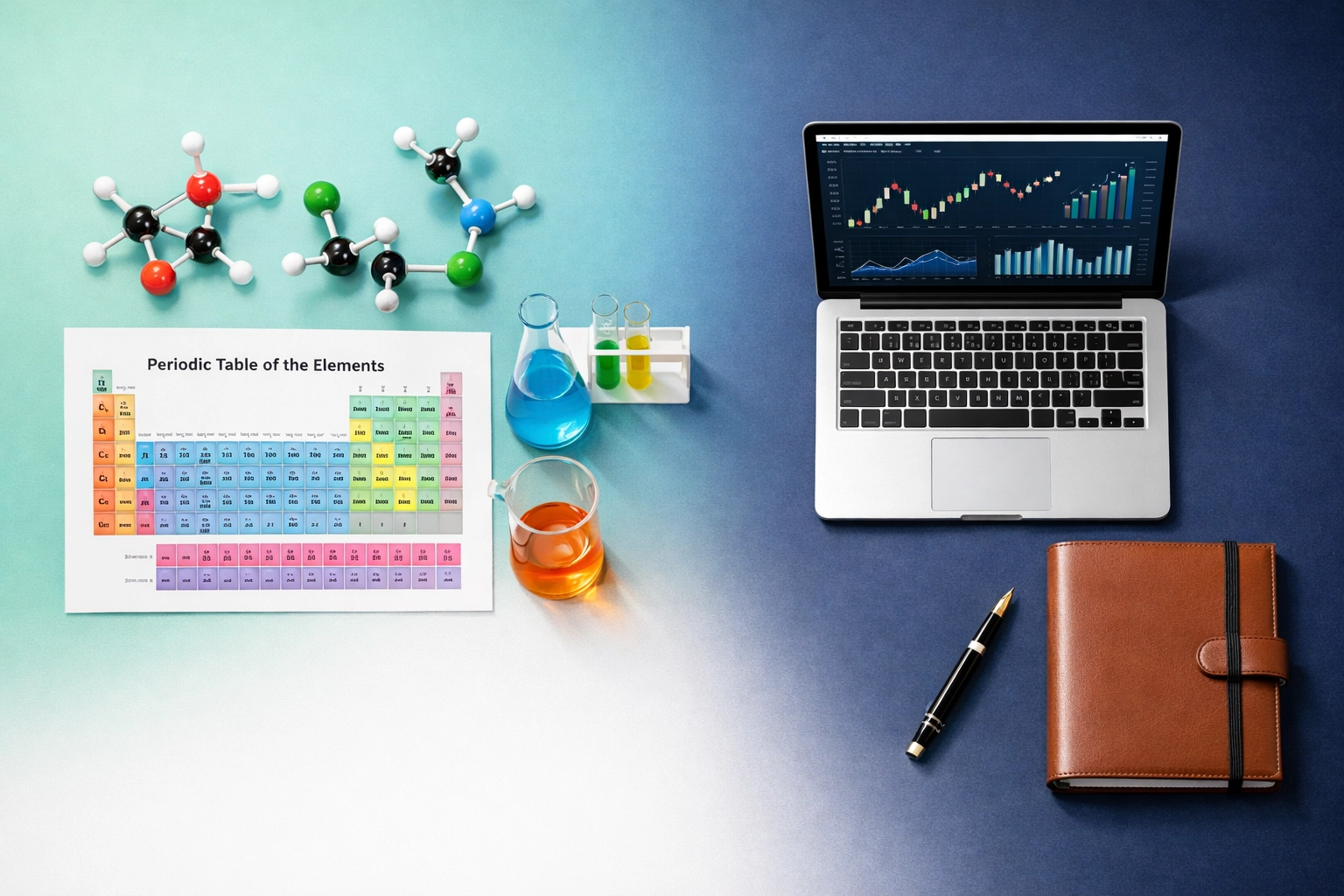
A CEO doesn’t make decisions based on hunches. They parse complex data sets, identify patterns, and extract meaningful insights from noise. This is exactly what Chemistry teaches from the very first balancing equation.
When your child calculates molar ratios or interprets reaction yields, they’re learning to look at raw information and ask: What does this actually tell me? They develop the discipline to show their working, to check their logic, and to question whether their answer makes sense in context.
This analytical rigor becomes second nature. It’s the difference between someone who can look at a quarterly financial report and see numbers, and someone who can look at the same report and identify the operational inefficiency causing a margin squeeze.
In our experience working with students aiming for top grades, we see this skill develop most strongly when Chemistry is taught with depth rather than speed. Students who memorise facts for exams may achieve good marks, but those who truly understand why reactions behave as they do: who can predict outcomes based on first principles: develop the analytical confidence that serves them for decades.
Logic and Multi-Step Problem Solving
Chemistry problems are rarely simple. Calculate the concentration. Use that to find the volume. Apply that volume to determine the mass. Now convert to moles. Finally, find the percentage yield.
Every multi-step calculation in Chemistry is training your child’s brain to hold multiple variables in working memory, to see how one answer feeds into the next question, and to maintain logical coherence across a complex chain of reasoning.
This is precisely the skillset required for strategic business decisions. A CEO must consider: If we expand into this market, what will that mean for our supply chain? How will that affect our capital allocation? What does that imply for our competitive positioning in our core market?
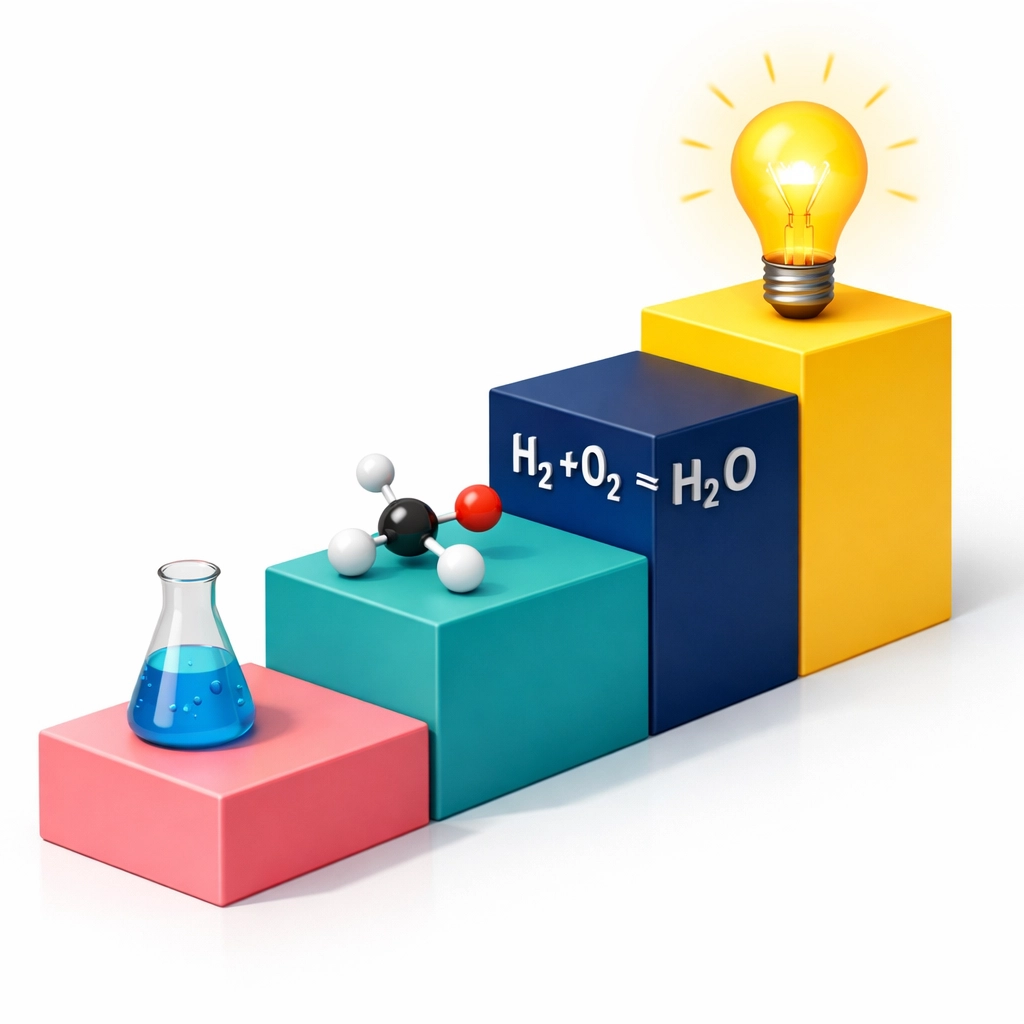
The capacity to think several steps ahead, to recognise dependencies, and to maintain logical rigour throughout: this is what distinguishes competent managers from visionary leaders. And it’s exactly what your child practices every time they work through a titration calculation or predict the products of a displacement reaction.
We often see students rush through these problems, looking for shortcuts. But the students who achieve Grade 9s are those who’ve learned to trust the process, to work methodically, and to check each step. That patience and logical discipline is precisely what Fortune 500 boards look for when appointing their next CEO.
Systems Thinking: The Periodic Table as Training for Organisations
Perhaps the most valuable skill Chemistry teaches: and the one least obvious to parents: is systems thinking.
Change the temperature in a reaction, and you don’t just change the speed. You might shift the equilibrium position. You might favour an endothermic reverse reaction. You might denature a catalyst. One variable change ripples through the entire system.
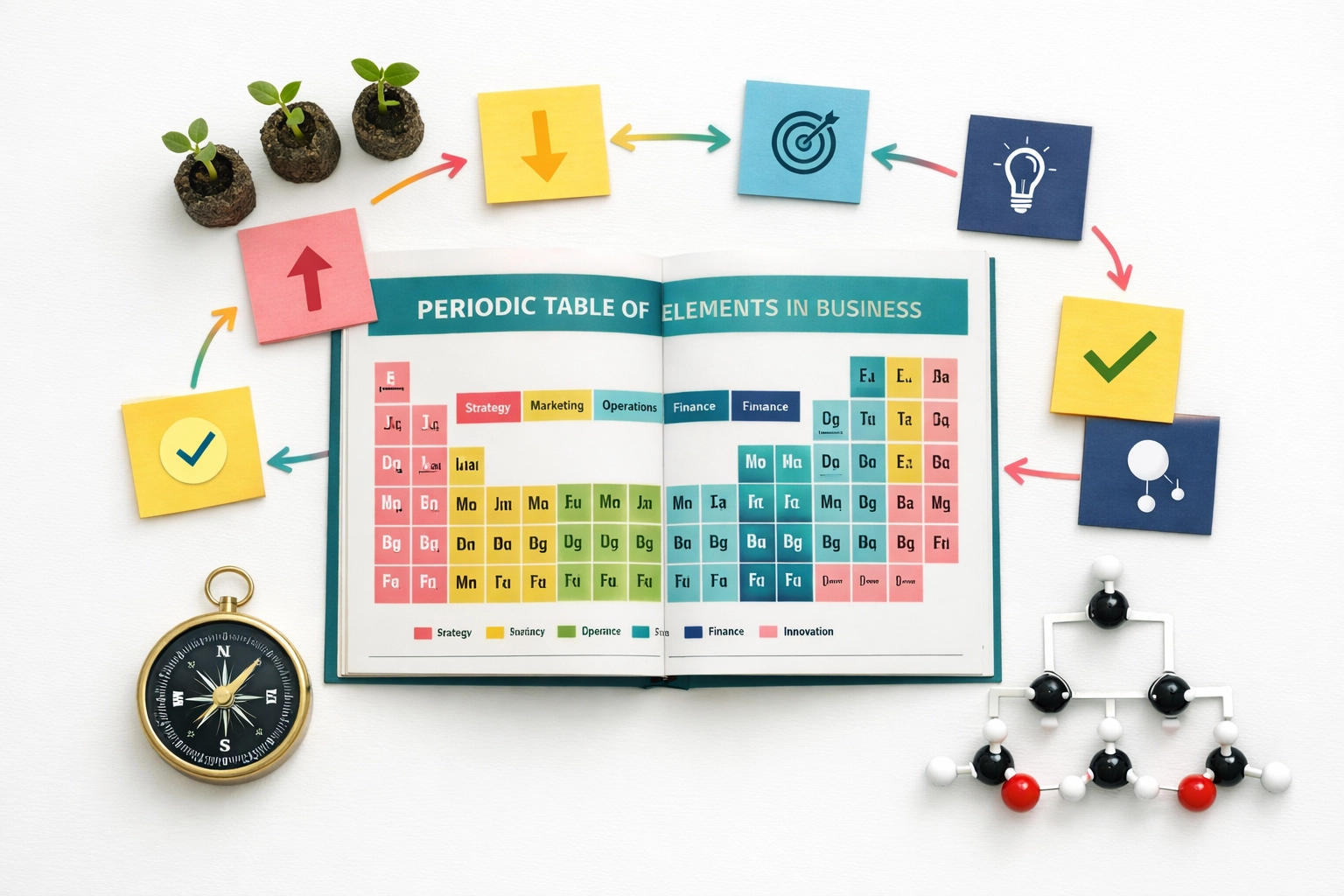
This is how large organisations work. Introduce a new product line, and you don’t just add revenue. You strain your production capacity. You dilute your brand positioning. You shift internal resource allocation. You create new competitive dynamics.
Chemistry students learn to trace these cascading effects. They learn that systems are interconnected, that actions have second-order consequences, and that understanding the whole is more valuable than memorising isolated facts.
The Periodic Table itself is a masterclass in systems thinking. Elements aren’t random: they’re organised by patterns of behaviour. Group 1 metals all react vigorously with water because of their electronic structure. Transition metals all form coloured compounds for a common underlying reason. Once you understand the system, you can predict behaviour you’ve never specifically studied.
This is how exceptional CEOs think. They don’t just respond to individual problems. They understand the underlying structures that generate those problems. They see the organisation as an interconnected system where changing one element requires consideration of the whole.
The Success in STEM Difference
At Success in STEM, we’ve built our approach around a simple observation: students who deeply understand why Chemistry works as it does develop transferable thinking skills that extend far beyond the exam hall.
We don’t teach to the mark scheme. We teach to build genuine understanding: the kind that allows a student to approach an unfamiliar problem with confidence rather than panic. The kind that stays with them when they’re leading a team, making strategic decisions, or solving problems that don’t come with a model answer.
Our tutors: Kate, Chloe, and Ruth: all bring extensive experience in making these connections explicit for students. They help young people see that balancing equations isn’t just about getting marks; it’s about developing logical discipline. That Le Chatelier’s Principle isn’t just exam content; it’s training in understanding how systems respond to change.
This approach requires time and space. It’s why we keep our groups small, why we encourage questions, and why we focus on building confidence alongside knowledge. Students who feel they understand Chemistry, rather than simply memorising it, develop the intellectual confidence that serves them throughout their academic and professional lives.
Building the Foundation Now
If your child is working towards their GCSEs, they’re at a pivotal moment. The thinking patterns they develop now: the habit of working logically through multi-step problems, the discipline of checking their reasoning, the confidence to approach unfamiliar questions: these become part of how they think.
A Grade 9 in Chemistry isn’t just a qualification. It’s evidence that your child has developed elite analytical skills, that they can handle complexity with calm logic, and that they understand systems rather than just memorising facts.
These are the foundations of leadership. And they’re built one well-understood concept at a time.
The Easter Opportunity
This April, we’re running our GCSE Science Revision Course in Dulwich at Harris Boys’ Academy (April 7-10). This intensive course brings together Kate, Chloe, and Ruth to provide the focused support that distinguishes good results from exceptional ones.
We work with students who are already performing well but want to ensure they reach their full potential. Over four days, we revisit key concepts with depth, practice the exam technique that secures marks, and build the confidence students need to approach papers with calm assurance.
This isn’t about cramming. It’s about consolidating understanding, refining technique, and ensuring that your child walks into their exams knowing they’re genuinely prepared.
Places are limited by design: we maintain small groups so every student receives individual attention. If this sounds like the right support for your child, we’d be very happy to welcome them.
You can find full details and booking information for our GCSE Science Revision Course in South London on our website.
The Long View
Your child’s GCSE years pass quickly, but the thinking skills they develop now stay with them. Chemistry: taught with depth and understanding: builds the analytical rigor, logical discipline, and systems thinking that distinguishes tomorrow’s leaders.
Whether your child goes on to study Chemistry at university, pursues medicine, engineering, or takes an entirely different path, these foundational skills travel with them. They become part of how they approach problems, make decisions, and understand the world.
That’s why we take this work seriously. And that’s why parents across South London trust us to support their children during these crucial years.
If you’d like to discuss how we can support your child’s progress, we’re here. Our GCSE Science Revision Course London offers the expertise and focused attention that helps strong students achieve outstanding results.
Because sometimes, the path to the C-suite begins with understanding the Periodic Table.

Oxford-Educated Chemistry Specialist
With over 20 years of teaching experience at some of the UK’s top independent schools, I help ambitious students bridge the gap between hard work and top-tier results. I specialise in GCSE, A Level, and IB Chemistry tuition for students targeting Grade 9s and A*s. Based in the UK but working globally, I provide 1-1 online support for families in South and West London, Dubai, and Hong Kong, ensuring students are perfectly prepared for competitive medical applications and Oxbridge entries.
I’ve helped students achieve top grades from schools such as Alleyn’s, Dulwich College, Tonbridge, Sevenoaks, Brighton College, Wycombe Abbey, Caterham, St Paul’s, Dubai College, Dubai British School and Harrow International School Hong Kong.
Contact me archardchloe@gmail.com to discuss how I can help your child excel in Chemistry.