

Blog
Giant Covalent Structures vs Molecular Structures: What’s the Difference?


If you’ve ever stared at your A Level Chemistry notes and wondered why diamond is rock-hard while ice melts in your hand, even though both involve covalent bonding, you’re asking exactly the right question. 🌟
Understanding the difference between giant covalent structures and molecular structures is one of those foundational topics that comes up again and again in exams. Get this clear in your head, and you’ll find that questions about melting points, hardness, conductivity, and solubility suddenly make a lot more sense.
Let’s break it down together, no jargon overload, I promise.
What Are Molecular Structures?
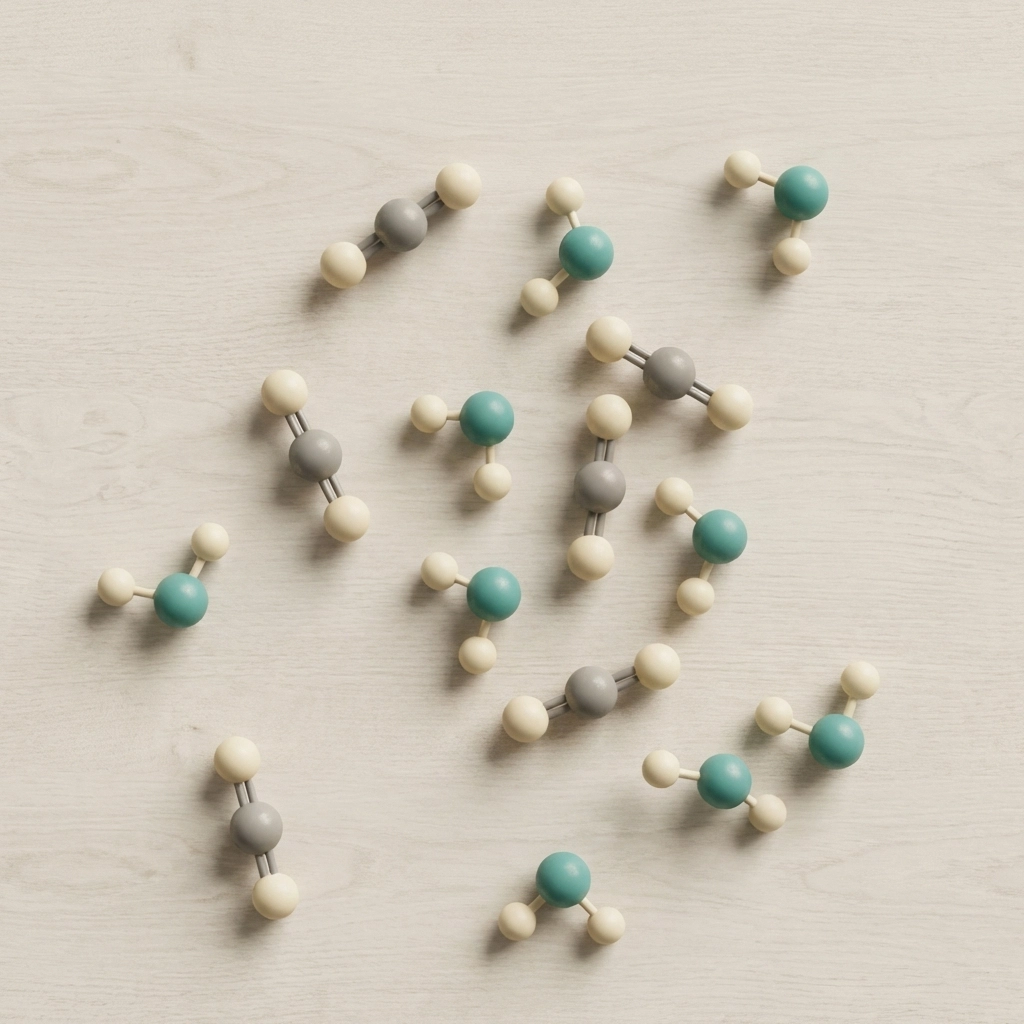
Molecular structures (sometimes called simple molecular structures) are made up of small, discrete molecules. Each molecule contains a fixed number of atoms held together by strong covalent bonds within the molecule.
Here’s the key thing: the molecules themselves are held together by weak intermolecular forces, like van der Waals forces or hydrogen bonds, not by covalent bonds.
Examples you’ll see in exams:
- Water (H₂O)
- Carbon dioxide (CO₂)
- Iodine (I₂)
- Methane (CH₄)
- Oxygen (O₂)
Think of molecular structures like a jar of marbles. Each marble (molecule) is its own complete unit. The marbles might be touching each other, but they’re not stuck together permanently, you can easily separate them.
Properties of Molecular Structures
Because the intermolecular forces are weak, molecular substances typically have:
- Low melting and boiling points – It doesn’t take much energy to overcome those weak forces between molecules. That’s why water boils at 100°C and iodine sublimes easily.
- Soft or brittle as solids – The molecules can move past each other without much resistance.
- Poor electrical conductivity – There are no free electrons or ions to carry a charge, even when molten or dissolved.
- Often soluble in non-polar solvents – “Like dissolves like.” Non-polar molecular substances dissolve well in non-polar solvents.
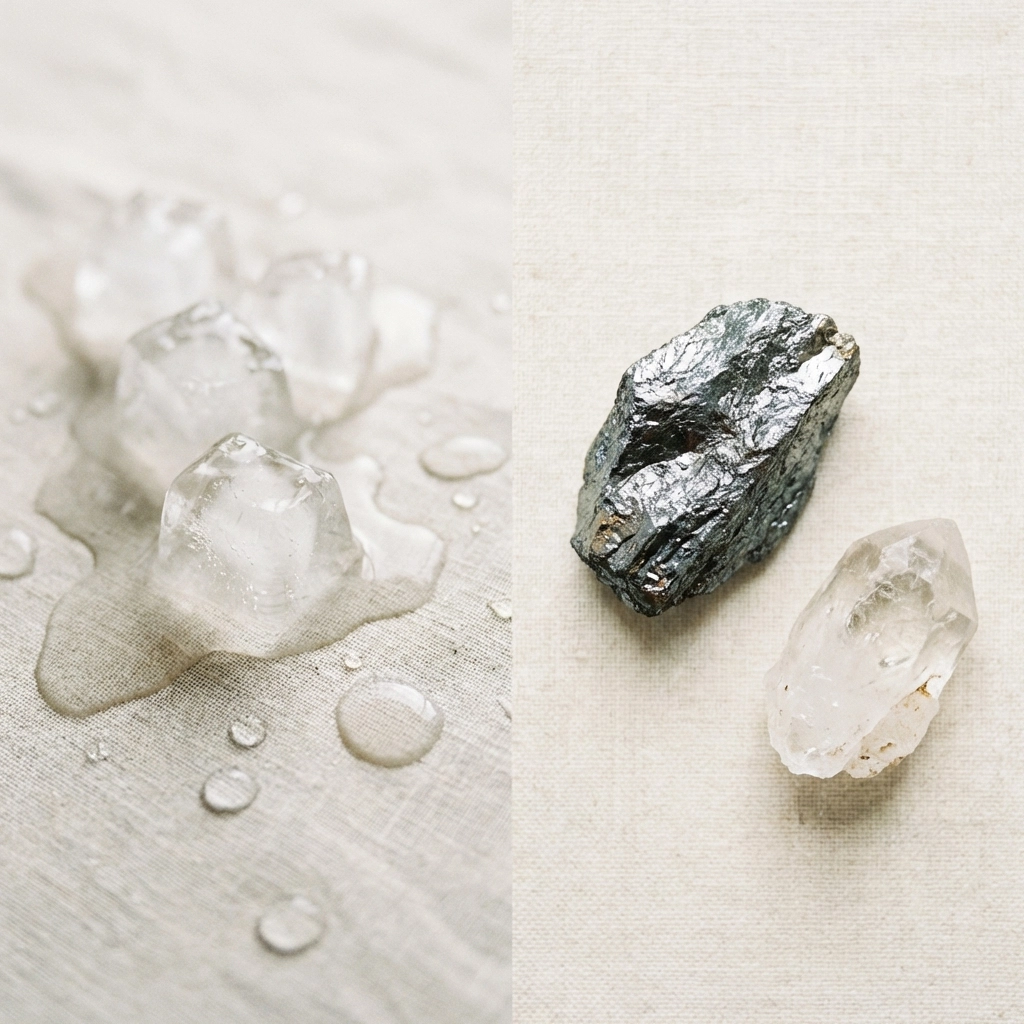
Real-life example: Ice is a molecular solid. The water molecules are held in a lattice by hydrogen bonds, but these are still relatively weak. That’s why ice melts at just 0°C, you don’t need extreme temperatures to break those forces.
What Are Giant Covalent Structures?
Now, let’s talk about giant covalent structures (also called macromolecular structures or network covalent structures). These are completely different beasts.
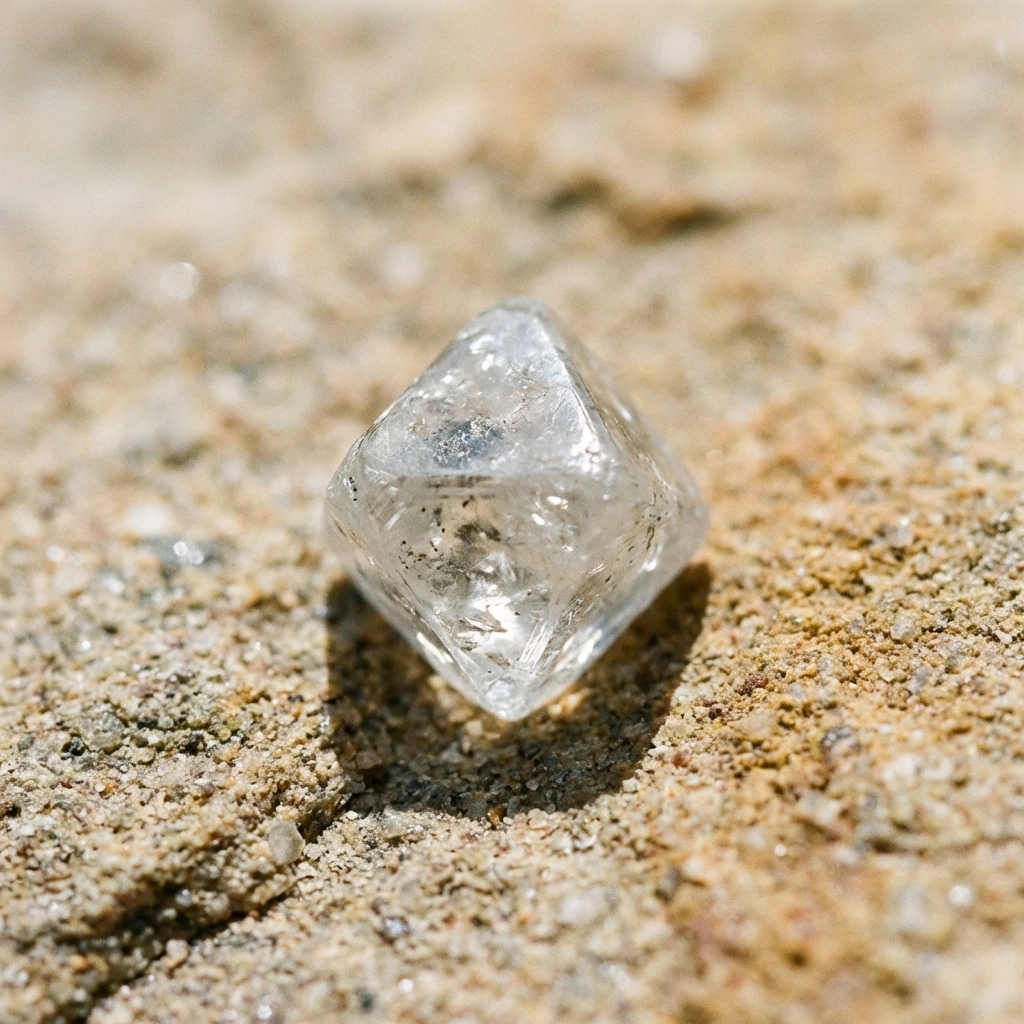
In a giant covalent structure, millions of atoms are bonded together by strong covalent bonds in a continuous three-dimensional network. There are no separate molecules, the entire structure is essentially one giant molecule.
Examples you need to know:
- Diamond (carbon)
- Graphite (carbon)
- Silicon dioxide (SiO₂) – found in sand and quartz
- Silicon (Si)
Imagine a massive 3D web of atoms, all locked together by covalent bonds that extend throughout the whole structure. To break this apart, you’d have to break actual covalent bonds, and that takes a LOT of energy.
Properties of Giant Covalent Structures
Because every bond is a strong covalent bond, giant covalent substances have:
- Very high melting and boiling points – You need enormous amounts of energy to break all those covalent bonds. Diamond’s melting point is around 3,550°C!
- Extremely hard – The rigid network of bonds makes these structures very difficult to deform. Diamond is the hardest natural substance on Earth.
- Insoluble in water and most solvents – The covalent bonds are far too strong to be broken by solvent molecules.
- Usually poor electrical conductors – Most giant covalent structures have no free electrons or ions… but there’s one famous exception. 🙌
The Graphite Exception
Graphite is a giant covalent structure, but it behaves differently from diamond in some important ways.
In graphite, carbon atoms are arranged in flat layers. Within each layer, the atoms are bonded in hexagonal rings with strong covalent bonds. However, each carbon atom only uses three of its four outer electrons for bonding, the fourth electron becomes delocalised and can move freely along the layers.
This means graphite can conduct electricity along its layers (but not between them). It’s also soft and slippery because the layers can slide over each other easily, there are only weak van der Waals forces holding the layers together.
That’s why graphite is used in pencils (the layers slide off onto paper) and as a lubricant, while diamond is used for cutting tools and jewellery.
Giant Covalent vs Molecular: The Key Differences at a Glance
| Property | Molecular Structures | Giant Covalent Structures |
|---|---|---|
| Bonding | Strong covalent bonds within molecules; weak intermolecular forces between molecules | Strong covalent bonds throughout the entire structure |
| Size | Small, discrete molecules | Huge, continuous networks |
| Melting point | Low | Very high |
| Hardness | Soft or brittle | Very hard (except graphite) |
| Electrical conductivity | Poor (no free electrons/ions) | Poor (except graphite) |
| Solubility | Often soluble in appropriate solvents | Insoluble |
Where Students Get Confused 😅
This is the part I really want you to pay attention to, because these mistakes come up all the time in exams:
Mistake 1: Saying “covalent bonds are weak”
No! Covalent bonds are strong. What’s weak are the intermolecular forces between molecules in a molecular structure. When you melt ice, you’re breaking hydrogen bonds between water molecules: not the covalent bonds inside the water molecules themselves.
Mistake 2: Forgetting that melting point depends on what you’re breaking
For molecular substances, you’re breaking intermolecular forces (weak = low melting point).
For giant covalent substances, you’re breaking covalent bonds (strong = high melting point).
Always be clear about which forces or bonds are being overcome.
Mistake 3: Thinking all giant covalent structures behave the same
Diamond and graphite are both made of carbon, but their structures are different: and so are their properties. Structure determines properties. Always think about how the atoms are arranged.
Mistake 4: Confusing giant covalent with ionic structures
Both have high melting points and form lattices, but ionic structures are held together by electrostatic attraction between ions, not covalent bonds. Ionic compounds conduct electricity when molten or dissolved; most giant covalent structures don’t.
How to Approach Exam Questions on This Topic
Here’s my advice for tackling structure-and-bonding questions like a pro:
- Identify the type of structure first. Is it molecular, giant covalent, ionic, or metallic? This determines everything else.
- Think about what’s being broken. For melting point questions, ask yourself: “Am I breaking intermolecular forces or actual bonds?”
- Use specific examples. Examiners love it when you mention diamond, graphite, silicon dioxide, or iodine to illustrate your points.
- Explain the link between structure and property. Don’t just say “diamond has a high melting point.” Say why: “Diamond has a very high melting point because it has a giant covalent structure with strong covalent bonds throughout, which require a lot of energy to break.”
- Watch your language. Be precise. Say “intermolecular forces” not “bonds between molecules” (that sounds like you mean covalent bonds).
If you want more tips on tackling tricky Chemistry questions, check out my post on how to tackle calculations without panic: the same clear, step-by-step approach works here too!
Wrapping Up
Understanding giant covalent structures vs molecular structures is all about recognising what holds the particles together and how much energy it takes to separate them.
- Molecular structures: small molecules, weak forces between them, low melting points, soft, poor conductors.
- Giant covalent structures: huge networks of covalent bonds, very high melting points, extremely hard, usually poor conductors (except graphite).
Once you’ve got this clear, you’ll find that property-prediction questions become much more manageable: and maybe even a little satisfying. ❤️
If you’re finding bonding and structure tricky, or you want someone to walk you through exam-style questions step by step, I’d love to help. Head over to my contact page and let’s chat about how we can get your Chemistry confidence up!

Oxford-Educated Chemistry Specialist
With over 20 years of teaching experience at some of the UK’s top independent schools, I help ambitious students bridge the gap between hard work and top-tier results. I specialise in GCSE, A Level, and IB Chemistry tuition for students targeting Grade 9s and A*s. Based in the UK but working globally, I provide 1-1 online support for families in South and West London, Dubai, and Hong Kong, ensuring students are perfectly prepared for competitive medical applications and Oxbridge entries.
I’ve helped students achieve top grades from schools such as Alleyn’s, Dulwich College, Tonbridge, Sevenoaks, Brighton College, Wycombe Abbey, Caterham, St Paul’s, Dubai College, Dubai British School and Harrow International School Hong Kong.
Contact me archardchloe@gmail.com to discuss how I can help your child excel in Chemistry.