

Blog
How to Conquer the Chemistry Olympiad: A Step-by-Step Guide for Students

The UK Chemistry Olympiad is the ultimate test of your scientific mettle. It’s hard, it’s outside the syllabus, and it’s arguably one of the most rewarding things you can do as a pre-university chemist. But here’s the question that keeps ambitious students up at night: how do you prepare for something that doesn’t have a formal syllabus?
If you’ve been staring at past papers feeling completely overwhelmed, take a breath. You’re not alone, and more importantly, you absolutely can do this. 🌟
I’ve helped countless students navigate the Olympiad journey: from tentative beginners to Gold award winners heading off to top universities. And I’m going to share with you exactly how to approach this challenge strategically, building your confidence and skills step by step.
Let’s dive in.
1. Don’t Panic About the Difficulty
First things first: the Chemistry Olympiad is designed to be tough. This isn’t your A Level exam where you’re expected to score 80%+ for a top grade. The Olympiad plays by completely different rules.
Here’s something that might surprise you: in 2021, a score of just 17 marks out of 85 was enough to earn a Bronze award. Let that sink in for a moment. You don’t need to be perfect. You don’t even need to be close to perfect.
The Olympiad isn’t testing whether you’ve memorised every corner of the syllabus. It’s testing something far more valuable: your ability to think logically, apply unfamiliar concepts, and make educated guesses based on the chemistry you do know.
This is a competition that rewards problem-solving over recall. It rewards curiosity over cramming. And honestly? That’s what makes it so exciting.
So when you open that first past paper and feel your stomach drop: remember this: everyone feels that way. The students who succeed are simply the ones who push through that initial discomfort and start building their skills systematically.
2. Start Small: Build Your Foundation First
One of the biggest mistakes I see students make is diving straight into the deep end. They grab the most recent past paper, attempt it under timed conditions, and end up feeling defeated before they’ve even begun.
Don’t do this to yourself. 🙌
Instead, start with the RSC’s introductory questions. These are specifically designed for students with GCSE-level knowledge and will help you get comfortable with the style of thinking the Olympiad requires: without the overwhelming difficulty.
Think of it like training for a marathon. You wouldn’t start by running 26 miles on day one. You’d build up your endurance gradually, adding distance as your fitness improves.
The same principle applies here. Start small, build confidence, then progress to more challenging material. The RSC has brilliantly structured their resources into different difficulty levels, so you can scaffold your learning in a way that actually works.
Once you’ve tackled the introductory questions and feel comfortable with the Olympiad “mindset,” you’re ready to move on to intermediate and advanced materials. This tiered approach means you’re always working at the edge of your ability: challenged but not crushed.
3. Master the ‘Olympiad Classics’
Here’s a secret that can give you a serious edge: certain topics appear again and again in Olympiad papers. Master these, and you’ll have a reliable source of marks every single time.
The two biggest “Olympiad classics” are:
- Unit Cells (crystallography and lattice structures)
- Organic Synthesis (multi-step reaction pathways)
These topics are often beyond the A Level syllabus, which is exactly why so many students struggle with them. But here’s the beautiful thing: once you’ve learned them properly, they become easy marks while everyone else is scratching their heads.
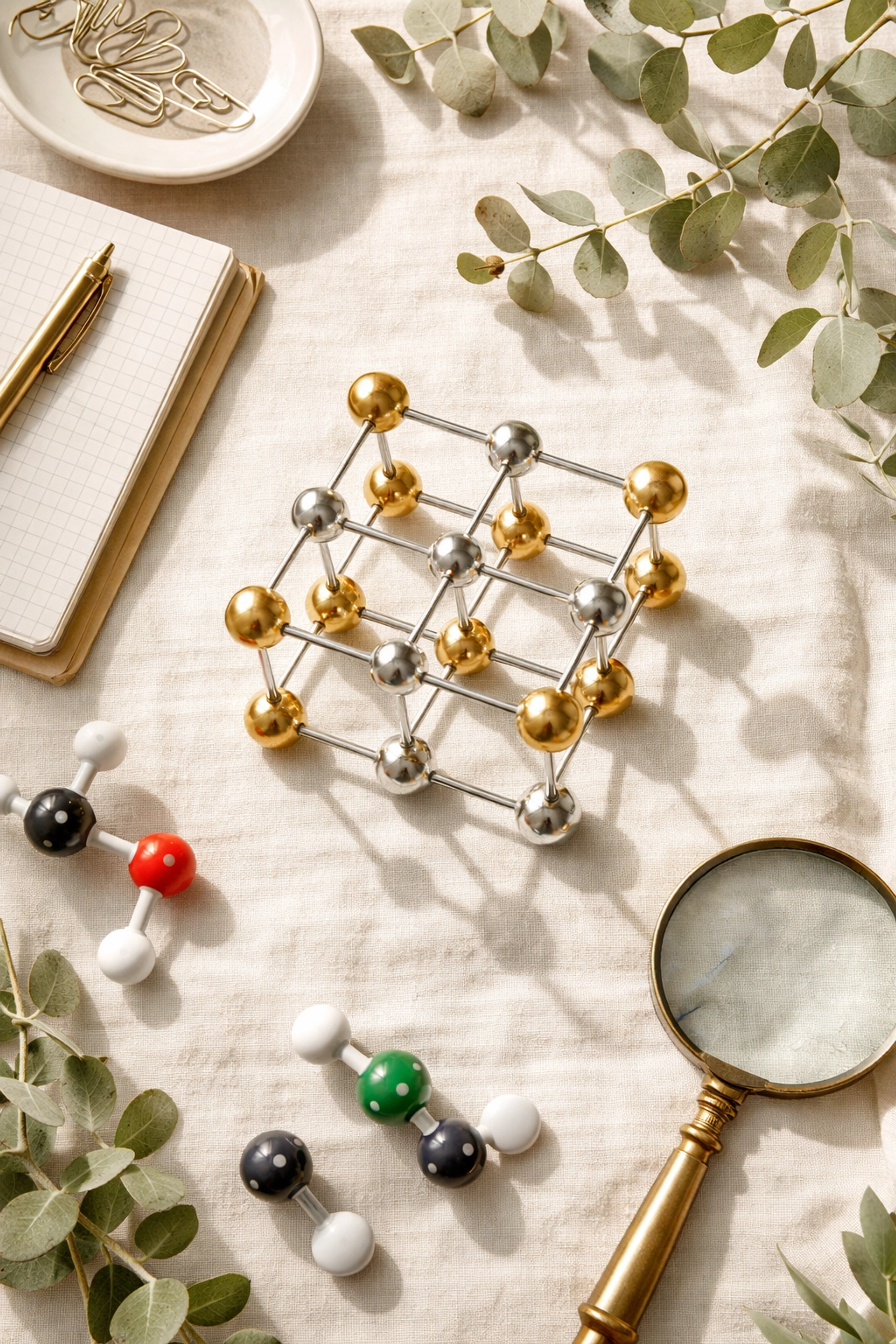
The RSC provides dedicated explainer materials for these tricky topics. They introduce the concepts clearly, then present past Olympiad questions with worked examples so you can see exactly how the theory applies in practice.
My advice? Allocate dedicated study sessions to these topics early in your preparation. Don’t leave them until the last minute hoping they won’t come up: they almost certainly will.
Other topics worth giving extra attention include:
- Electrochemistry and cell potentials
- Thermodynamics beyond A Level
- Coordination chemistry and transition metals
- Spectroscopy interpretation (especially NMR and mass spec)
When you’ve mastered the classics, you walk into that exam hall with confidence. And confidence, as any experienced competitor will tell you, is half the battle. ✨
4. Watch the Worked Answers (This is Gold!)
If there’s one resource I could recommend above all others, it’s this: the RSC’s worked answer videos.
These videos feature chemistry experts walking through past Olympiad questions step by step, explaining their thought processes as they go. This isn’t just about getting the right answer: it’s about learning how to think like an Olympiad chemist.
You’ll discover:
- How to break down complex problems into manageable chunks
- When to apply familiar concepts to unfamiliar situations
- How to make logical deductions even when you’re not 100% sure
- The “tricks” that experienced problem-solvers use
I cannot stress this enough: watching experts solve problems teaches you more than struggling alone ever could. You’re essentially getting a masterclass in Olympiad thinking, completely free.
My suggested approach? Attempt a question yourself first, then watch the worked answer: even if you got it right. You’ll often pick up alternative approaches or shortcuts you hadn’t considered.
5. Timing is Everything: Practice Under Pressure
Once you’ve built your foundational skills, it’s time to simulate the real thing.
The RSC has past papers stretching all the way back to 2003: that’s over two decades of practice material at your fingertips! And here’s a lovely bonus: Olympiad questions often follow similar patterns year to year, with certain question types recurring regularly. The more papers you practice, the more familiar these patterns become.
When you’re ready, set yourself up with:
- A quiet space free from distractions
- The correct time limit (check the paper instructions)
- No notes or textbooks nearby
- A determination to attempt every single question
That last point is crucial. Remember that 17/85 Bronze threshold? Every mark counts. Even if you’re unsure, write something. Apply the logic you’ve learned. Make an educated guess. Partial marks add up.
After each timed practice, go through the mark scheme carefully. Identify patterns in your mistakes. Are you losing marks on calculation errors? Time management? Specific topics? Use this feedback to direct your future study sessions.
6. Embrace the Real-World Context (and Have Fun!)
Here’s something I’d love you to remember throughout your preparation: Chemistry Olympiad questions are based on real, cutting-edge research.
You’re not solving abstract puzzles for their own sake. You’re engaging with genuine scientific discoveries: new materials, innovative reactions, breakthrough research. The chemists who write these papers are passionate about their subject, and they want to share that excitement with you.
So when you encounter a question about a novel catalyst or an unusual compound, take a moment to appreciate how cool it actually is. This is chemistry at its most vibrant and alive. 🧪
The students who perform best in the Olympiad aren’t just technically skilled: they’re genuinely curious. They enjoy the challenge. They find the chemistry fascinating, even when it’s difficult.
If you can cultivate that spirit of enquiry, you’ll not only perform better: you’ll actually enjoy the process.
Ready to Take Your Preparation to the Next Level?
If you’re aiming for a Gold award or using the Olympiad to strengthen your application to a competitive university, you don’t have to go it alone.
Whether you’re based in Dubai or the UK, I help ambitious students bridge the gap between A Level content and Olympiad-level thinking. We’ll tackle those tough questions together, build your problem-solving toolkit, and develop the confidence you need to excel.
Let’s make your Olympiad goals a reality. Get in touch today and let’s start working together. 🌟

Oxford-Educated Chemistry Specialist
With over 20 years of teaching experience at some of the UK’s top independent schools, I help ambitious students bridge the gap between hard work and top-tier results. I specialise in GCSE, A Level, and IB Chemistry tuition for students targeting Grade 9s and A*s. Based in the UK but working globally, I provide 1-1 online support for families in South and West London, Dubai, and Hong Kong, ensuring students are perfectly prepared for competitive medical applications and Oxbridge entries.
I’ve helped students achieve top grades from schools such as Alleyn’s, Dulwich College, Tonbridge, Sevenoaks, Brighton College, Wycombe Abbey, Caterham, St Paul’s, Dubai College, Dubai British School and Harrow International School Hong Kong.
Contact me archardchloe@gmail.com to discuss how I can help your child excel in Chemistry.