

Blog
How to Help Your Teen Navigate the “Impossible” Questions of an Oxbridge Chemistry Interview


Imagine being seventeen years old, sitting across from a world-renowned professor, when they ask you: “If you had a glass of water, how would you know if someone had added a single molecule of salt?”
This isn’t a trick question. There’s no textbook answer waiting to be recalled. It’s a test of how your teenager thinks when the ‘right answer’ isn’t neatly printed in Chapter 12.
And that moment , when your child realises they need to reason through rather than remember , is exactly what Oxbridge Chemistry interviews are designed to create.
What These “Impossible” Questions Are Really Testing
Here’s something we see parents worry about constantly: “But my child hasn’t studied that yet. How can they possibly answer?”
The truth is, they’re not supposed to have studied it.
Oxbridge tutors deliberately ask questions that go beyond A-Level content. They want to see what happens when your teenager encounters something unfamiliar. Do they freeze? Do they panic? Or do they lean in with curiosity and start working through the problem using what they do know?
The questions aren’t impossible at all. They’re just unfamiliar. And there’s a crucial difference.
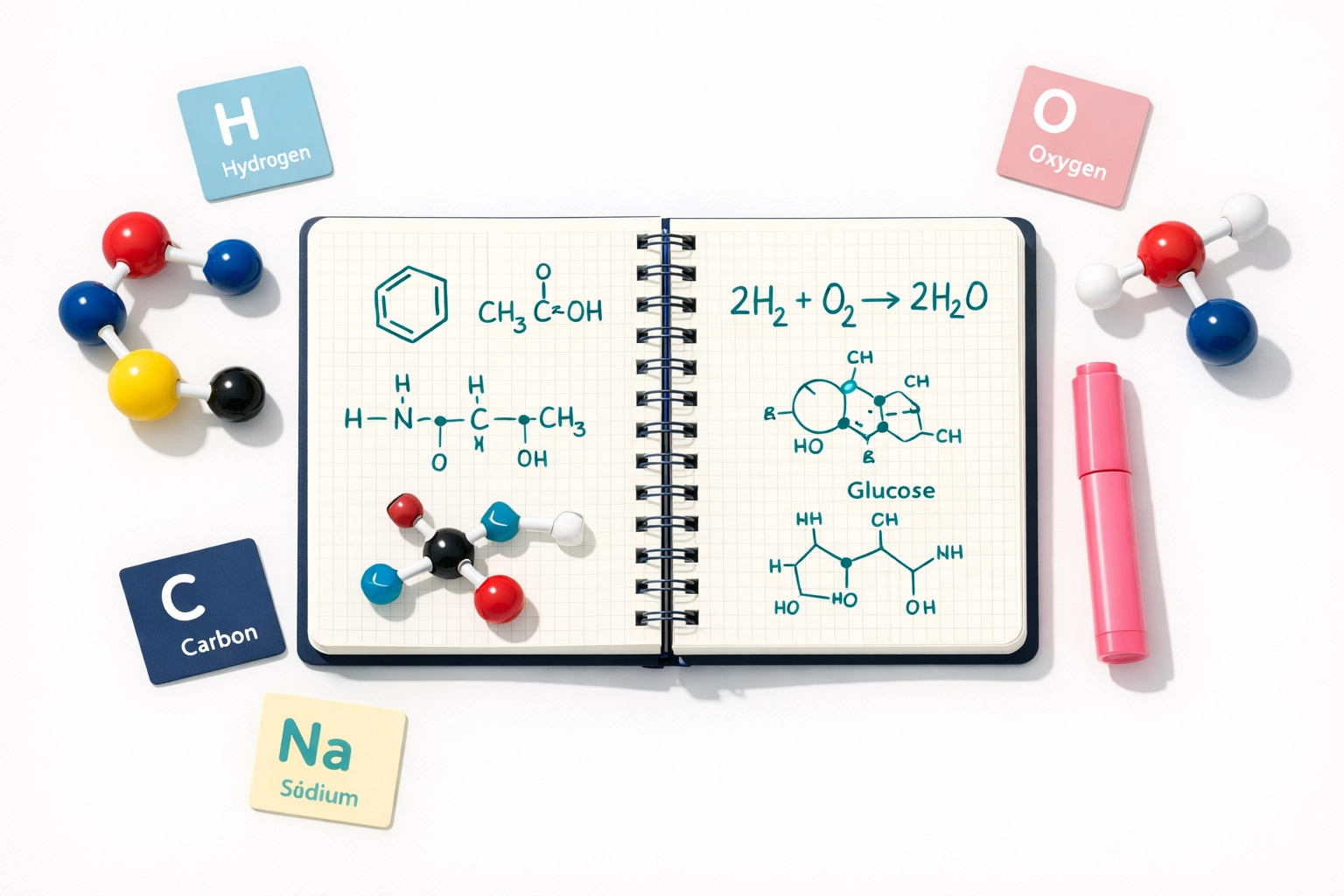
What interviewers are actually assessing is whether your child can take their GCSE and A-Level foundations , equilibrium, bonding, kinetics, energetics , and apply them to a brand new context. They want to see the thinking process, not a memorised fact pattern.
The Pivot: Why “I Don’t Know” Is Just the Beginning
One of the most important things we teach students preparing for these interviews is this: Oxbridge tutors don’t want someone who knows everything. They want someone they can teach.
The magic moment in any Oxbridge interview isn’t when your teenager gets the answer right immediately. It’s when they hit a wall, the tutor gives them a hint, and then , there it is , the pivot.
That’s when your child says, “Oh, so if we’re thinking about it that way, then maybe…” and starts exploring a new direction.
This is what tutors are watching for. Can this student absorb a new piece of information, integrate it with what they already know, and adjust their thinking accordingly?
In our experience working with ambitious students across South London, this is often the hardest shift to make. So many bright teenagers have spent years being rewarded for having the answer ready. The idea that the best response might start with “I’m not sure, but let me think through what I do know” feels uncomfortable at first.
But that discomfort? That’s where the learning happens.
Thinking Out Loud: Your Teen’s Secret Weapon
Here’s where many students trip up in Oxbridge interviews: they go silent while they think.
From your teenager’s perspective, this makes sense. They’re working through the problem mentally, trying to arrive at something coherent before speaking. But from the interviewer’s perspective, they’ve just lost all visibility into how that student thinks.
We always tell students: your thought process is more valuable than your final answer.
If your child sits in silence for two minutes and then offers a conclusion, the tutor has no idea whether they got there through logical reasoning, a lucky guess, or vague pattern recognition. But if they talk through their thinking , even if they’re uncertain , the interviewer can see the quality of their mind at work.
“Okay, so we’re talking about detecting a single molecule of salt. I know that salt dissociates into ions, so we’d be looking for sodium and chloride ions. But the concentration would be incredibly low. Maybe we’d need a technique that’s really sensitive to ionic concentration? I’m not sure if spectroscopy could detect something that dilute, but conductivity might work because even one ion would technically change the conductance of the water…”
That’s a student thinking. Even if they don’t land on the “right” answer, they’re demonstrating how they approach unfamiliar problems. And that’s exactly what gets you an offer.
From Phase Diagrams to Kinetics: Using What They Already Know
One of the most reassuring things we tell parents is this: your child already has the tools they need.
The interview questions might sound impossible, but they’re built on concepts your teenager has been learning since GCSE. The trick is teaching them to recognise which tools to reach for when they’re in unfamiliar territory.
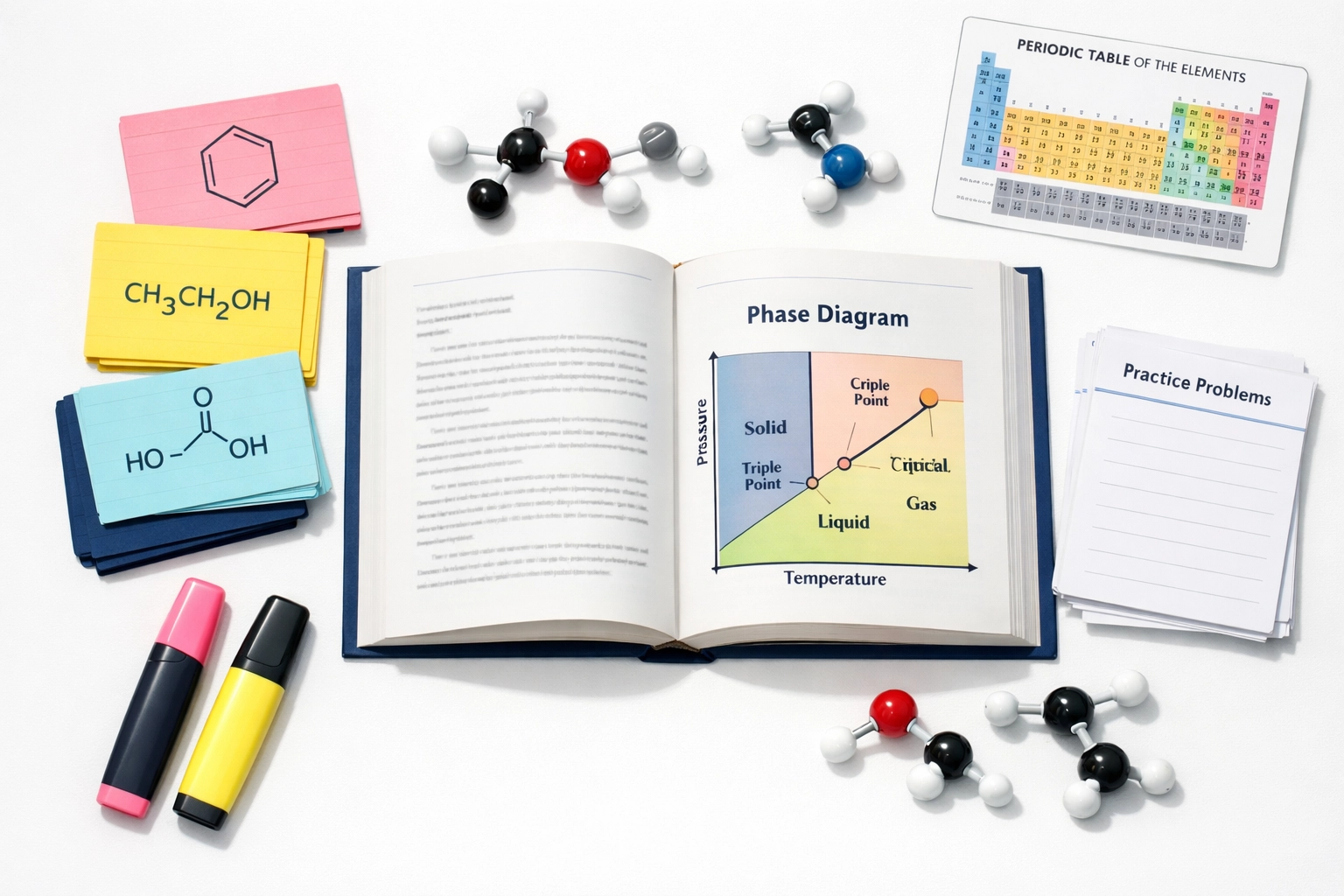
Let’s say an interviewer shows your child a phase diagram they’ve never seen before and asks them to interpret what happens at a particular point. A student who’s been taught to think flexibly will mentally run through their toolkit: “Right, I know that phase diagrams show state changes. I know about triple points from my notes on carbon dioxide. I know that moving along the pressure axis means we’re changing how tightly packed the particles are…”
They’re not pulling from memorised content about that specific phase diagram. They’re applying fundamental principles to a new context.
This is what we work on during our intensive revision courses. We take students through the foundational concepts until they’re confident enough to play with them : to apply them in ways they haven’t been explicitly taught.
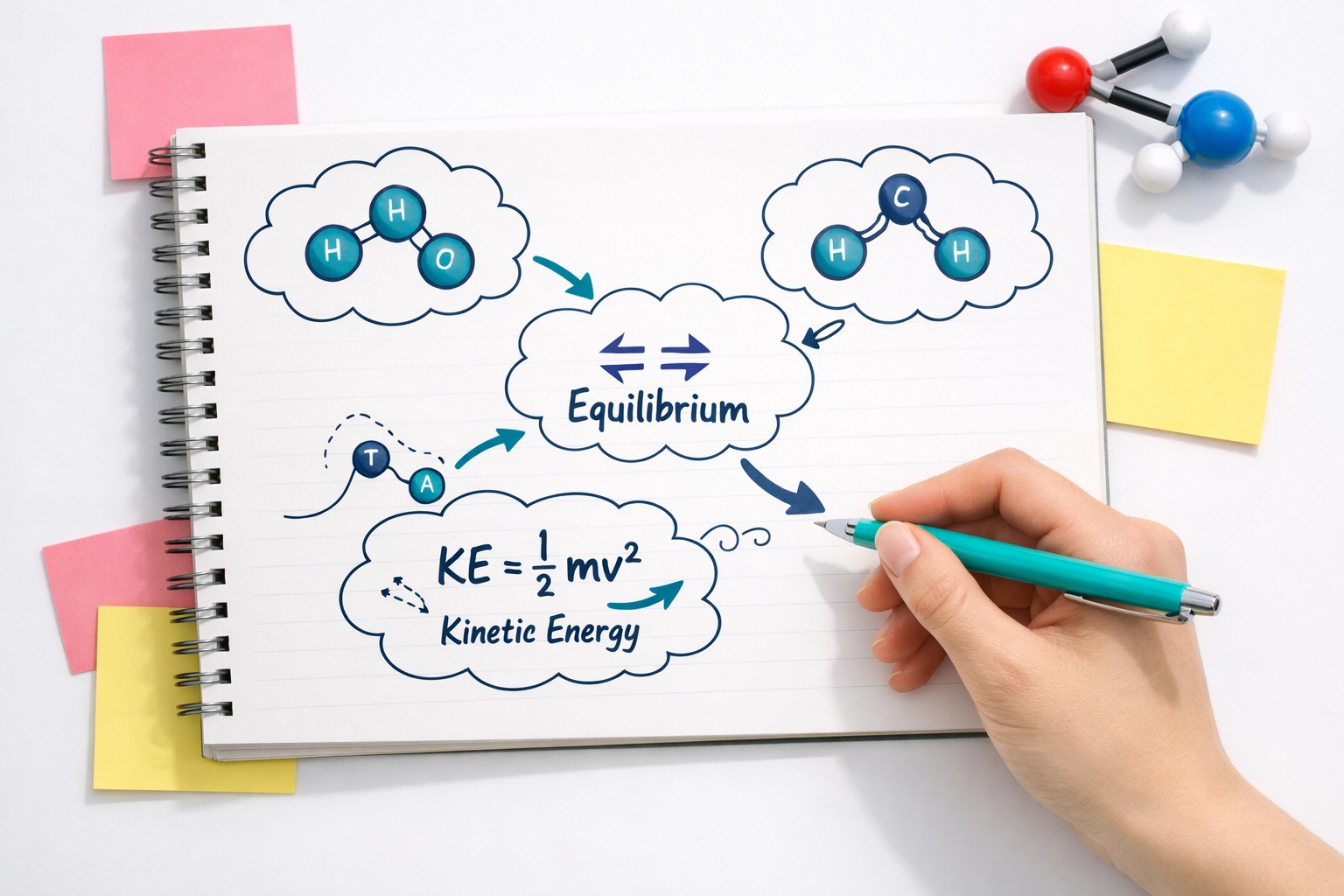
When we’re reviewing chemical kinetics, for example, we don’t just drill rate equations. We ask: “What would happen if we doubled the concentration of only one reactant? How would you figure out the order with respect to that reactant if you’d never seen this reaction before?”
We’re building that intellectual flexibility. The ability to take what you know and stretch it.
The Confidence to Handle the Unseen
There’s something else happening in these interviews beyond pure Chemistry knowledge: your teenager is being assessed on their intellectual courage.
Are they willing to take a reasoned guess? Can they handle being wrong and then adjust? Do they show curiosity when they hit something they don’t understand, or do they shut down?
This is partly about personality, but it’s also about preparation. Students who’ve been exposed to this style of questioning before : where there isn’t a neat answer in the mark scheme : arrive at their interviews feeling much more grounded.
They’ve already experienced that moment of uncertainty. They’ve already had the experience of talking through a problem they don’t fully understand and realising that the process of talking through it is what helps them understand it.
This is why we incorporate so much “thinking out loud” work into our courses. It’s not natural for most students, especially high-achievers who are used to being right. But it’s a skill that can be taught.
Expert Guidance Makes All the Difference
Having taught at schools like Alleyn’s, I’ve seen first-hand how much these high-level academic challenges can stretch students : and how much they grow when they’re given the right support.
Preparing for Oxbridge interviews isn’t about cramming extra content. It’s about changing how students approach unfamiliar problems. And that shift happens most effectively when they’re working with teachers who understand both the subject at a deep level and the specific demands of these interviews.
During our Easter intensive, we don’t just cover exam technique. We’re also building the kind of intellectual confidence that carries students through university interviews, undergraduate supervisions, and eventually into research or industry roles where this kind of flexible thinking is essential.
We create space for students to get things wrong, to explore half-formed ideas, and to practice verbalising their reasoning even when they’re uncertain. Because that’s exactly what they’ll need to do when they’re sitting across from a professor at Cambridge or Oxford.
Practical Steps You Can Take Now
If your teenager is considering an Oxbridge application : or if you simply want them to develop that deeper level of scientific thinking : here’s what we’d suggest:
Encourage them to explain concepts to you. Even if you don’t have a Chemistry background, asking your child to talk through what they’re learning helps them practice articulating complex ideas clearly. If they can’t explain it simply, they probably don’t understand it as well as they think.
Normalise uncertainty. When they’re stuck on a homework problem, resist the urge to push for the answer. Instead, ask: “What do you know that might be relevant? What have you seen before that’s similar?” Help them build that habit of reaching for their toolkit.
Celebrate the process, not just the result. When they work through a difficult problem : even if they don’t get it right : acknowledge the quality of their thinking. “I liked how you connected that back to what you learned about bonding” means more than “Well done for getting an A.”
Building the Foundation for Success
The beautiful thing about preparing for these high-level academic challenges is that the skills students develop are useful far beyond university interviews.
The ability to think through unfamiliar problems. The confidence to reason out loud. The intellectual flexibility to take foundational knowledge and apply it creatively. These are exactly the qualities that make for successful scientists, doctors, engineers, and researchers.
And they’re built gradually, through consistent practice with teachers who know how to stretch students’ thinking without overwhelming them.
If this sounds like the kind of rigorous, supportive environment your child would thrive in, we’d be very happy to welcome them to our GCSE Science Revision Course. We’re running an intensive programme from 7-10 April 2026 at Harris Boys Academy, and we keep group sizes deliberately small so every student gets the individual attention they need to develop these higher-level thinking skills.
You can find more information about the course here: https://www.success-in-stem.com/easter-gcse-science-revision-course-2026
Whether or not Oxbridge is on your child’s radar, building this foundation of confident, flexible scientific thinking will serve them well wherever their academic journey takes them.


Oxford-Educated Chemistry Specialist
With over 20 years of teaching experience at some of the UK’s top independent schools, I help ambitious students bridge the gap between hard work and top-tier results. I specialise in GCSE, A Level, and IB Chemistry tuition for students targeting Grade 9s and A*s. Based in the UK but working globally, I provide 1-1 online support for families in South and West London, Dubai, and Hong Kong, ensuring students are perfectly prepared for competitive medical applications and Oxbridge entries.
I’ve helped students achieve top grades from schools such as Alleyn’s, Dulwich College, Tonbridge, Sevenoaks, Brighton College, Wycombe Abbey, Caterham, St Paul’s, Dubai College, Dubai British School and Harrow International School Hong Kong.
Contact me archardchloe@gmail.com to discuss how I can help your child excel in Chemistry.