

Blog
Is Your Teen Considering a STEM Career? Here’s Why Chemistry is a Multi-Billion Pound Industry Advantage


When your teenager mentions they’re interested in science, it’s natural to wonder where that curiosity might lead. Will it open doors? Will it lead to stable, fulfilling work? And perhaps most practically: will it provide them with genuine career security in an uncertain world?
If chemistry is part of that conversation, the answer is a reassuring yes.
Chemistry isn’t just a subject your teen studies for their GCSEs. It’s the foundation of an industry that contributes a staggering £83 billion to the UK’s GDP every year. That’s not a typo: it’s a multi-billion pound sector that touches nearly every part of modern life, from the medicines we take to the materials in our phones.
Let’s take a closer look at why chemistry offers such a compelling pathway for ambitious young people.
An Industry That’s Growing Faster Than Most
One of the most encouraging things we can share with parents is this: the chemical sciences workforce is growing 30% faster than the rest of the UK labour market.
In a world where many industries face uncertainty, chemistry-related careers are expanding. This isn’t a temporary spike: it reflects a sustained, long-term need for skilled scientists across pharmaceuticals, energy, manufacturing, agriculture, and technology.
What does this mean for your teen? It means that building strong chemistry foundations now positions them for a job market that actively needs their skills. They won’t be competing for a shrinking pool of opportunities. They’ll be entering a field with genuine momentum.
Salaries That Reflect the Value of the Work
We know that career satisfaction isn’t only about money: but financial stability matters, especially when you’re thinking about your child’s long-term prospects.
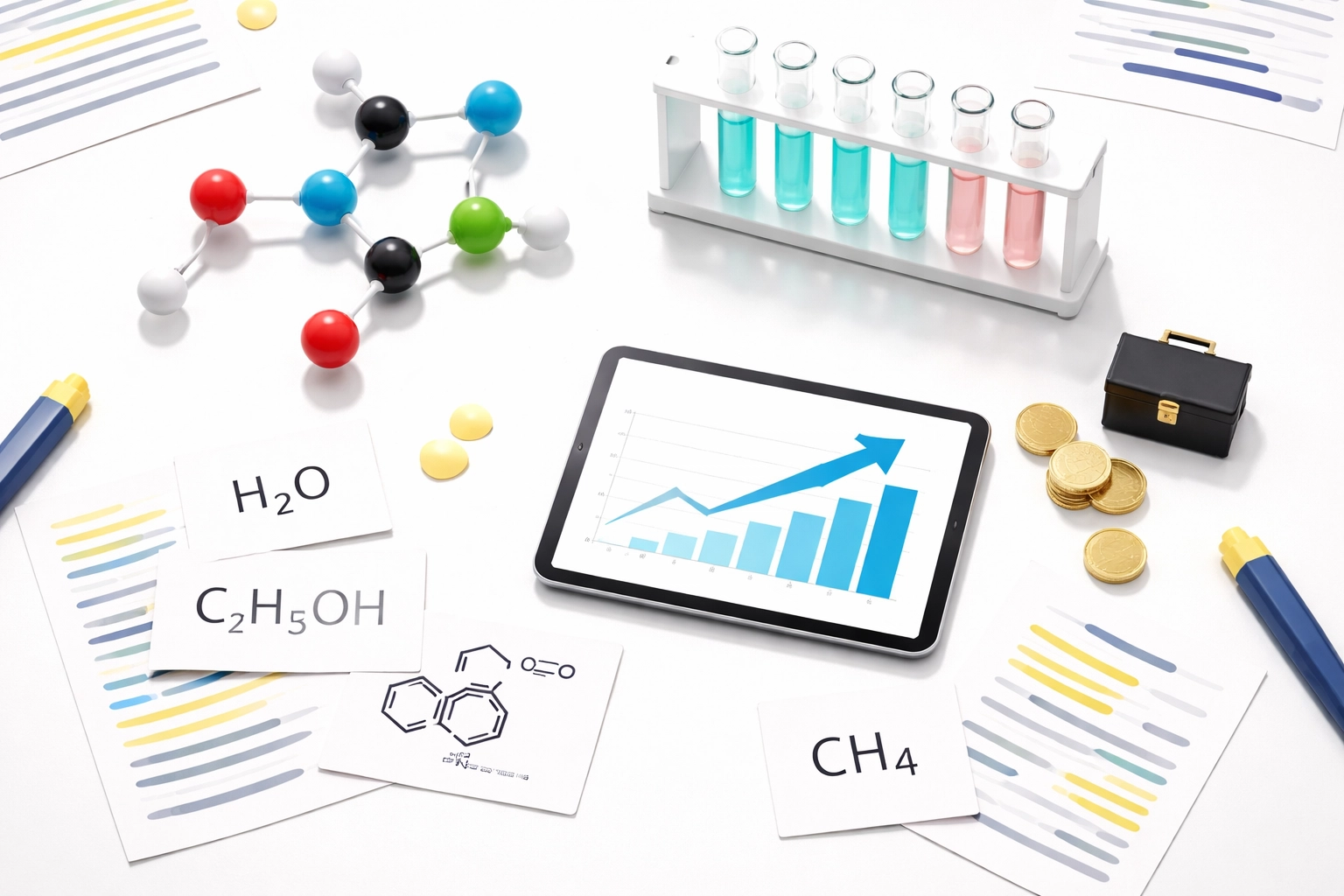
The median salary for chemistry-related roles in the UK sits at approximately £38,590, which is significantly higher than the national average. For graduates who move into specialised areas like pharmaceuticals, materials science, or chemical engineering, earning potential increases further still.
This isn’t about chasing the highest salary for its own sake. It’s about recognising that chemistry skills are genuinely valued by employers, and that value is reflected in how professionals in this field are compensated.
Solving the Problems That Matter Most
If your teenager is the kind of person who wants their work to mean something, chemistry offers some of the most meaningful career paths available.
Consider the global challenges we’re facing right now:
- Climate change : Chemists are developing carbon capture technologies, cleaner fuels, and sustainable materials that reduce environmental impact.
- Food security : Agricultural chemistry helps us grow more food with fewer resources, feeding growing populations sustainably.
- Health crises : From vaccines to cancer treatments, pharmaceutical chemists are at the forefront of protecting and extending human life.
These aren’t abstract problems. They’re urgent, real-world issues: and chemistry is central to solving them.
For young people who care about making a difference, this is a field where they can genuinely contribute to something larger than themselves.
Emerging Fields Creating New Opportunities
The chemistry sector isn’t standing still. New specialisms are emerging that didn’t exist a generation ago, creating fresh career paths for today’s students.
Green and Sustainable Chemistry
The global green chemicals market is currently valued at around $148 billion and is projected to more than double by 2035. As governments and businesses commit to net-zero targets, demand for chemists who understand sustainable processes and bio-based materials is accelerating rapidly.
Semiconductor and Electronic Chemicals
The technology in your pocket relies on chemistry. The global semiconductor market is projected to surpass $760 billion by 2026, and chemicals make up 9-14% of the materials used in electronic devices. Ultra-pure solvents, specialty gases, and advanced materials all require chemistry expertise.
Digital Chemistry and AI
Perhaps surprisingly, digital skills are becoming increasingly valuable in chemistry careers. Companies are adopting AI optimisation, predictive modelling, and digital twins to improve processes: creating hybrid roles that combine scientific knowledge with data science capabilities.
What this means for your teen is that chemistry isn’t a static field. It’s evolving, adapting, and creating new opportunities that align with where the world is heading.
Why GCSE Chemistry Matters More Than You Might Think
With all this talk of multi-billion pound industries and global challenges, it might seem like GCSE chemistry is a very small piece of a very large puzzle.
But here’s the thing: it’s the entry point.
A solid understanding of chemistry at GCSE level opens the door to A-Level study, which in turn leads to university courses and apprenticeships in chemistry, biochemistry, chemical engineering, pharmacy, materials science, and more.
Students who struggle with chemistry at GCSE often find those doors harder to open later. Not because they lack ability, but because the foundational concepts weren’t secured when it mattered most.
We see this often with students who come to us feeling uncertain about chemistry. Once they understand why reactions happen, how to approach calculations, and what examiners are actually looking for, their confidence grows. And with confidence comes progress.
Building the Foundation Now
If your teen is in Year 10 or Year 11, they’re at a pivotal moment. The work they do now: particularly in mastering core concepts and exam technique: shapes the options available to them in the years ahead.
This doesn’t need to feel overwhelming. With the right support and a structured approach, most students can make meaningful progress in a relatively short time. It’s about working smarter, not just harder.
Here’s what we’ve found makes the difference:
- Understanding over memorisation : Students who grasp the underlying principles find it much easier to apply their knowledge to unfamiliar questions.
- Exam technique : Knowing the content is only half the battle. Understanding how to structure answers and avoid common pitfalls is equally important.
- Confidence : When students believe they can succeed, they engage more fully with the material. Confidence isn’t magic: it’s built through small, supported steps.
A Thoughtful Next Step
If you’re reading this and thinking about how to support your teen’s chemistry learning, we’d be happy to help.
Our 4-day GCSE Science Easter Revision Course runs from 7-10 April 2026 at our centre in East Dulwich. It’s designed to help students consolidate their understanding of Chemistry, Biology, and Physics in the final weeks before their exams.
We keep groups small so every student receives individual attention. Our tutors are experienced teachers who understand both the GCSE curriculum and the pressures students face. The atmosphere is focused but supportive: never stressful.
You can find full details and book a place here: Easter GCSE Science Revision Course 2026
If you’d like to explore other courses we offer, you’re welcome to browse our full programme: View All Courses
Looking Ahead With Confidence
Chemistry is more than a GCSE subject. It’s a gateway to careers that are growing, well-compensated, and genuinely meaningful. It’s a discipline that sits at the heart of solving the challenges our world faces: from climate change to healthcare to technological innovation.
For parents supporting a teenager through their GCSEs, this is encouraging news. The effort your child puts into chemistry now isn’t just about exam results. It’s about building the foundations for a future full of opportunity.
If you’d like to explore what career paths a chemistry education might open up, the Royal Society of Chemistry has an excellent resource: What Jobs Can I Do With Chemistry?
We’re always here if you have questions or would like to discuss how we might support your child. Whatever path they choose, we believe in helping them take confident, well-prepared steps forward.

Oxford-Educated Chemistry Specialist
With over 20 years of teaching experience at some of the UK’s top independent schools, I help ambitious students bridge the gap between hard work and top-tier results. I specialise in GCSE, A Level, and IB Chemistry tuition for students targeting Grade 9s and A*s. Based in the UK but working globally, I provide 1-1 online support for families in South and West London, Dubai, and Hong Kong, ensuring students are perfectly prepared for competitive medical applications and Oxbridge entries.
I’ve helped students achieve top grades from schools such as Alleyn’s, Dulwich College, Tonbridge, Sevenoaks, Brighton College, Wycombe Abbey, Caterham, St Paul’s, Dubai College, Dubai British School and Harrow International School Hong Kong.
Contact me archardchloe@gmail.com to discuss how I can help your child excel in Chemistry.