

Blog
The 12-Month Countdown: A Strategic Timeline for Aspiring Doctors in Year 12


Let’s be honest, the road to Medical School is a marathon, not a sprint. And if you’re reading this in Year 12, you’re already ahead of the game. 🌟
I’ve watched hundreds of aspiring doctors navigate this journey, and the ones who succeed aren’t necessarily the smartest, they’re the most strategic. They understand that getting into Medicine isn’t just about having good grades (though you absolutely need those). It’s about timing, preparation, and knowing exactly what needs to happen when.
So whether you’re a Year 12 student in Dubai wondering where to start, or a parent in the UK trying to support your child through this maze, this timeline is your roadmap. Print it. Pin it. Follow it. And by next October, you’ll be hitting that UCAS submit button with confidence.
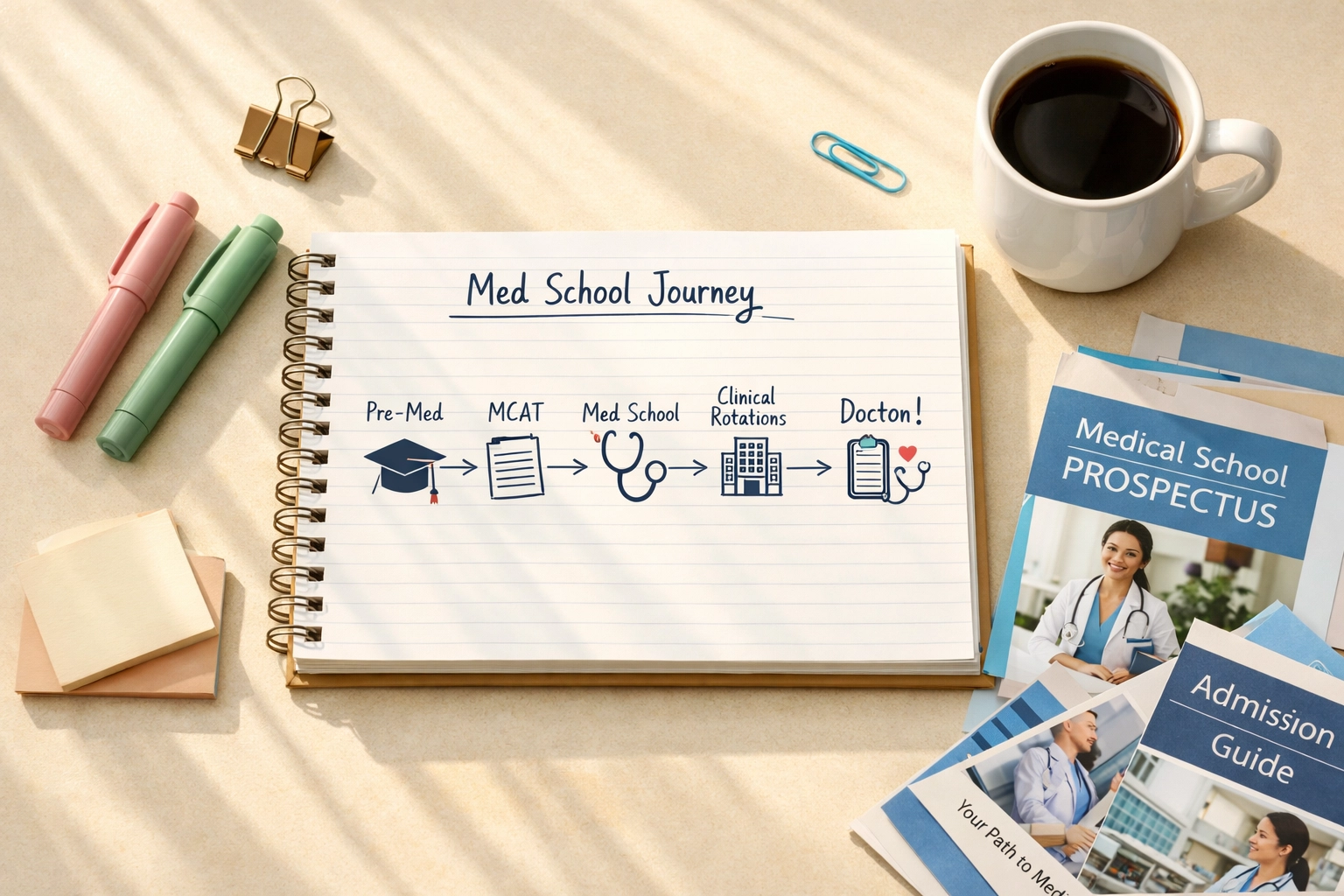
February: Research & Reach Out
Right now, yes, literally this month, your first job is to become a detective. Not the dramatic kind, but the thorough, organized kind who makes spreadsheets and color-codes things.
Here’s what you need to research:
- University entry requirements for every Medical School on your radar (spoiler: they’re all slightly different)
- UCAT vs. BMAT confusion? Good news, BMAT is gone. You only need to focus on the UCAT now
- A-Level requirements: Most want Chemistry plus Biology or Physics, and they want them at A/A* level
Now, start hunting for work experience. In Dubai, reach out to private hospitals and clinics, many have structured shadowing programmes for students. In the UK, contact your local GP surgery, care homes, or hospital volunteer coordinators. Yes, it’s competitive. Yes, you might get rejected five times. Keep going. This experience isn’t just box-ticking, it’s what you’ll write about in your personal statement and discuss in interviews.
Action step: Create a spreadsheet of 8-10 Medical Schools with their exact entry requirements. Note down UCAT cut-offs from previous years (they’re usually published online).
March/April (Easter): Work Experience & Deep Dive Chemistry
Easter holidays are gold dust. While your mates are at the beach, you’re building your future. Dramatic? Maybe. True? Absolutely.
Work experience time: Ideally, you want 1-2 weeks of hospital shadowing or clinical exposure. Can’t get into a hospital? Volunteer at a care home. Shadow a physiotherapist. Help at a mental health charity. Medical Schools care about breadth of experience and your reflections on what you learned, not just fancy hospital letterheads.
Meanwhile, your Chemistry cannot slip. This is the term when most schools cover Energetics, Kinetics, and start Organic Chemistry, the foundations of everything. An A* in Chemistry isn’t negotiable for most top Medical Schools, and these topics appear heavily in Year 13 exams.
If you’re struggling with moles, equilibrium, or organic mechanisms, get help now, not in May when mocks arrive. Your predicted grade depends on your May performance, and your predicted grade determines whether universities even consider your application.

May: The Mock Exam Crunch
This is decision month. Your mock exams determine your predicted grades, and your predicted grades determine where you can apply.
Here’s the reality: Most Russell Group Medical Schools want AAA minimum, with that A usually in Chemistry or Biology. Some want AAA. Check your target schools’ exact requirements, but understand this, if your Chemistry teacher can’t predict you an A*, many doors close automatically.
Revision strategy:
- Past papers are your best friend (Edexcel, AQA, OCR, do all of them)
- Focus on exam technique, not just content knowledge
- Practice writing mechanisms under time pressure
- Master the command words: “Explain” ≠ “Describe” ≠ “Suggest”
Your mock results land in late May or early June. If they’re not where you need them, don’t panic, but do act. Get a tutor, join a revision course, or dedicate serious time to improving before September.
June: UCAT Foundations
You’ve survived mocks. Well done. Now it’s time to meet your new frenemy: the UCAT 🎯
The University Clinical Aptitude Test (UCAT) isn’t like A-Levels. It doesn’t test knowledge, it tests reasoning, decision-making, and how you think under pressure. And Medical Schools weight it heavily in their selection process.
This month, just get familiar:
- Understand the five sections (Verbal Reasoning, Decision Making, Quantitative Reasoning, Abstract Reasoning, Situational Judgement)
- Register for an official UCAT account and explore their practice materials
- Try one diagnostic test to see where you naturally sit
Don’t go all-in yet. You’re still finishing Year 12 content. But understand what’s coming so you’re not blindsided in July.
July: Summer Volunteering & Personal Statement Draft 1
First week of summer: take a breath. You’ve earned it. Second week onwards: let’s build that personal statement.
Your personal statement needs:
- Genuine enthusiasm for Medicine (not “I want to help people”, everyone says that)
- Specific examples from your work experience with reflections on what you learned
- Academic curiosity (this is where mentioning a Chemistry concept you found fascinating comes in)
- Evidence of resilience, teamwork, and communication
Write it while your work experience is fresh. What surprised you? What made you uncomfortable? What confirmed this is the right path? Those authentic reflections make your statement memorable.
Meanwhile, keep volunteering. If you did hospital shadowing at Easter, now do something different, maybe a charity supporting elderly patients, or a mental health helpline. Medical Schools love seeing breadth.
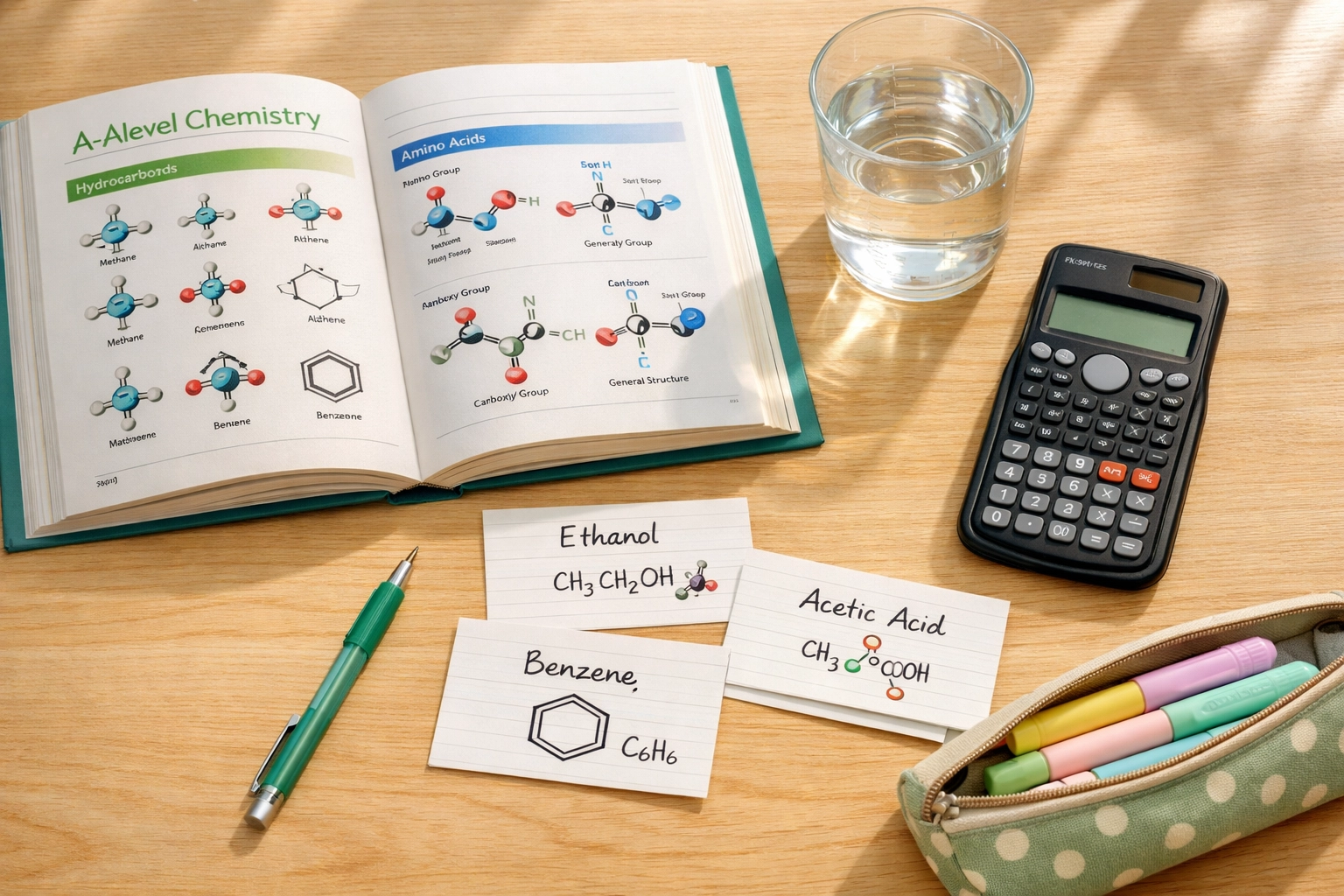
August: UCAT Intensive
This is the month. Block out 4-6 weeks for serious UCAT preparation. We’re talking 10-15 hours per week minimum.
Your strategy:
- Official UCAT practice materials first (they’re the most accurate)
- Medify or similar prep platforms for volume
- Timed practice from day one, accuracy under time pressure is what matters
- Review every wrong answer. Understand why you got it wrong
- Take at least 4-6 full-length mock exams under test conditions
Book your actual UCAT test for September (ideally early September, so if disaster strikes, you have time to resit). Most test centers fill up quickly, so book in July if you can.
September: The UCAT Test & UCAS Final Touches
UCAT test day is intense. You’ll sit in a test center for two hours doing rapid-fire questions on a computer. Trust your preparation. Stay calm. If one section goes badly, move on, the others still matter.
Your score comes through immediately (brutal, but also efficient). Average UCAT score is around 2,500. Competitive for Medicine? You’re looking at 2,600+, with top schools like Oxford, Cambridge, and Imperial often wanting 2,700+.
Once you have your score, finalize your UCAS choices:
- Maximum 4 Medical Schools (+ 1 non-Medical backup if you want)
- Be strategic, choose a mix based on your UCAT score, predicted grades, and interview confidence
Your personal statement must be perfect by late September. Get teachers, mentors, and ideally someone already in Medical School to review it. Every word counts (literally, you have 4,000 characters).
October: The Deadline
October 15th, 6pm (UK time) is the UCAS deadline for Medicine, Dentistry, and Veterinary Science. This is non-negotiable. Miss it, and you’re waiting another year.
Final checks:
- Personal statement uploaded and error-free
- Reference submitted by your school
- All qualifications and grades entered correctly
- UCAT score added to your application
- £27.50 application fee paid
Hit submit. Breathe. Pour yourself a celebratory tea (or coffee, I won’t judge) ☕
November: Admission Tests & Interview Prep Starts
Some universities still have additional assessments:
- BMAT is gone, but a few universities have their own tests
- Cambridge has specific requirements
- Check your chosen universities’ websites for any November/December tests
More importantly, interview invitations start arriving. If you get one, congratulations! If you don’t immediately, don’t spiral. Some universities interview everyone, others are very selective, and invitations roll out between November and January.
Start interview prep now:
- NHS hot topics (waiting lists, healthcare funding, AI in medicine)
- Ethical scenarios (confidentiality, end-of-life care, resource allocation)
- MMI stations (Multiple Mini Interviews) vs. panel interviews
- “Why Medicine?” and “Why this university?” prepared answers
December: Interview Season
Peak interview season. You might have 2-4 interviews between December and February depending on how many universities invite you.
Each interview is different:
- Oxford and Cambridge often include academic problem-solving
- MMIs involve 6-8 mini stations (role-play, ethical dilemma, interpretation tasks)
- Panel interviews can last 20-30 minutes with 2-4 interviewers
The key? Be yourself. They’re not looking for robots who’ve memorized perfect answers. They want genuine, thoughtful students who’ve reflected on their experiences and understand what Medicine actually involves.
And keep your Chemistry grades up. Some students relax after UCAS submission, big mistake. Your January mocks matter for proving you’ll meet your offer conditions.

January/February: Offers & Keeping the Grades Up
Offers roll out between January and March. You might get:
- Unconditional offer (rare, usually post-qualification)
- Conditional offer (e.g., AAA including Chemistry A)
- Rejection (it happens, Medicine is brutal. Your backup plan matters)
Don’t let your Chemistry grade slip now. You need to actually achieve those grades in summer. I’ve seen students get A*AA offers and then panic in April when they realize they’re sitting on a B in Chemistry.
Your January mocks prove you’re on track. If you’re borderline, get help immediately. Small group tuition, intensive revision courses, or one-to-one support can make the difference between meeting your offer and losing your place.

The Pro-Tip: Chemistry is the Gatekeeper Subject
You can have the best UCAT score in the world. You can have done incredible work experience. You can nail your interview.
But without that A* predicted grade in Chemistry, many top Medical Schools won’t even consider your application. And without achieving that grade in summer, your offer evaporates.
Chemistry is non-negotiable because:
- Year 1 Medicine is heavily biochemistry-based
- You need strong problem-solving and analytical skills
- Medical Schools know Chemistry A-Level separates the resilient from the rest
If you’re sitting in February right now thinking “my Chemistry is shaky,” you have time: but you need to act now, not in August.
Ready to Secure That A* and Smash Your Medical School Application?
This 12-month timeline is your roadmap, but you don’t have to walk it alone. Whether you need to nail those predicted grades in May, master Organic Chemistry over summer, or keep your grades solid while juggling UCAT prep: I’ve got you covered ❤️
My A-Level Chemistry small group tuition gives you expert teaching, exam technique coaching, and the accountability to stay on track. Or if you’re laser-focused on Medicine, my MedAspire course combines A* Chemistry support with Medical School application strategy.
Your dream Medical School place is 12 months away. Let’s make it happen 🩺✨


Oxford-Educated Chemistry Specialist
With over 20 years of teaching experience at some of the UK’s top independent schools, I help ambitious students bridge the gap between hard work and top-tier results. I specialise in GCSE, A Level, and IB Chemistry tuition for students targeting Grade 9s and A*s. Based in the UK but working globally, I provide 1-1 online support for families in South and West London, Dubai, and Hong Kong, ensuring students are perfectly prepared for competitive medical applications and Oxbridge entries.
I’ve helped students achieve top grades from schools such as Alleyn’s, Dulwich College, Tonbridge, Sevenoaks, Brighton College, Wycombe Abbey, Caterham, St Paul’s, Dubai College, Dubai British School and Harrow International School Hong Kong.
Contact me archardchloe@gmail.com to discuss how I can help your child excel in Chemistry.