

Blog
The Easter Window: Why 4 Days of Revision in Dulwich is the Key to GCSE Science Success


Ask any Year 11 student: or their parents: and they’ll tell you the same thing: the Easter holidays are when GCSE exams start to feel very real. The calendar suddenly sharpens into focus. Mock results are in. Final exams are weeks, not months, away. And for most families, this is the moment when a quiet question surfaces: Is my child genuinely ready?
The Easter break offers something rare in the final stretch of Year 11: a solid block of time away from school, when focused, uninterrupted revision can actually happen. But here’s what we see again and again: without structure, that time slips away. Students sit in their rooms with highlighters and textbooks, feeling overwhelmed. They review what they already know, avoid the difficult topics, and emerge at the end of the holidays feeling no more confident than when they started.
This is where the right kind of support makes all the difference.
The Problem with Solo Revision
Most students approach revision with the best intentions. They gather their notes, watch a few YouTube videos, maybe attempt a past paper or two. But without a clear plan or someone to guide them through the harder material, they quickly hit a wall.
The topics they find difficult: equilibrium in Chemistry, electricity in Physics, the intricacies of the nervous system in Biology: get pushed aside. It’s human nature. We gravitate towards what feels manageable and avoid what makes us uncomfortable. But of course, those avoided topics are precisely the ones that need attention.
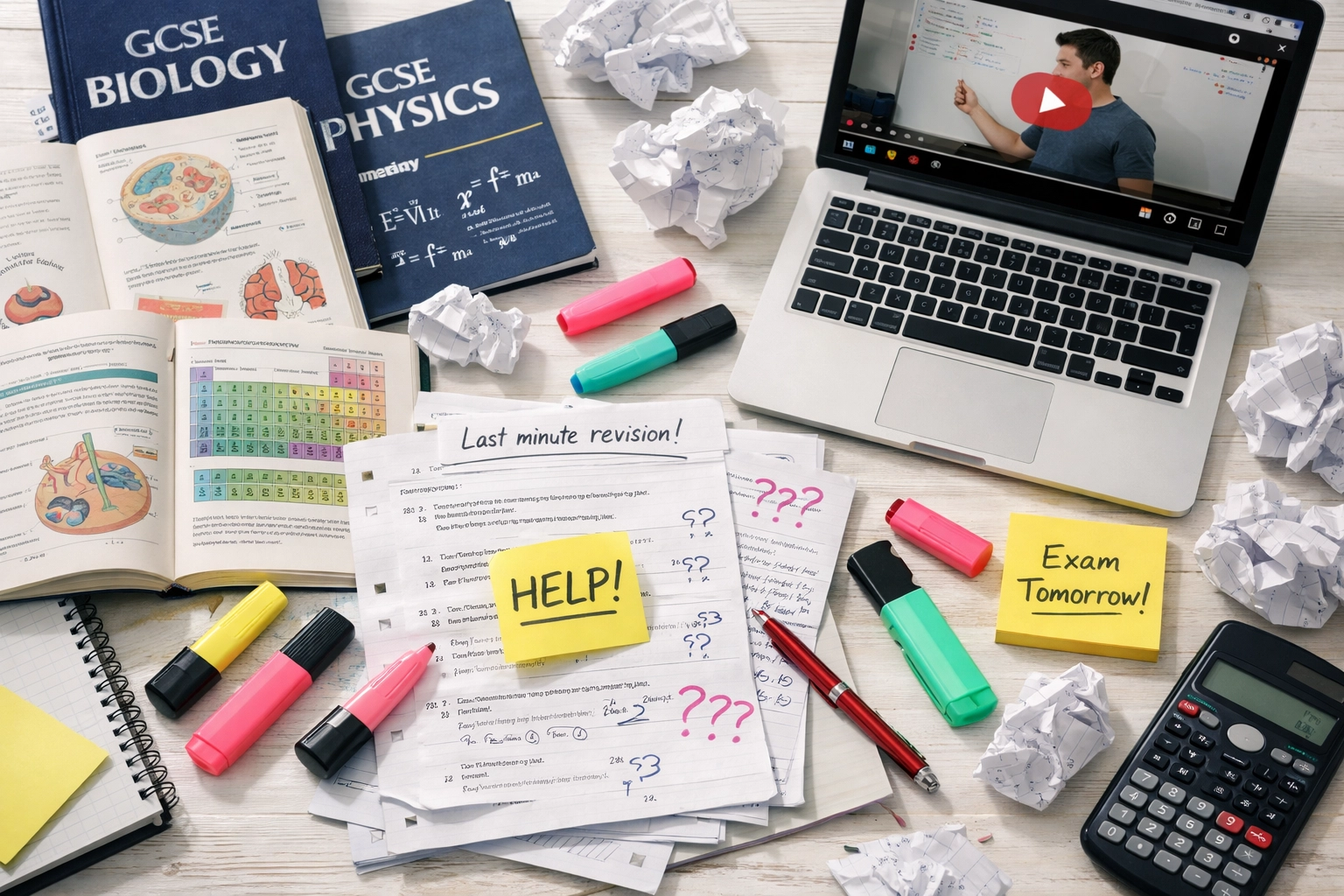
We also find that students often don’t know how to revise effectively. They re-read notes without testing themselves. They recognise content without being able to apply it. And critically, they don’t get the chance to ask the clarifying questions that would unlock their understanding: the “why does this work?” moments that turn confusion into clarity.
By the time they return to school for the final term, many students feel they’ve worked hard during the Easter break but haven’t actually moved forward. The anxiety remains, and the clock is still ticking.
The 4-Day Power Reset
This is exactly why we’ve designed our GCSE Science Revision Course in Dulwich the way we have. It’s not a series of passive lectures or an endless stream of practice papers. It’s a carefully structured, four-day intensive experience that does what solo revision can’t: it re-teaches, rebuilds confidence, and creates genuine momentum.
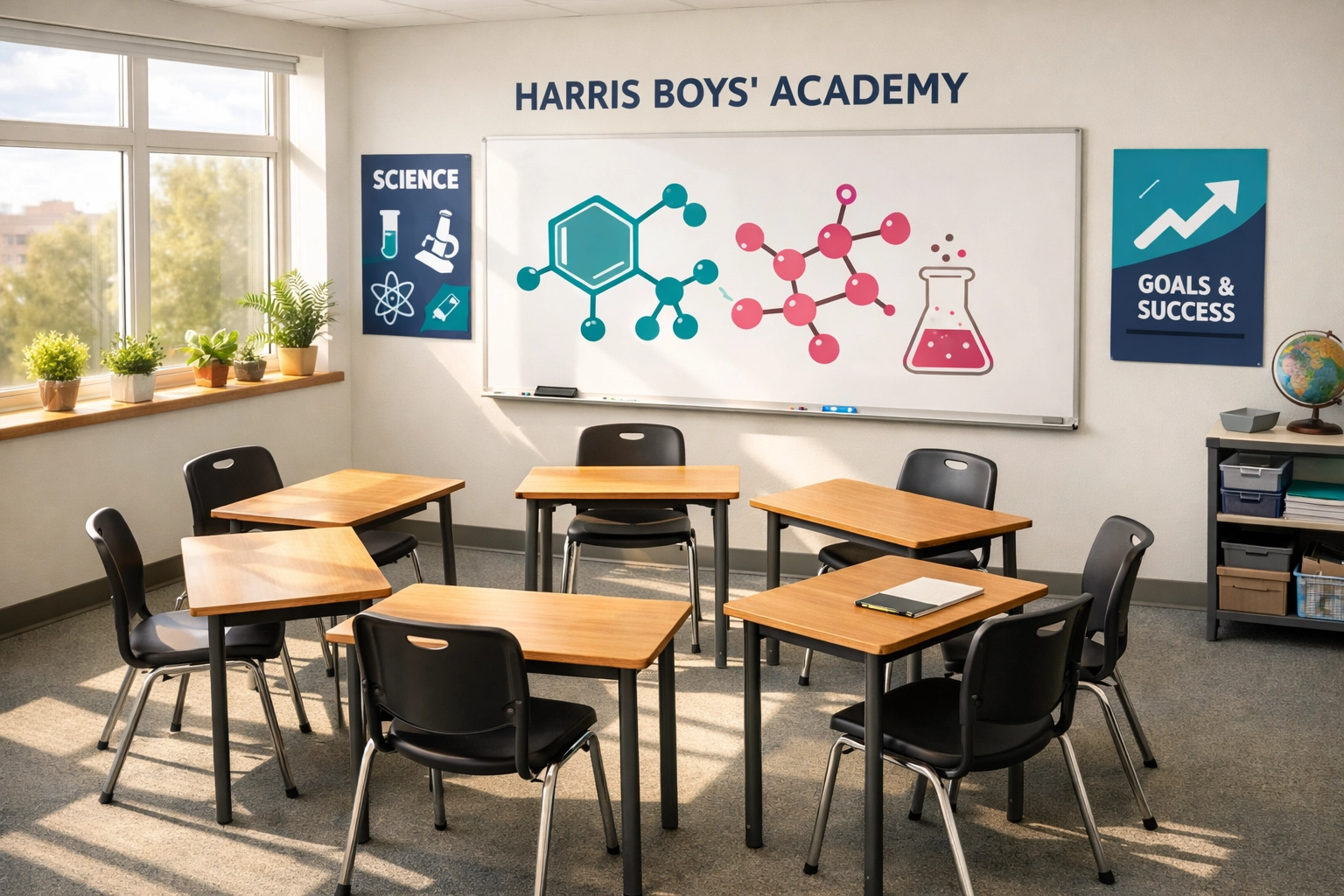
From Tuesday 7th to Friday 10th April 2026, students join us at Harris Boys Academy in East Dulwich for what we call the “Easter Window”: a focused reset that bridges the gap between where they are now and where they need to be.
Each day runs from 9:30am to 3:30pm, mirroring a school day without the fatigue that comes from overly long sessions. This timing is deliberate. It keeps energy and concentration high while leaving evenings free for rest and consolidation. We’ve found this rhythm works far better than cramming longer hours into fewer days.
The course covers all three sciences: Biology, Chemistry, and Physics: whether students are taking Combined Science or Triple Science. We work through the core content that forms the backbone of every exam board (AQA, Edexcel, and OCR), addressing the foundational concepts that students need to be solid on before they can tackle the trickier applications.
But what really sets this course apart is the way we’ve structured it around expert rotation.
Why Expert Rotation Works
Rather than one tutor attempting to cover all three sciences, students move between three specialist teachers over the four days: Chloe for Chemistry, Ruth for Biology, and Kate for Physics. Each brings deep subject expertise and years of experience teaching A Level and GCSE students.
This rotation does something powerful. It keeps the energy high and ensures that every topic is taught by someone who truly understands the “why” behind it: not just the surface-level facts, but the underlying logic that makes everything else fall into place.
When Chloe explains rates of reaction, she’s not just covering collision theory: she’s helping students see the patterns across the whole of Chemistry, so that catalysts, temperature changes, and surface area all make intuitive sense. When Ruth unpicks the endocrine system, she connects it back to cell signalling and homeostasis, building a coherent mental map rather than a list of isolated facts. When Kate teaches circuits, she makes sure students can see what’s happening with current and voltage, rather than just memorising formulas.
This is the difference between revision that feels like passive absorption and revision that actually sticks.
Small Groups, Big Impact
We keep our groups deliberately small: no more than six students per class. This isn’t just about individual attention, though that certainly matters. It’s about creating the kind of environment where students feel comfortable asking the questions they’ve been avoiding.
“Why does increasing temperature increase the rate of reaction and shift the equilibrium position in an exothermic reaction: aren’t those contradictory?”
“If white blood cells are part of the immune system, why do we also need antibodies?”
“I understand Ohm’s law, but I have no idea how to use it in series and parallel circuits.”
These are the questions that never get asked in a crowded classroom or resolved through solo revision. But in a small, supportive group with an expert tutor, they become the breakthrough moments. The “aha!” realisations that shift everything.
We also find that small groups naturally encourage students to articulate their thinking out loud. When one student asks a question, others often realise they’ve been wondering the same thing. The collaborative atmosphere: calm, focused, and genuinely supportive: helps students see that struggling with a concept doesn’t mean they’re behind. It means they’re engaging properly with the material.
Exam Technique: The Hidden Game-Changer
Here’s something parents are often surprised to learn: many students lose marks not because they don’t know the content, but because they don’t know how to answer the question.
They write too much or too little. They don’t use the command words correctly (“explain” versus “describe” versus “evaluate”). They miss easy marks because they haven’t shown their working or used the correct units. They panic when a question presents familiar content in an unfamiliar way.
This is where exam technique becomes essential, and it’s woven throughout our four-day course. We teach students exactly what examiners are looking for. How to structure a six-mark answer. How to approach calculations methodically. How to identify which piece of information in the question is the key to unlocking the whole thing.
We practise these skills using real past paper questions, so students get used to the phrasing and layout they’ll see in May and June. But rather than just marking answers right or wrong, we unpack why a particular approach works and another doesn’t. This builds confidence and reduces the exam-day anxiety that so many students feel.
The Result: Confidence and Clarity
When students leave our GCSE Science Revision Course in South London on Friday 10th April, something fundamental has shifted. They’re not carrying the same sense of overwhelm they arrived with. The difficult topics feel manageable. The gaps in their knowledge have been filled. They have a clear revision plan for the final weeks before exams, and they know how to use it effectively.
More importantly, they believe they can do this. And that belief: that quiet, steady confidence: makes all the difference when they walk into the exam hall.
Parents tell us that the course acts as a turning point. Their child comes home feeling ahead of the curve rather than chasing it. Mock anxiety is replaced by focus. Panic gives way to strategy. And the final term at school becomes about fine-tuning and consolidating, not desperately trying to catch up.

Why This Window Matters
The Easter holidays represent the last significant stretch of uninterrupted time before GCSE exams begin. After this, students are back in school, juggling lessons, controlled assessments, and mounting exam pressure. There simply isn’t another opportunity like this one.
But time alone isn’t enough. What matters is how that time is used. Four days of structured, expert-led teaching in a supportive environment can achieve far more than two weeks of unfocused, solitary revision ever could.
We’ve designed this course specifically for families in Dulwich and the wider South London area who want to give their child the best possible preparation without adding to the stress. Harris Boys Academy in East Dulwich provides a calm, modern learning environment, and our small group sizes mean we can genuinely get to know each student and adapt our teaching to what they need.
Secure the Easter Window Today
If this sounds like the right fit for your child, we’d be very happy to welcome them. Places are limited because we keep the groups small, but spaces are still available for our four-day course from 7th–10th April 2026.
You can find full details and book online at success-in-stem.com/easter-gcse-science-revision-course-2026.
We know how important these final weeks are, and we’re here to support your child through them with clarity, expertise, and genuine care. The Easter window is a gift( let’s make sure it counts.)


Oxford-Educated Chemistry Specialist
With over 20 years of teaching experience at some of the UK’s top independent schools, I help ambitious students bridge the gap between hard work and top-tier results. I specialise in GCSE, A Level, and IB Chemistry tuition for students targeting Grade 9s and A*s. Based in the UK but working globally, I provide 1-1 online support for families in South and West London, Dubai, and Hong Kong, ensuring students are perfectly prepared for competitive medical applications and Oxbridge entries.
I’ve helped students achieve top grades from schools such as Alleyn’s, Dulwich College, Tonbridge, Sevenoaks, Brighton College, Wycombe Abbey, Caterham, St Paul’s, Dubai College, Dubai British School and Harrow International School Hong Kong.
Contact me archardchloe@gmail.com to discuss how I can help your child excel in Chemistry.