

Blog
The Oxbridge Blueprint: Why A Level Chemistry is the Ultimate Filter for Elite Universities


If you’re a parent of an ambitious Year 11 or Year 12 student with dreams of Oxford, Cambridge, or a top-tier Medical School, you’ve probably already noticed something: A Level Chemistry isn’t just recommended: it’s non-negotiable.
But here’s what most families don’t realize until it’s too late: Chemistry isn’t just a box to tick on the UCAS form. It’s the ultimate intellectual filter that these elite universities use to separate students who can memorize from students who can think.
And that distinction? It makes all the difference.
The “Gatekeeper” Subject: Why Chemistry is Non-Negotiable
Let’s start with the facts. Oxford Chemistry requires AAA, with both As specifically in science or mathematics subjects: and Chemistry and Mathematics are both mandatory. Cambridge has the same requirement: AA*A with Chemistry as one of two minimum science or mathematics subjects.
For Medicine, Dentistry, and Veterinary Science? Chemistry is required across the board. But here’s what surprises most people: Chemistry is highly valued for Law, Economics, and Engineering too: not because you’ll be balancing equations in a courtroom, but because of the rigour it demands.
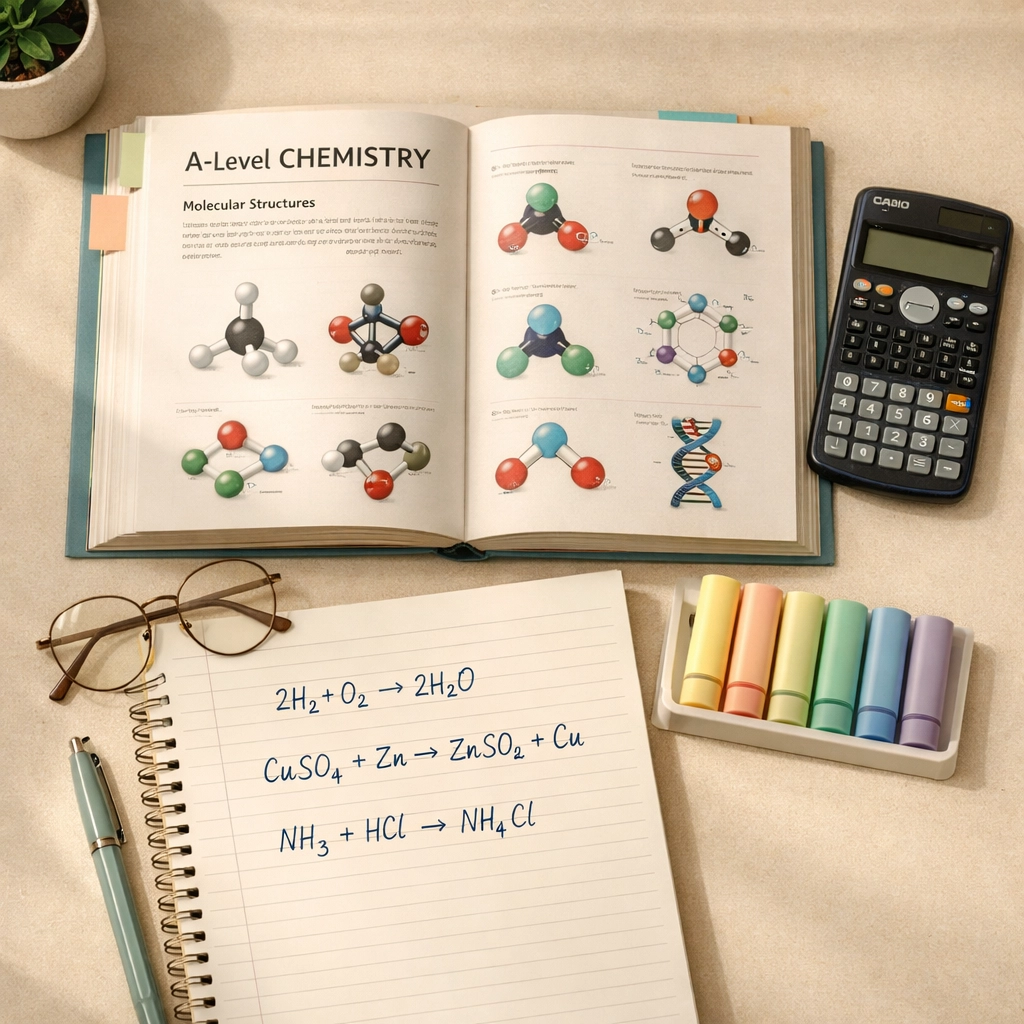
Think about it. Chemistry requires you to:
- Navigate between the abstract (quantum mechanics, molecular orbital theory) and the concrete (titrations, practical analysis)
- Apply mathematical logic to predict real-world outcomes
- Hold multiple variables in your mind simultaneously
- Explain complex mechanisms with precision
These are exactly the skills that elite universities are looking for: regardless of your intended degree. Chemistry proves you can handle intellectual complexity under pressure.
Beyond the Grade: Developing the “Oxbridge Mindset”
Here’s the uncomfortable truth: an A* in A Level Chemistry doesn’t guarantee an Oxbridge offer. Oxford interviewed 89% of applicants but accepted only 29%. Cambridge’s statistics are similar.
Why? Because these universities aren’t just looking for students who can get the right answer. They’re looking for students who can explain why a mechanism happens: not just memorize it.
This is what I call the “Oxbridge Mindset,” and it’s something that needs to be cultivated from the very beginning of Year 12. It’s about asking deeper questions:
- Why does this reaction happen in this direction and not the reverse?
- What assumptions are we making when we apply Le Chatelier’s principle here?
- How would changing the solvent affect this equilibrium?
In a typical classroom setting, these questions often get glossed over in favour of “this is how you score marks on the exam.” But Oxbridge interviewers will push you on exactly these deeper questions: and if you’ve only ever learned to follow a mark scheme, you’ll struggle.
This is where targeted, expert tutoring makes the difference. In my 1-1 and small group sessions, we don’t just cover content. We practice thinking like an Oxbridge supervisor: exploring the “why” behind every concept, questioning assumptions, and building genuine chemical intuition rather than algorithmic responses.
The Tutorial Advantage: Preparing for the Interview Room from Day One
If you’ve researched Oxbridge at all, you’ve probably heard about the tutorial system: small group supervisions where students defend their ideas, get challenged by world-class academics, and learn to think on their feet.
Most students don’t experience anything like this until they arrive at university (if they get there). By then, it’s sink or swim.
My approach is different. Every session I run is designed to mimic that Oxbridge environment:
- I’ll ask you to explain a reaction mechanism out loud: not just write it down
- I’ll challenge your assumptions and ask you to defend your reasoning
- I’ll introduce unfamiliar problems that require you to apply principles, not just recall them
- I’ll help you get comfortable with saying “I don’t know: but here’s how I’d figure it out”
Because that last point? That’s what Oxbridge tutors want to hear. They’re not testing whether you know everything: they’re testing whether you can think critically when faced with something new.
This is especially crucial for students applying from Dubai, London, or other international locations who may not have access to the same university preparation resources as students in traditional UK grammar schools. An online chemistry tutor with Oxbridge experience can bridge that gap.
Strategic Planning: Why Year 12 is the Make-or-Break Year
Here’s where most families get the timing wrong. They think: “We’ll focus on getting strong predicted grades in Year 12, and then we’ll worry about Oxbridge preparation in Year 13.”
By then, it’s too late.
Oxbridge applications are due in mid-October of Year 13: which means your personal statement, admissions test preparation, and interview prep all need to happen in the summer between Year 12 and Year 13. And your predicted grades? Those are based on your Year 12 performance.
More importantly, the “Chemistry Intuition” that Oxbridge interviewers are looking for doesn’t develop overnight. It’s built through consistent practice, deep questioning, and making connections across topics over months: not weeks.
This is why students who start building that intuition in Year 12 have such a significant advantage. By the time they hit Year 13, they’re not just “learning Chemistry”: they’re thinking in Chemistry. And that’s what gets noticed.
If your child is currently in Year 12 and targeting Oxbridge or Medicine, now is the time to start. We should be working on:
- Strengthening foundational understanding of bonding, energetics, and kinetics
- Practicing unfamiliar problem-solving (like Chemistry Olympiad-style questions)
- Building confidence in explaining concepts out loud
- Developing the ability to make connections across topics
It’s Not Just About Chemistry: It’s About Opening Doors
Here’s the final piece that often gets overlooked: a strong Chemistry A Level doesn’t just get you into Oxbridge: it opens doors to careers that most people don’t even know exist.
Patent law in the pharmaceutical industry. Sustainable luxury materials. Green tech startups. Quantum computing. These are fields where a Chemistry background gives you a genuine competitive advantage: and they’re exactly the kinds of careers that ambitious, internationally-minded families in Dubai and London want for their children.
But to access those opportunities? You need to start with the foundation: a rigorous, Oxbridge-standard Chemistry education.
The Bottom Line
If your child is serious about Oxford, Cambridge, or top-tier medical schools, Chemistry isn’t just another subject: it’s the filter that determines whether they’re ready for that level of intellectual challenge.
But the good news? With the right guidance, it’s absolutely achievable. It’s not about being a “natural” at science. It’s about learning how to think deeply, question assumptions, and develop genuine understanding rather than surface-level memorization.
That’s exactly what I help students do: whether they’re based in London, Dubai, or anywhere else in the world. My A Level Chemistry tutoring is designed specifically for students who aren’t just aiming for an A*: they’re aiming for *elite*.
If you’re aiming for the world’s best universities, don’t leave your most important subject to chance. The Oxbridge admissions process is unforgiving, and Chemistry is where most students either prove themselves or fall short.
Let’s make sure your child is in the first category. Book a consultation to see how we can build their Oxbridge-ready profile( starting with the one subject that matters most.)

Oxford-Educated Chemistry Specialist
With over 20 years of teaching experience at some of the UK’s top independent schools, I help ambitious students bridge the gap between hard work and top-tier results. I specialise in GCSE, A Level, and IB Chemistry tuition for students targeting Grade 9s and A*s. Based in the UK but working globally, I provide 1-1 online support for families in South and West London, Dubai, and Hong Kong, ensuring students are perfectly prepared for competitive medical applications and Oxbridge entries.
I’ve helped students achieve top grades from schools such as Alleyn’s, Dulwich College, Tonbridge, Sevenoaks, Brighton College, Wycombe Abbey, Caterham, St Paul’s, Dubai College, Dubai British School and Harrow International School Hong Kong.
Contact me archardchloe@gmail.com to discuss how I can help your child excel in Chemistry.