

Blog
The Resilience Factor: How Mastering GCSE Chemistry Prepares Your Teen for the Corporate World

Chemistry is often called the ‘Central Science’, but for many teens, it’s also the ultimate test of resilience. It’s hard, it’s complex, and it requires a level of persistence that is becoming increasingly rare: and incredibly valuable in the corporate world.
As parents, we naturally focus on the grade. Will they get the 7, 8, or 9 they need for sixth form? Will the result open doors to competitive A Level choices? These are valid concerns. But there’s something else happening in those hours spent balancing equations and wrestling with organic mechanisms: something that extends far beyond the exam hall.
Your teenager is building a mindset that future employers will actively seek out.
The Chemistry Crucible: Where Grit Is Forged
Let’s be honest: GCSE Chemistry is not easy. It’s the subject where many capable students hit their first real intellectual wall. The content demands abstract thinking. The calculations require precision. And concepts like molar mass, electrolysis, and reaction mechanisms don’t tend to click on the first attempt.
This is precisely what makes it so valuable.
When a student sits down with a challenging quantitative chemistry problem and works through it: failing, re-reading, trying a different approach, and finally understanding: they’re developing something that can’t be taught directly. They’re learning how to tolerate frustration and push through it.
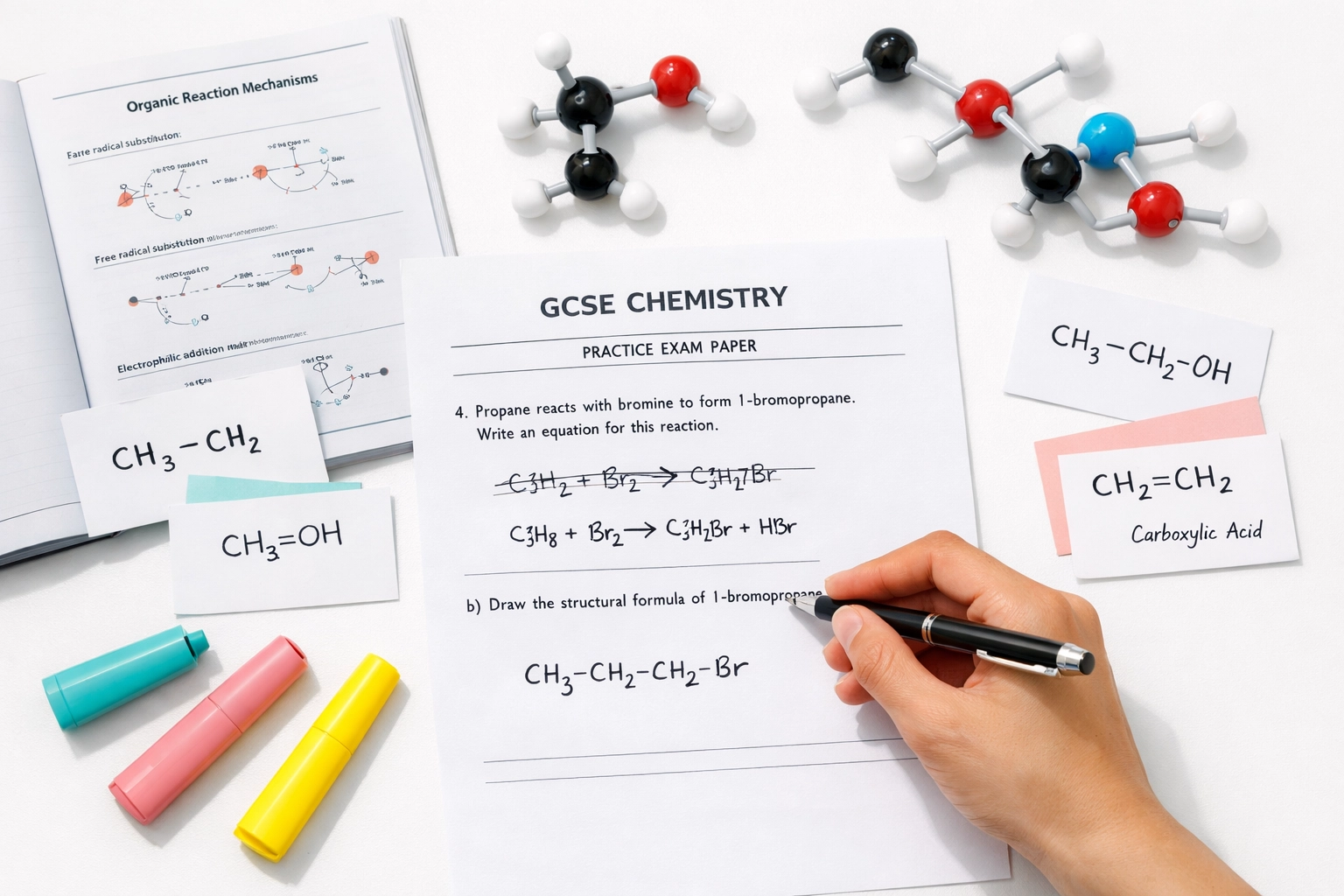
We see this regularly with the students we work with. There’s often a moment, somewhere around the third or fourth attempt at a particularly stubborn concept, where something shifts. The student stops expecting instant understanding and starts trusting the process. They realise that confusion isn’t a sign of failure: it’s simply part of learning something genuinely difficult.
This willingness to struggle, re-evaluate, and persist is what psychologists call ‘grit’. And it’s becoming one of the most sought-after qualities in the professional world.
Transferable Toughness: From the Lab to the Boardroom
Here’s something that might surprise you: when graduate recruiters at major law firms, investment banks, and management consultancies are asked what they’re really looking for, subject knowledge rarely tops the list.
What they want is problem-solving ability. Analytical thinking. The capacity to take on a complex challenge, break it down logically, and work through it systematically: even when the path forward isn’t immediately clear.
Sound familiar?
The skills your teenager develops while tackling GCSE Chemistry translate directly to high-stakes corporate environments. Consider what a typical chemistry student learns to do:
- Analyse patterns and relationships in data, not just memorise isolated facts
- Apply logical frameworks to unfamiliar problems
- Communicate technical concepts clearly and precisely
- Manage frustration when initial approaches don’t work
- Evaluate evidence and adjust conclusions accordingly
These aren’t just science skills. They’re the foundations of strategic thinking in any demanding profession.
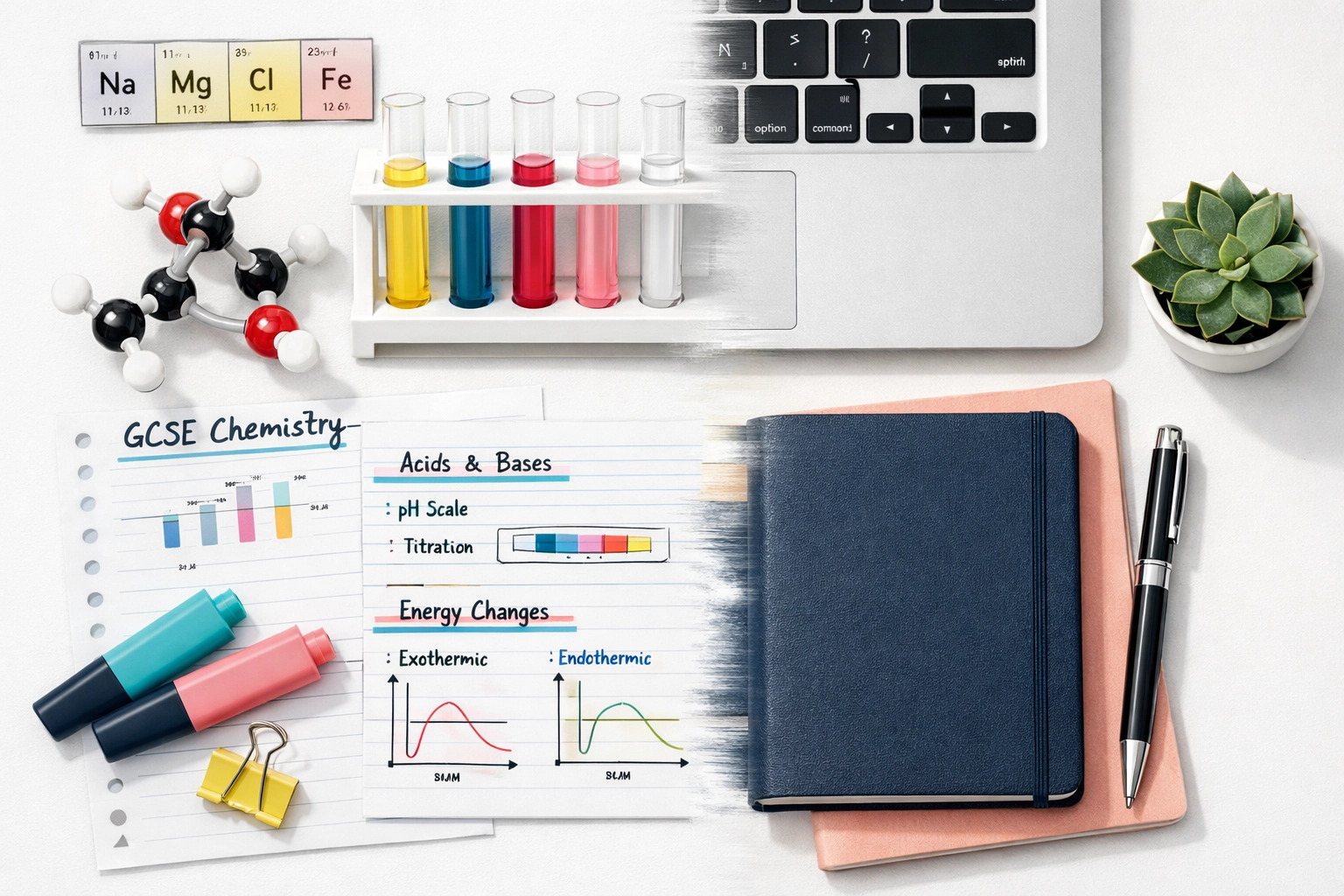
A student who has spent months wrestling with rate of reaction graphs and equilibrium shifts has unknowingly been training for the moment when, as a junior analyst or trainee solicitor, they’re handed a complex brief with a tight deadline and expected to figure it out.
The difference between someone who crumbles under that pressure and someone who stays calm and works the problem? Often, it comes down to whether they’ve had practice doing exactly that: in a different context.
Beyond the Grade: The Hidden Curriculum
When we talk about exam success, we tend to focus on the destination. The grade. The certificate. The numbers on a results slip.
But anyone who has genuinely mastered a challenging subject knows that the real transformation happens in the journey. The A* (or the strong 7, or the improved 5) is simply evidence that a student has developed a whole constellation of capabilities along the way.
Consider what the process of preparing properly for GCSE Chemistry actually involves:
Time management: Allocating revision across multiple topics, prioritising weaknesses, and working consistently over months rather than cramming at the last minute.
Handling complex data: Interpreting graphs, calculating percentages, working with unfamiliar units: skills that are essential in finance, consulting, and data-driven roles.
Logical problem-solving: Breaking multi-step questions into manageable parts and knowing which principles to apply at each stage.
Self-assessment: Identifying gaps in understanding, seeking help where needed, and being honest about what still needs work.
These meta-skills: the ability to learn effectively, manage oneself, and maintain composure under pressure: are exactly what distinguishes high performers in competitive professional environments.
Research consistently shows that chemistry qualifications are associated with higher earning potential, with chemical scientists earning approximately £7,500 above the UK median salary. But it’s worth considering why this is the case. It’s not simply the qualification itself: it’s the analytical capabilities and resilience that chemistry students develop along the way.
Expert Mentorship: Guiding Students Through the Tough Bits
At Success in STEM, we’ve taught chemistry for a combined total of over 50 years. Our team includes experienced teachers from schools like Alleyn’s, and we’ve worked with hundreds of students at every ability level.
What we’ve observed, time and again, is that the students who make the most significant progress aren’t necessarily the ones who find chemistry easiest. They’re the ones who learn to engage with difficulty rather than avoid it.
Our role is to support that process. We don’t simply deliver content: we mentor students through the moments when frustration peaks and motivation wavers. We help them see that struggling with a concept isn’t evidence that they’re “not a science person.” It’s evidence that they’re engaging with material that genuinely requires thought.
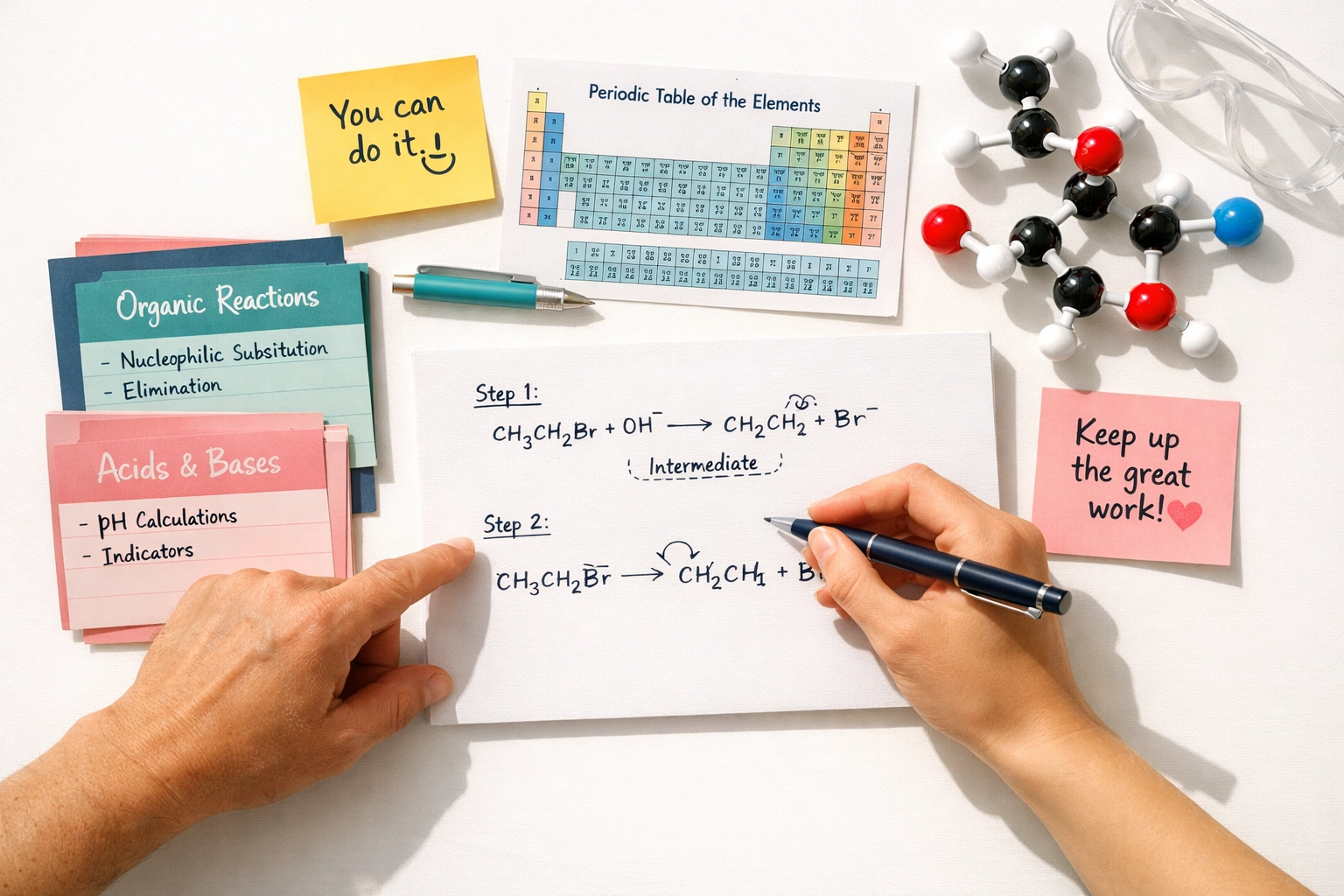
When a student finally grasps a mechanism they’ve been wrestling with for weeks, or works through a calculation that previously seemed impossibly complex, the confidence boost is substantial. And that confidence carries forward: not just into the exam, but into future challenges in subjects, careers, and life more broadly.
We take a structured, supportive approach because we know that resilience isn’t built through pressure and panic. It’s built through steady, guided effort, with expert support available when it’s needed.
A Foundation for the Future
Your teenager’s GCSE results will matter for their immediate next steps: sixth form choices, A Level subjects, university prospects. That’s a given.
But the habits of mind they develop while earning those results will shape something far more lasting: their capacity to take on difficult challenges, stay composed under pressure, and persist until they find a solution.
In a professional landscape that increasingly values adaptability and problem-solving over rote knowledge, this might be the most valuable preparation your child receives: whatever career path they eventually choose.
Chemistry teaches students that complex problems can be solved systematically. That confusion is temporary. That mastery comes to those who are willing to work through difficulty rather than around it.
These lessons serve them in the exam hall. They also serve them in the boardroom, the courtroom, and the consulting office: wherever their ambitions eventually take them.
Build the Resilience Your Child Needs for the Future
If this approach resonates with you, we’d be delighted to support your child through our GCSE Science Revision Course in South London.
Course dates: Tuesday 7th – Friday 10th April 2026
Venue: Harris Boys Academy, East Dulwich
We keep groups small so every student receives the individual attention they need: not just to improve their grades, but to build the confidence and capability that will serve them for years to come.
Secure a place for your child here.

Chloe Archard | Oxford-Educated Chemistry Specialist
With over 20 years of teaching experience at some of the UK’s top independent schools, I help ambitious students bridge the gap between hard work and top-tier results. I specialise in GCSE, A Level, and IB Chemistry tuition for students targeting Grade 9s and A*s. Based in the UK but working globally, I provide 1-1 online support for families in South and West London, Dubai, and Hong Kong, ensuring students are perfectly prepared for competitive medical applications and Oxbridge entries. Contact me archardchloe@gmail.com to discuss how I can help your child excel in Chemistry.