

Blog
UCAT, GAMSAT, and Grades: Navigating the New Medical School Entry Landscape


If you’ve been researching medical school applications recently, you might have noticed something major has changed. The BMAT is gone. Retired. No longer part of the equation.
So what does this mean for you and your medical school dreams? 🌟
Honestly, it’s a bit of a game-changer – and not necessarily in a bad way. But it does mean you need to understand exactly how the new admissions landscape works, and more importantly, how your Chemistry grades fit into the bigger picture.
Let’s break it all down together.
The Big Shift: Life After BMAT
For years, the BMAT (BioMedical Admissions Test) was a fixture for applicants to prestigious universities like Oxford, Cambridge, and Imperial. Students would prepare for months, stressing over yet another high-stakes exam on top of everything else.
But as of recently, BMAT has been retired, leaving UCAT as the primary admissions test for the vast majority of UK medical schools. According to the BMA’s guide to applying to medical school, this shift means your preparation strategy needs to adapt accordingly.
The good news? You’ve got one fewer test to worry about.
The reality check? UCAT has become even more important, and your grades matter more than ever.

What Exactly is UCAT?
The University Clinical Aptitude Test (UCAT) is used by more than 35 undergraduate medical and dental programmes across the UK. It’s designed to test your cognitive abilities, problem-solving skills, and decision-making under pressure – essentially, the mental toolkit you’ll need as a future doctor.
The UCAT consists of five sections:
- Verbal Reasoning – analysing and evaluating written information
- Decision Making – applying logic to complex scenarios
- Quantitative Reasoning – solving problems using numerical data
- Abstract Reasoning – identifying patterns and relationships
- Situational Judgement – understanding real-world ethical scenarios
Here’s the thing about UCAT: it’s entirely multiple choice, and there’s serious time pressure. You’re making rapid-fire decisions under demanding constraints, which can feel overwhelming if you’re not prepared.
Scores range from 1200 to 3600, and to be genuinely competitive, you’re typically looking at hitting the 90th to 95th percentile – that’s around 3100 or above based on recent cohorts.
No pressure, right? 😅
What About GAMSAT?
If you’re considering graduate-entry medicine (perhaps you’re already at university or thinking ahead), then GAMSAT is the test for you. It’s accepted at 12 UK universities and has a completely different flavour to UCAT.
GAMSAT consists of three sections:
- Reasoning in Humanities and Social Sciences
- Written Communication (yes, actual essays!)
- Reasoning in Biological and Physical Sciences
Unlike UCAT, GAMSAT requires prior knowledge. We’re talking Year 12 Physics and first-year university Chemistry and Biology. The questions dig deeper into scientific reasoning, and there’s less time pressure but more emphasis on your ability to think critically and communicate clearly.
Here’s something important: GAMSAT scores are often combined directly with your university GPA and interview performance. So your academic grades carry direct weighting in the admissions decision.
If you hold an undergraduate degree and sit both UCAT and GAMSAT, you could potentially apply to any of the 18 graduate entry medical programmes in the UK. That’s a significant advantage for keeping your options wide open.
The Chemistry Connection: Why Your A Level Skills Matter
Now, here’s where things get interesting – and where I get to talk about my favourite subject! 🧪
You might look at UCAT and think, “Well, it doesn’t directly test Chemistry knowledge, so maybe I can coast a bit on that subject while I focus on test prep.”
Please don’t make this mistake.
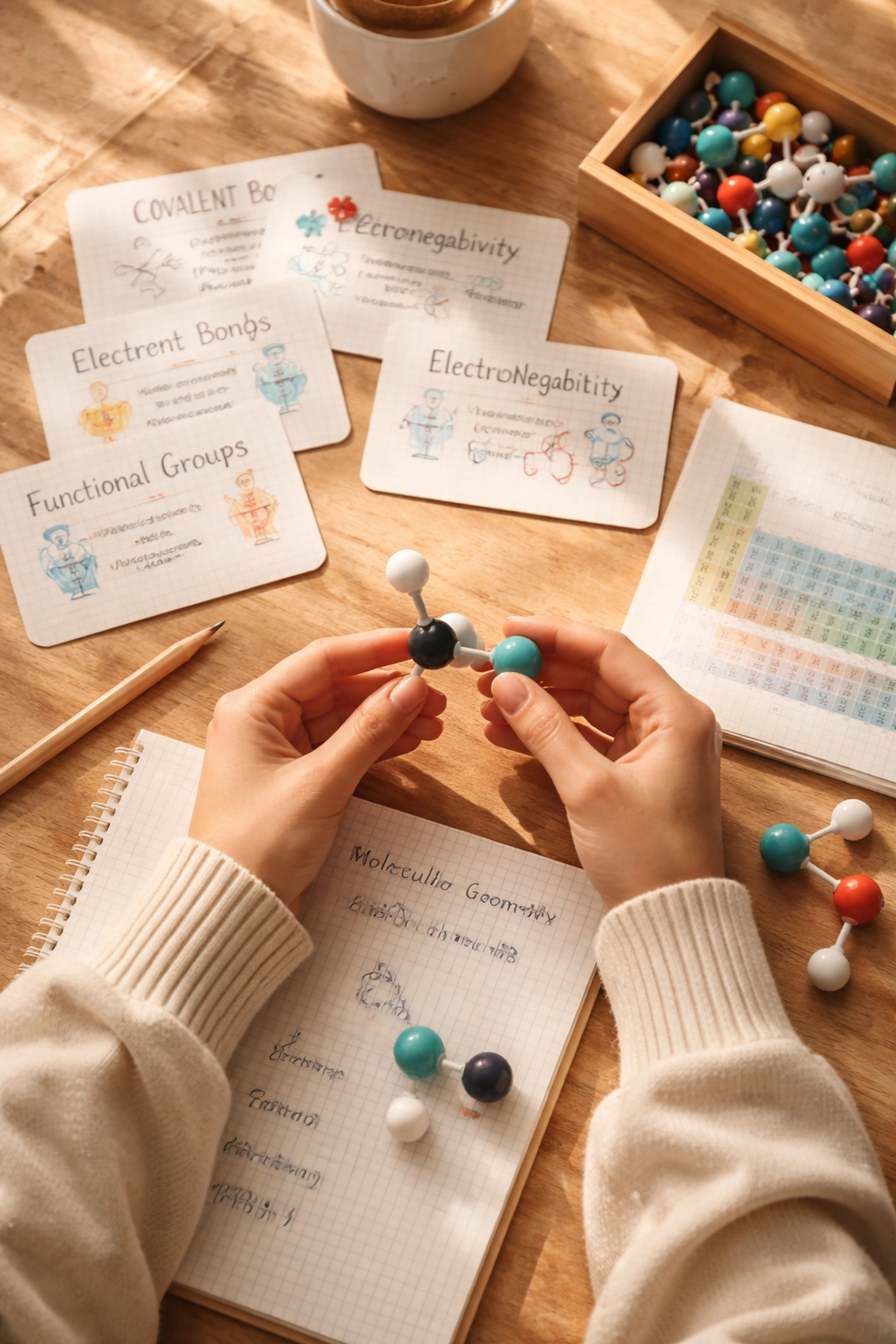
The analytical skills you develop while studying A Level Chemistry are the exact same skills you need to excel in admissions tests. Think about it:
- Pattern recognition in Abstract Reasoning? That’s literally what you do when identifying trends in reactivity series or electron configurations.
- Quantitative Reasoning under pressure? Hello, titration calculations and mole ratios!
- Decision Making with complex data? Every time you interpret a rate equation or analyse a mass spectrum, you’re building this muscle.
- GAMSAT’s science section? It directly tests Chemistry knowledge at university level.
The students who excel at Chemistry tend to approach problems systematically, break down complex information into manageable chunks, and stay calm under pressure. These are exactly the traits that medical schools are looking for – and exactly what admissions tests are designed to identify.
So when you’re working hard on your Chemistry revision, you’re not just preparing for one exam. You’re building the cognitive toolkit that will serve you across every stage of your medical school application.
The UCAS Maths: Why Every Grade Point Matters
Let’s talk numbers for a moment, because this is where reality hits hard.
When you apply to medicine through UCAS, you get exactly four choices. That’s it. Four universities to pin all your hopes on.
Now, every medical school has its own entry requirements, and they vary significantly. Some will accept AAA, others demand AAA, and the most competitive programmes want AAA with Chemistry as one of those A grades.
Here’s the brutal truth: if your predicted Chemistry grade isn’t an A or A*, your list of available schools shrinks instantly.
Suddenly, you’re not choosing from the full menu of medical schools. You’re limited to the handful that might consider you with lower predictions – and those schools are often the most oversubscribed because everyone else with lower grades is applying there too.
Maintaining high grades is the only way to keep all your options open.
This isn’t about perfectionism or unnecessary pressure. It’s about strategic thinking. When you’re competing against thousands of other brilliant applicants, you need every advantage you can get. And a strong predicted grade in Chemistry? That’s your ticket to the widest possible choice of medical schools.

The Complete Picture: Grades AND Test Scores
Here’s what catches some students (and parents) off guard: you can’t let either your grades or your test scores slip.
Medical schools use a combination of:
- Predicted/actual A Level grades (especially in Chemistry and Biology)
- UCAT or GAMSAT scores
- Personal statement
- Interview performance
- Work experience and extracurriculars
A fantastic UCAT score won’t compensate for disappointing predicted grades. Equally, straight A*s won’t get you an interview if your UCAT score falls below a school’s threshold.
You need both. And that means balancing your revision time wisely, preparing strategically for admissions tests, and not letting either ball drop.
It sounds like a lot – because it is. But with the right support and a solid plan, it’s absolutely achievable. ❤️
Ready to Bridge the Gap? Let MedAspire Help
If you’re reading this thinking, “Okay, I understand what I need to do, but HOW do I actually get there?” – I hear you. And I’d love to help.
MedAspire is our course specifically designed for aspiring medical students who want to bridge the gap between working hard and actually getting the grades. It’s not just about content knowledge – it’s about exam technique, strategic thinking, and building the confidence you need to perform under pressure.
Whether you’re in the UK or Dubai, studying for GCSEs or A Levels, MedAspire gives you the structured support that makes the difference between a competitive application and an outstanding one.
And if you need more targeted, personalised support, our 1-1 and small group tuition sessions focus specifically on Chemistry – helping you secure that A or A* that keeps all your options open.
Your medical school dreams deserve a solid foundation. Let’s build it together. 🌟
Get in touch today to learn more about MedAspire and how we can support your journey to medicine.

Chloe Archard | Oxford-Educated Chemistry Specialist
With over 20 years of teaching experience at some of the UK’s top independent schools, I help ambitious students bridge the gap between hard work and top-tier results. I specialise in GCSE, A Level, and IB Chemistry tuition for students targeting Grade 9s and A*s. Based in the UK but working globally, I provide 1-1 online support for families in South and West London, Dubai, and Hong Kong, ensuring students are perfectly prepared for competitive medical applications and Oxbridge entries. Contact me archardchloe@gmail.com to discuss how I can help your child excel in Chemistry.