

Blog
Van der Waals Forces and Hydrogen Bonding Explained: What Every A Level Chemistry Student Needs to Know


Ever wondered why water boils at 100°C but methane (which has a similar molecular mass) boils at a freezing -164°C? Or why ice floats? The answer lies in understanding intermolecular forces – specifically van der Waals forces and hydrogen bonding. These invisible forces between molecules are absolute game-changers for your A Level Chemistry exams! 🌟
Let’s break down these crucial concepts in a way that actually makes sense (and helps you nail those exam questions).
What Are Intermolecular Forces?

Intermolecular forces are the attractive forces that exist between molecules. They’re much weaker than the covalent bonds that hold atoms together within molecules, but they’re incredibly important because they determine physical properties like boiling points, melting points, and solubility.
Think of it like this: if covalent bonds are like the strong cables holding a bridge together, intermolecular forces are like the gentle magnetic attraction between nearby metal objects. Weak individually, but collectively they have a massive impact on how substances behave.
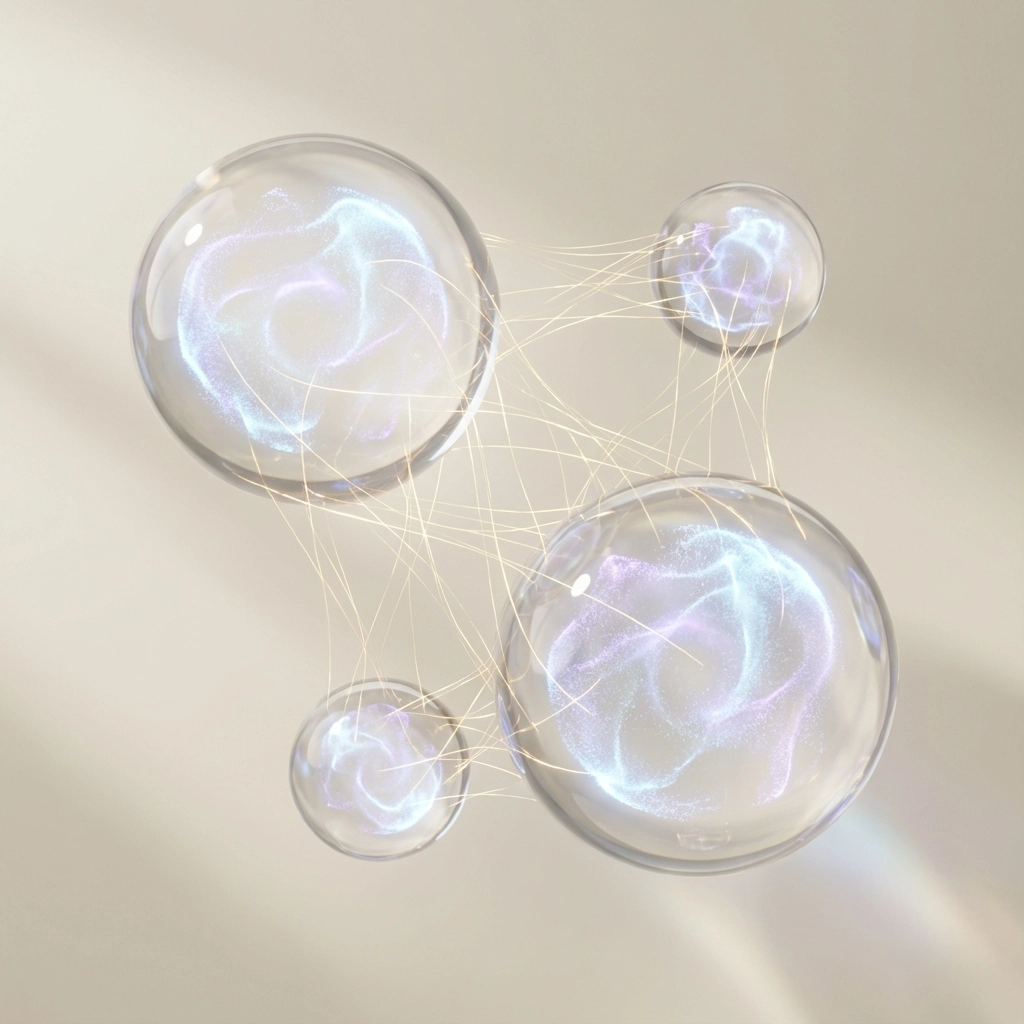
The Three Types of Van der Waals Forces You Need to Master
1. London Dispersion Forces (The Universal Ones)
London dispersion forces exist in all atoms and molecules – they’re the baseline intermolecular force. Here’s what’s happening:
- Electrons are constantly moving around atoms and molecules
- Sometimes they temporarily bunch up on one side, creating an instantaneous dipole
- This temporary charge imbalance induces dipoles in nearby molecules
- These temporary dipoles attract each other
Key facts for exams:
- Present in all substances (polar and non-polar)
- Weakest of the intermolecular forces
- Strength increases with larger molecules (more electrons = stronger forces)
- Explains why iodine (I₂) is solid but chlorine (Cl₂) is gas at room temperature
2. Permanent Dipole-Dipole Interactions
These occur between polar molecules – molecules with a permanent separation of charge due to differences in electronegativity.
How to spot them:
- Look for molecules with polar covalent bonds that don’t cancel out
- Examples: HCl, CH₃Cl, SO₂
- The δ+ end of one molecule attracts the δ- end of another
Exam tip: Remember that symmetrical molecules like CO₂ and CCl₄ have polar bonds but are non-polar overall because the dipoles cancel out!
3. Hydrogen Bonding (The Superstar)
Hydrogen bonding is like the VIP version of dipole-dipole interactions. It’s so important it gets its own category!
The magic formula: Hydrogen bonding occurs when hydrogen is directly bonded to one of three highly electronegative atoms:
- Fluorine (H-F)
- Oxygen (H-O)
- Nitrogen (H-N)
The hydrogen becomes extremely δ+ and is attracted to lone pairs on F, O, or N in nearby molecules.

Why Hydrogen Bonding Changes Everything
Hydrogen bonds are roughly 10 times stronger than regular dipole-dipole forces. This explains some mind-blowing exceptions to normal patterns:
Water vs. Other Group 16 Hydrides
| Compound | Boiling Point | Explanation |
|---|---|---|
| H₂O | 100°C | Hydrogen bonding |
| H₂S | -60°C | Only London forces + weak dipole-dipole |
| H₂Se | -41°C | Slightly stronger London forces |
| H₂Te | -2°C | Even stronger London forces |
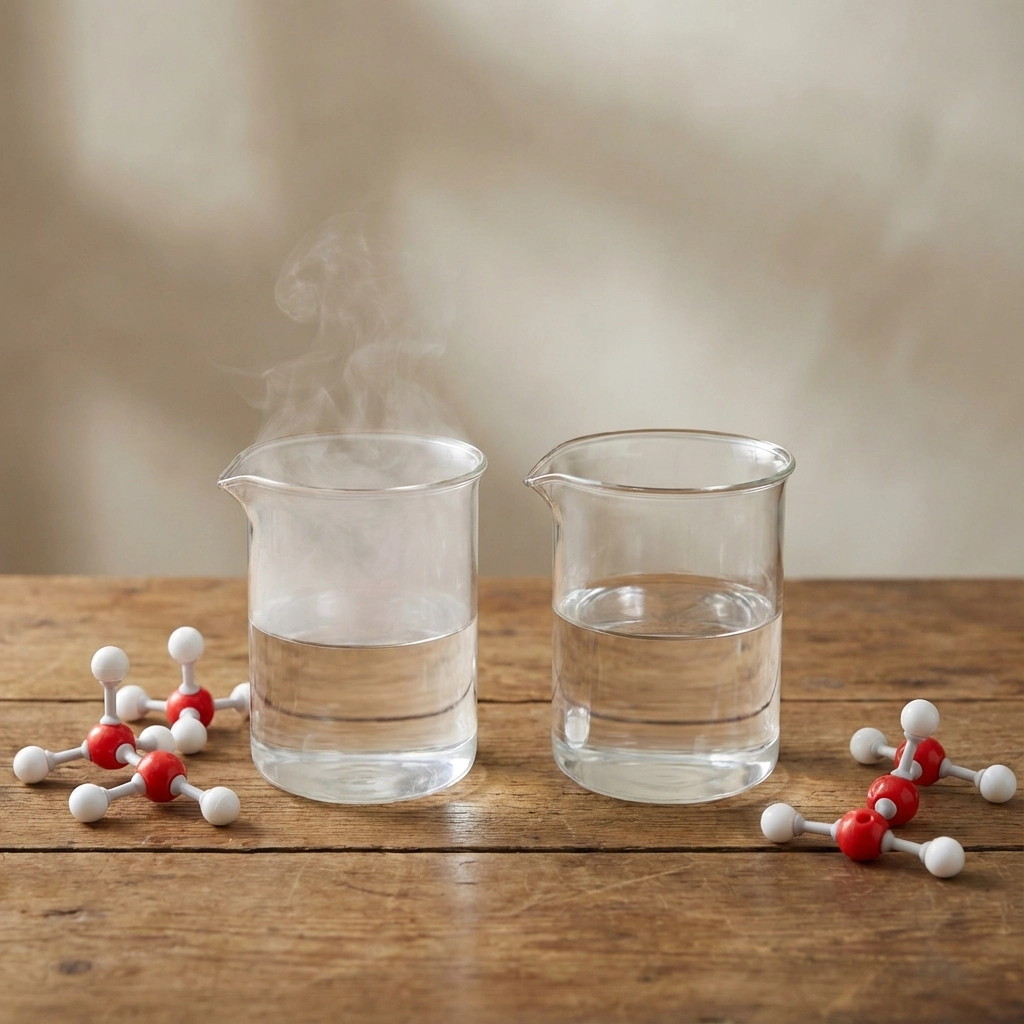
Without hydrogen bonding, water would boil at about -80°C! Life as we know it wouldn’t exist.
Alcohols vs. Ethers
Compare these molecules with similar molecular masses:
- Ethanol (C₂H₅OH): boiling point = 78°C (hydrogen bonding)
- Dimethyl ether (CH₃OCH₃): boiling point = -24°C (no hydrogen bonding)
Both have the same molecular formula (C₂H₆O), but ethanol can form hydrogen bonds while ether cannot!
How Intermolecular Forces Affect Physical Properties
Boiling and Melting Points
Stronger intermolecular forces = higher boiling/melting points
This is because you need more energy to overcome the attractions between molecules.
Typical pattern (weakest to strongest):
- London forces only (e.g., methane, noble gases)
- London forces + dipole-dipole (e.g., HCl, SO₂)
- London forces + hydrogen bonding (e.g., water, alcohols)
Solubility
“Like dissolves like” – this rule is all about intermolecular forces:
- Polar substances dissolve in polar solvents (hydrogen bonding/dipole interactions)
- Non-polar substances dissolve in non-polar solvents (London forces)
Viscosity and Surface Tension
Stronger intermolecular forces also mean:
- Higher viscosity (thicker, more resistant to flow)
- Higher surface tension (stronger “skin” on liquid surfaces)
This is why honey (lots of hydrogen bonding) flows much slower than petrol (mainly London forces).
Noble Gases: A Perfect Case Study
The noble gases are brilliant for understanding London forces because they’re completely non-polar – London forces are the only intermolecular forces present.
| Noble Gas | Atomic Number | Boiling Point |
|---|---|---|
| Helium | 2 | -269°C |
| Neon | 10 | -246°C |
| Argon | 18 | -186°C |
| Krypton | 36 | -153°C |
| Xenon | 54 | -108°C |
Perfect trend: As atomic number increases, more electrons mean stronger London forces and higher boiling points.

Exam-Crushing Tips for Intermolecular Forces
Quick Recognition Guide
For any molecule, ask yourself:
- Is hydrogen bonded to F, O, or N? → Hydrogen bonding (strongest)
- Is the molecule polar? → Dipole-dipole interactions
- All molecules have: → London dispersion forces (weakest)
Common Exam Traps to Avoid
❌ “NH₃ has stronger hydrogen bonds than H₂O”
✅ H₂O has stronger hydrogen bonding – oxygen is more electronegative than nitrogen, and water can form up to 4 hydrogen bonds per molecule vs. 3 for ammonia.
❌ “Larger molecules always have higher boiling points”
✅ Consider the type of intermolecular forces – a small molecule with hydrogen bonding can have a higher boiling point than a larger molecule with only London forces.
Practice Questions to Master
- Explain why HF has a higher boiling point than HCl, despite HCl being a larger molecule.
- Why does ethanol mix with water but hexane doesn’t?
- Compare the boiling points of butanol (C₄H₉OH) and butane (C₄H₁₀).
Your Intermolecular Forces Revision Checklist ✅
Master these and you’ll smash the exam:
- [ ] Can identify all three types of van der Waals forces in any given molecule
- [ ] Understand why hydrogen bonding only happens with F, O, and N
- [ ] Can predict relative boiling/melting points based on intermolecular forces
- [ ] Know the hydrogen bonding exceptions (water, alcohols, carboxylic acids)
- [ ] Can explain solubility patterns using “like dissolves like”
- [ ] Understand the relationship between molecular size and London forces
- [ ] Can draw hydrogen bonding between molecules (showing lone pairs and δ+ hydrogen)
Putting It All Together
Intermolecular forces might seem like a small topic, but they’re everywhere in A Level Chemistry. From explaining why ice floats (hydrogen bonding makes ice less dense than water) to understanding how proteins fold (hydrogen bonding between amino acids), these forces are fundamental to chemistry and biology.
The key is practice, practice, practice. Start with simple molecules, identify the intermolecular forces present, and predict their properties. Before you know it, you’ll be confidently tackling even the trickiest exam questions about boiling points, solubility, and molecular behavior.
Need more help mastering the fundamentals? Check out our complete guide to physical chemistry or discover proven revision strategies that actually work.
Remember: understanding beats memorising every time. Once you truly get intermolecular forces, so many other chemistry concepts will suddenly click into place! 🙌

Oxford-Educated Chemistry Specialist
With over 20 years of teaching experience at some of the UK’s top independent schools, I help ambitious students bridge the gap between hard work and top-tier results. I specialise in GCSE, A Level, and IB Chemistry tuition for students targeting Grade 9s and A*s. Based in the UK but working globally, I provide 1-1 online support for families in South and West London, Dubai, and Hong Kong, ensuring students are perfectly prepared for competitive medical applications and Oxbridge entries.
I’ve helped students achieve top grades from schools such as Alleyn’s, Dulwich College, Tonbridge, Sevenoaks, Brighton College, Wycombe Abbey, Caterham, St Paul’s, Dubai College, Dubai British School and Harrow International School Hong Kong.
Contact me archardchloe@gmail.com to discuss how I can help your child excel in Chemistry.