

Blog
From B to A*: The 3 Revision Habits That Actually Move the Needle in A Level Chemistry


Are you spending hours staring at your notes, highlighting every second line, and yet your mock results are still stuck at a B? You’re not alone. I’ve worked with countless students who feel like they’re doing everything right, putting in the hours, making beautiful colour-coded notes, watching YouTube videos until their eyes glaze over, and yet that elusive A* feels completely out of reach.
Here’s the thing: Chemistry is unique. It’s not just about what you know, it’s about how you apply it under pressure, how you communicate your understanding, and how well you’ve trained your brain to retrieve information when it matters most. If you want to jump from a B to an A*, you need to stop “reviewing” and start mastering.
Let me share the three revision habits that genuinely move the needle. These aren’t fluffy tips you’ve heard a thousand times. These are the high-impact changes that separate the students who plateau at a B from those who secure their Med School offers with an A*. ?
Habit 1: Stop Being a “Passive Reader” and Embrace Active Recall
Let’s be honest, highlighting a textbook feels like work, but for your brain, it’s basically a holiday. You’re recognising information, not retrieving it. And recognition is not what the examiner is testing you on. They want you to pull knowledge from your memory, apply it to unfamiliar contexts, and communicate it precisely.
This is where Active Recall becomes your secret weapon.
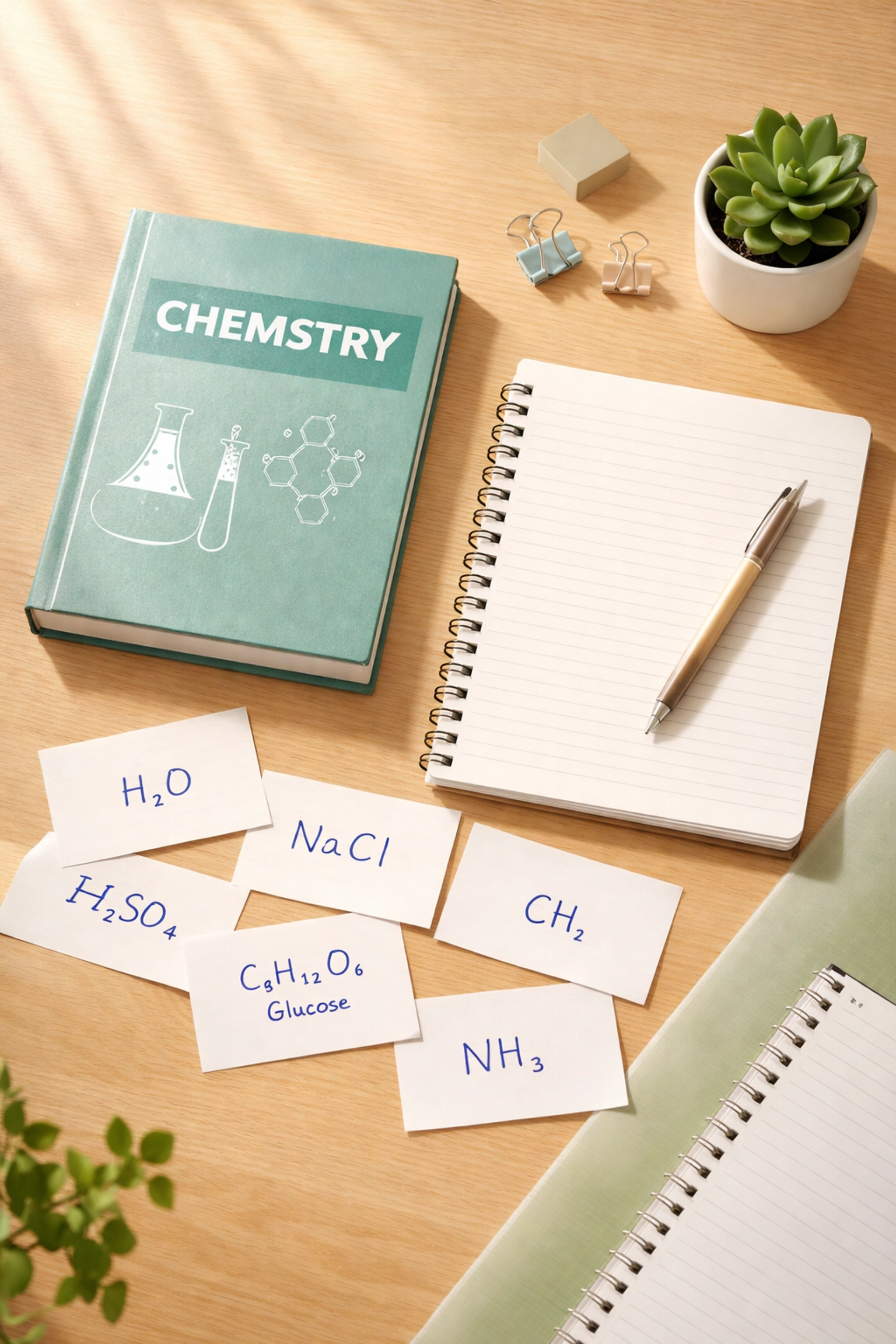
What Does Active Recall Actually Look Like?
Instead of reading your notes on Transition Metals for the fifteenth time, close the book. Grab a blank piece of paper and try to draw the colour change chart from memory. Write out the electron configurations. List the properties of complexes and explain why they form coloured solutions.
Then, and only then, check where you went wrong.
That “struggle” to remember is where the actual learning happens. When your brain has to work hard to retrieve something, it strengthens the neural pathway. When you just read it passively, your brain goes, “Yeah, I’ve seen this before,” and moves on without encoding anything meaningful.
A Practical Method You Can Start Today
Try this approach tonight:
- Read a section of your notes or textbook for 10 minutes
- Close everything and write down everything you can remember
- Check your work and note what you missed
- Repeat the retrieval the next day, and then again three days later
This technique, combined with spaced repetition, is genuinely transformative. Research consistently shows that students who use active recall outperform passive readers by significant margins, even when the passive readers spend more total time studying.
The students who jump from B to A* aren’t necessarily working harder. They’re working smarter. ??
Habit 2: Treat Mechanisms Like a Story, Not a Picture
One of the biggest mistakes I see students make in Organic Chemistry is trying to memorise what arrows go where as if it’s a drawing. They stare at nucleophilic substitution diagrams, try to photograph them with their brain, and then panic when the exam gives them a molecule they’ve never seen before.
Sound familiar?
Here’s the truth: mechanisms aren’t meant to be memorised like pictures. They’re meant to be understood like stories.

Understanding the “Why” Changes Everything
Every curly arrow in organic chemistry has a reason for existing. That lone pair isn’t attacking that carbon atom randomly, it’s doing so because of electronegativity differences, because of partial positive charges, because of stability considerations.
When you understand the plot of the mechanism, why electron-rich species attack electron-poor centres, why certain leaving groups are better than others, why some reactions need heat and others don’t, you can predict any mechanism the examiner throws at you.
Even if you’ve never seen that specific molecule before.
How to Actually Learn Mechanisms
Instead of staring at the diagram and hoping it sticks, try this:
- Identify the nucleophile (electron-rich species) and ask yourself: “Why does this want to donate electrons?”
- Identify the electrophile (electron-poor species) and ask: “Why is this carbon ?+? What’s making it electron-deficient?”
- Trace the electron flow logically, electrons flow from high density to low density
- Predict the product before looking at the answer
Once you can explain the “why” behind every arrow, mechanisms become easy 4-5 marks in an exam. They’re genuinely some of the most predictable marks available, if you’ve learned them properly.
This is exactly the approach I take in my 1-1 online tutoring sessions. We don’t just practise mechanisms; we decode them until they make intuitive sense. ?
Habit 3: Learn the “Examiner’s Dialect”
This habit is the one that surprises students the most, and it’s probably the most important for jumping from a B to an A*.
You can understand the science perfectly. You can explain ionic bonding to your grandmother at Sunday dinner in a way that makes complete sense. But if you don’t write “electrostatic attraction between oppositely charged ions” in your exam answer, you might lose the mark.
A Level Chemistry mark schemes are notoriously picky. Examiners stick closely to specific wording, and they don’t reward answers that deviate from it, even if the underlying understanding is correct.

The B Student vs. The A* Student
Here’s what often separates these two grades:
| B Student | A* Student |
|---|---|
| “The ions are attracted to each other” | “Electrostatic attraction between oppositely charged ions” |
| “The reaction happens faster” | “Increased rate due to higher collision frequency” |
| “The acid gives away a proton” | “The acid donates a proton to the base” |
The science knowledge might be identical. But the A* student has learned to speak the examiner’s language.
The 80/20 Rule for Revision
Here’s a controversial suggestion: spend 20% of your revision time on content and 80% on past papers.
Once you have a solid understanding of the material (which, if you’re getting Bs, you probably already do), the biggest gains come from practising exam technique. When you mark your own work:
- Don’t just tick correct answers
- Write down the specific phrases the mark scheme used that you missed
- Create a “mark scheme vocabulary” document
- Review these phrases before your next practice paper
This “translation layer”, knowing how to communicate your understanding in the way examiners want to hear it, is genuinely the difference between B students and A* students.
Timing Matters Too
In the final weeks before your exams, practise papers under strict timed conditions. This builds exam stamina and helps you identify where you lose marks under pressure. It’s one thing to answer a question perfectly when you have unlimited time; it’s another thing entirely when you’ve got 90 minutes and sweaty palms.
Putting It All Together: Your A* Action Plan
Let’s recap the three habits that actually move the needle:
- Active Recall over Passive Reading , Close the book and retrieve information from memory. The struggle is where learning happens.
- Story-Based Mechanism Learning , Understand the “why” behind every curly arrow so you can predict any mechanism, even unfamiliar ones.
- Speaking the Examiner’s Dialect , Learn the precise phrases mark schemes reward and practise past papers relentlessly.
The jump to an A* isn’t about working harder. It’s about working smarter. It’s about recognising that your current approach has a ceiling, and that ceiling is a B. To break through, you need to change how you’re studying, not just how much.
Ready to Make the Jump? ?
If you’re serious about bridging the gap from B to A*, whether it’s for your Med School application, Dentistry, Veterinary Science, or any competitive course, these habits will get you there.
But I also know that implementing them alone can be challenging. Sometimes you need someone to guide you through the mechanisms until they click. Sometimes you need someone to show you exactly which phrases the mark schemes are looking for. Sometimes you just need someone in your corner who gets it.
That’s exactly what my 1-1 online tutoring sessions are designed for. We focus on these high-impact habits to get you results faster, no fluff, no wasted time, just targeted practice that moves the needle.
Ready to secure that A* and open doors to your dream university? Get in touch and let’s chat about how we can work together to make it happen.
You’ve got this. Now let’s prove it. ?

Oxford-Educated Chemistry Specialist
With over 20 years of teaching experience at some of the UK’s top independent schools, I help ambitious students bridge the gap between hard work and top-tier results. I specialise in GCSE, A Level, and IB Chemistry tuition for students targeting Grade 9s and A*s. Based in the UK but working globally, I provide 1-1 online support for families in South and West London, Dubai, and Hong Kong, ensuring students are perfectly prepared for competitive medical applications and Oxbridge entries.
I’ve helped students achieve top grades from schools such as Alleyn’s, Dulwich College, Tonbridge, Sevenoaks, Brighton College, Wycombe Abbey, Caterham, St Paul’s, Dubai College, Dubai British School and Harrow International School Hong Kong.
Contact me archardchloe@gmail.com to discuss how I can help your child excel in Chemistry.