

Blog
The A Level Chemistry Tutor’s Secret: 5 Study Methods That Turn B Students Into A* Achievers


You know your stuff. You can recite the reactivity series. You understand Le Chatelier’s principle. You’ve memorized the functional groups. So why are you still stuck at a B?
Here’s the truth that most A Level Chemistry revision guides won’t tell you: the gap between a B student and an A* student isn’t about intelligence. It’s rarely about working harder either. In fact, I’ve seen brilliant students burn out cramming for hours, only to watch their grades plateau.
The real difference? Method. The A* students aren’t just working, they’re working smarter. And today, I’m sharing the five study secrets that Chemistry tutors use to transform frustrated B-grade students into confident top performers. 🌟
Secret 1: Active Recall Over Passive Reading (Stop Highlighting, Start Testing)
Let’s be honest, you’ve been lying to yourself. Reading through your notes for the third time isn’t revision. It’s procrastination disguised as productivity.
Your brain is sneaky. When you re-read something, you get a false sense of familiarity. “Oh yes, I know this,” you think. Then the exam paper arrives and suddenly you can’t recall a single thing about intermolecular forces.
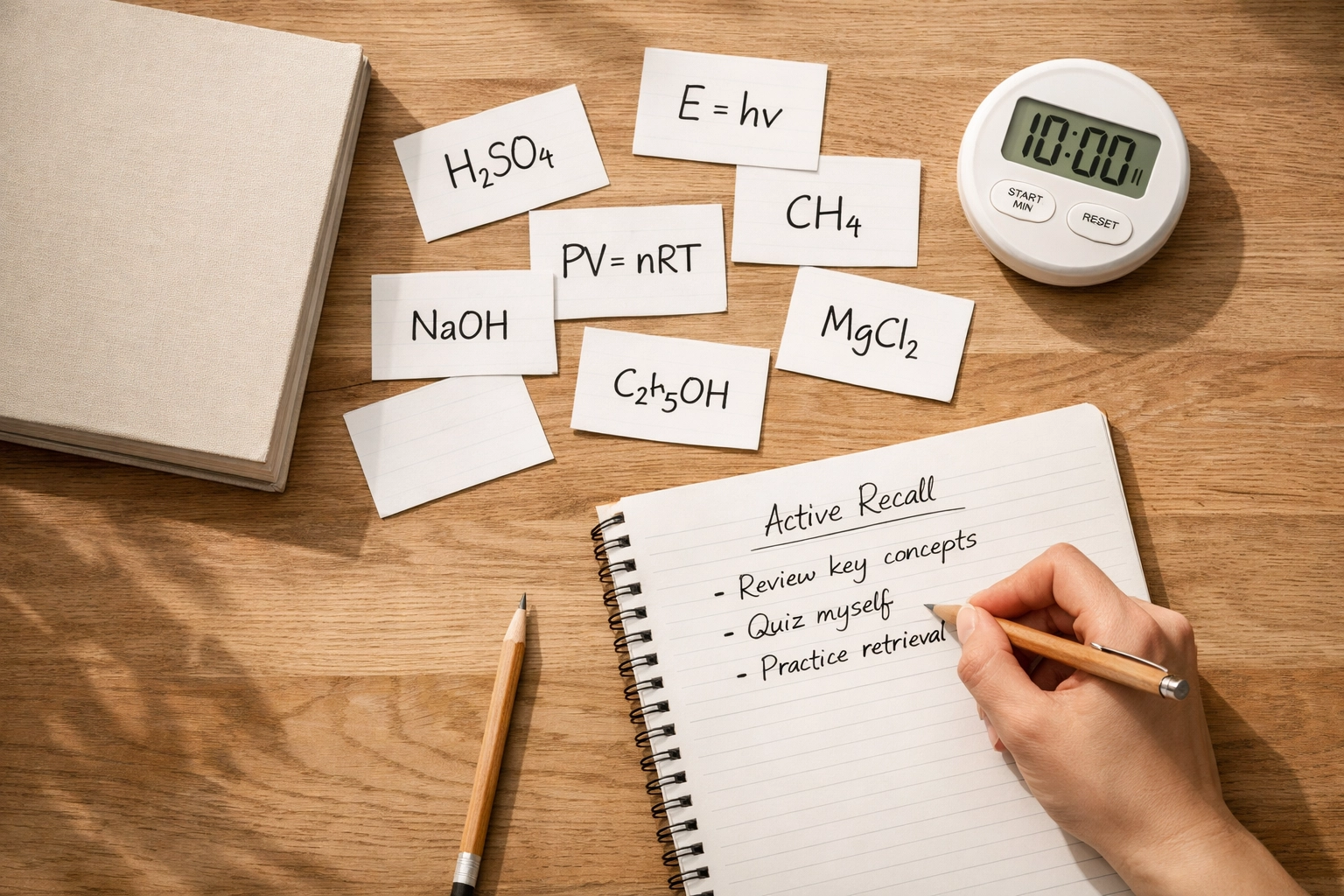
Active recall is the antidote. Instead of passively absorbing information, you force your brain to retrieve it. Here’s how:
- Blurting: Set a timer for 10 minutes. Write down everything you know about a topic (say, electrochemical cells) without looking at your notes. Then check what you missed.
- Flashcards: Not just for vocabulary. Use them for mechanisms, definitions, and calculations. Apps like Anki use spaced repetition to show you cards right when you’re about to forget them.
- Teaching someone else: Explain oxidation states to your dog, your mum, or your mirror. If you can’t teach it clearly, you don’t understand it yet.
This feels harder than reading notes because it is harder. Your brain has to work. But that struggle is exactly what builds the neural pathways that survive exam stress. 💪
Secret 2: The “Why” Behind the Mechanism (Organic Chemistry Doesn’t Need Memorization)
If you’re trying to memorize every single curly arrow in organic chemistry, stop immediately. You’re making this ten times harder than it needs to be.
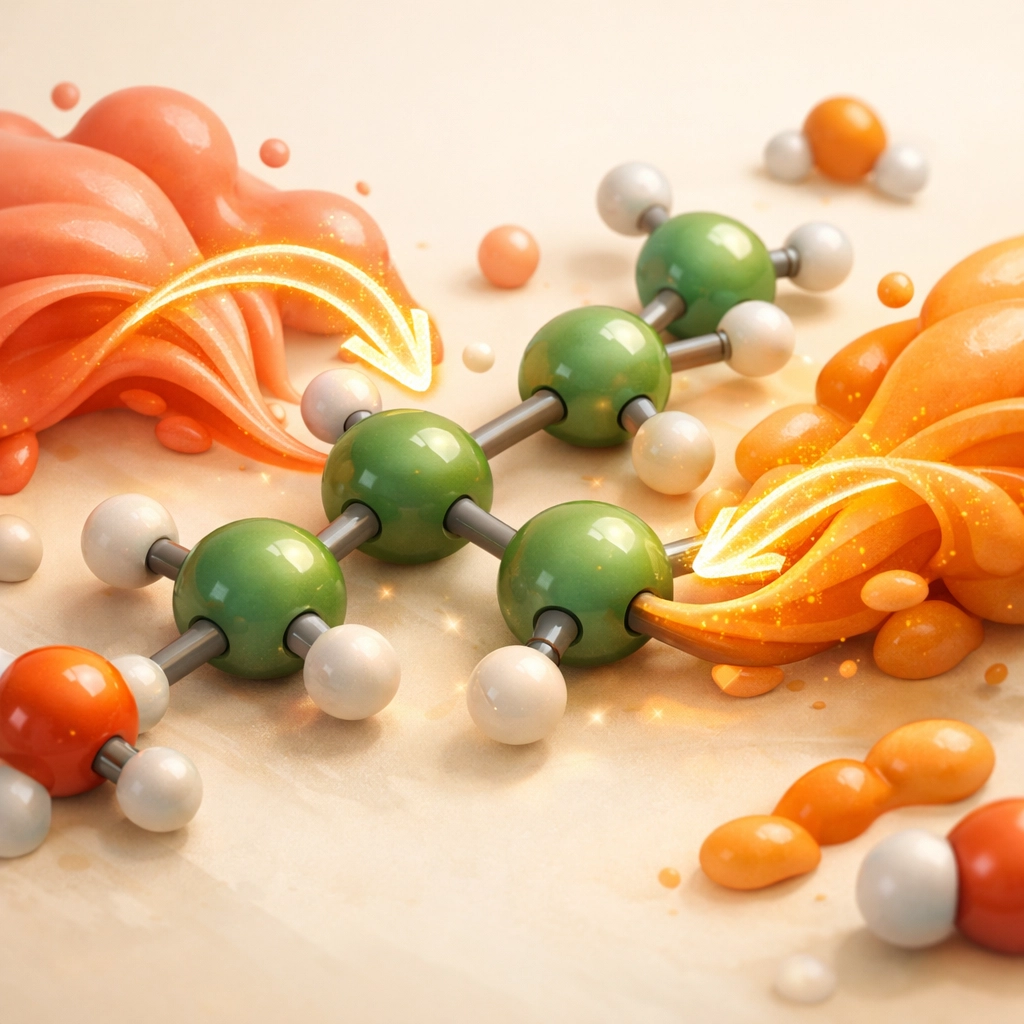
Here’s what A* students understand: electrons are lazy. They want to hang out with positive charges. Once you grasp this fundamental truth, organic mechanisms become predictable rather than random.
Take nucleophilic substitution. Don’t memorize that “OH⁻ attacks the δ+ carbon.” Instead, understand why: the hydroxide ion is electron-rich and attracted to the partially positive carbon. The bromine leaves because it’s a better leaving group (it’s more stable as Br⁻).
Ask yourself the right questions:
- Where are the electron-rich regions? (Look for lone pairs, π bonds, negative charges)
- Where are the electron-poor regions? (Look for δ+ carbons, positive charges)
- What’s the best leaving group?
- Is this reaction feasible? (Consider stability, entropy, enthalpy)
When you understand the “why” behind reactions, you’re not memorizing 50 separate mechanisms. You’re applying one set of principles to different scenarios. That’s how you get to A*: and beyond, if university Chemistry is in your future.
Secret 3: Master the Maths (Or Cap Your Grade at a B)
Let me be blunt: if you can’t handle the calculations, you cannot get an A* in A Level Chemistry. Full stop.
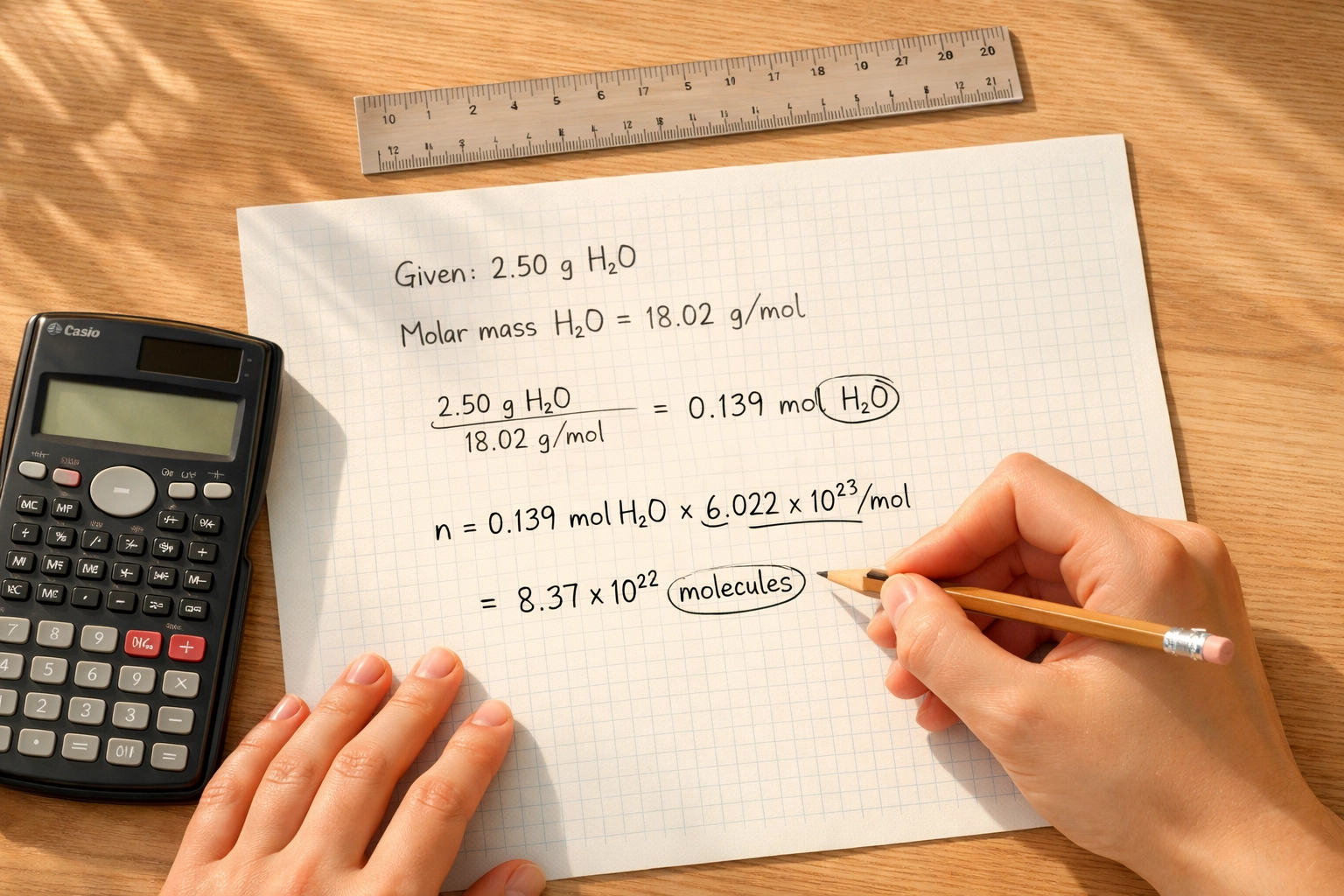
Chemistry is at least 20% mathematics. Moles, titration calculations, pH and logarithms, rate equations, equilibrium constants: these aren’t optional extras. They’re grade-defining.
I’ve seen countless students lose 15-20 marks across a paper purely on calculation errors. That’s the difference between a B and an A*.
Here’s your action plan:
- Nail the fundamentals: Can you rearrange equations confidently? Do you understand logarithms? If not, fix this first.
- Practice calculations daily: Not just once a week. Spend 10 minutes every day on different calculation types.
- Show your working obsessively: Even if you get the final answer wrong, clear working gets you method marks. Write down what’s given, what’s required, and which formula you’re using.
- Use units as a checking tool: If your answer for concentration comes out in kg, you’ve made an error.
Want a specific resource? Check out our guide on formulae, equations and amounts of substance: it breaks down the most common calculation pitfalls.
Secret 4: Treat Mark Schemes Like Cheat Codes
This is possibly the most overlooked strategy for how to get an A* in Chemistry, and it’s hiding in plain sight.
Mark schemes aren’t just answer keys. They’re instruction manuals written in the exact language examiners want to see. If you’re not studying them, you’re essentially playing a game without reading the rules.
Here’s what I mean by specific keywords:
- Don’t write “oppositely charged ions attract.” Write “electrostatic attraction between oppositely charged ions.”
- Don’t say “the molecule is polar.” Say “permanent dipole-dipole interactions exist between molecules.”
- For describing bonding in metals: “electrostatic attraction between positive metal ions and delocalized electrons.”
These aren’t just fancy words: they’re trigger phrases that examiners are looking for. Miss one keyword and you’ve dropped a mark.
Your new revision routine:
- Do a past paper question
- Mark it against the mark scheme
- Rewrite your answer using the exact phrasing from the mark scheme
- Create a glossary of these “examiner-approved” phrases
- Drill them until they become automatic
After a few weeks of this, you’ll start thinking in mark scheme language. When exam day comes, you’ll write exactly what the examiner wants to read. That’s how B students become A* students. ✨
Secret 5: Consistency Over Cramming (Small Wins Build Big Results)
I’m going to tell you something your parents might not want to hear: those marathon 5-hour Sunday study sessions are probably hurting your grades.
Your brain isn’t designed to absorb Chemistry in huge chunks. It’s designed for regular, spaced practice. Neuroscience backs this up: spaced repetition leads to stronger, longer-lasting memories than cramming.
The 20-minute rule:
Twenty focused minutes of IB Chemistry revision every single day will beat a frantic weekend cram session. Here’s why:
- Retention: Your brain consolidates information during sleep. Study a topic Monday, review it Wednesday, test yourself Friday: you’ll remember it for months.
- Reduced stress: No more panic the night before a test.
- Pattern recognition: Daily exposure helps you spot connections between topics that weekly students miss.
Set a non-negotiable appointment with Chemistry every day. Same time, same place. It doesn’t matter if it’s 6am before school or 8pm after dinner: consistency beats intensity.
And here’s the beautiful part: small, daily wins build confidence. You stop being “the student who’s bad at Chemistry” and become “the person who does Chemistry every day.” That identity shift? That’s when the A* becomes inevitable. 🍀
The Mindset Shift: From B to A* Isn’t About Being Smarter
Let’s bring this together. You now have the five methods that separate good students from exceptional ones:
- Active recall instead of passive reading
- Understanding mechanisms instead of memorizing them
- Mastering calculations so they never cost you marks
- Speaking the language of mark schemes
- Choosing daily consistency over occasional intensity
But here’s the final secret, the one that underpins everything else: transitioning from a B to an A* is fundamentally a shift in mindset and method.
You’re not trying to become someone different. You’re becoming more systematic. More strategic. You’re working with your brain instead of against it.
The students I’ve seen make this jump share one thing in common: they stopped asking “How do I remember all this?” and started asking “How do I understand this so deeply that I can’t forget it?”
That question changes everything.
Ready to Fast-Track Your A* Journey?
These five methods work. I’ve seen them transform countless students from frustrated B-graders into confident A* candidates. But I’ll be honest: implementing them alone takes discipline, and figuring out the nuances takes time.
That’s where expert guidance makes the difference. In my 1-1 tuition sessions and small group classes, we don’t just cover content. We rebuild your approach from the ground up. We practice active recall together. We decode mark schemes. We fix the calculation weak spots that are capping your grade.
Think of it as having a personal trainer for your Chemistry brain: someone who knows exactly where your B is turning into an A*, and how to bridge that gap faster than you could alone.
If you’re serious about Chemistry study tips that actually work, about transforming your relationship with the subject, about walking into that exam hall knowing you’ve got this: I’d love to help you get there. 🙌
Visit Chemistry with Chloe to learn more about how we can work together, or reach out directly to discuss your specific goals.
Your A* is closer than you think. Sometimes you just need the right map to find it.


Oxford-Educated Chemistry Specialist
With over 20 years of teaching experience at some of the UK’s top independent schools, I help ambitious students bridge the gap between hard work and top-tier results. I specialise in GCSE, A Level, and IB Chemistry tuition for students targeting Grade 9s and A*s. Based in the UK but working globally, I provide 1-1 online support for families in South and West London, Dubai, and Hong Kong, ensuring students are perfectly prepared for competitive medical applications and Oxbridge entries.
I’ve helped students achieve top grades from schools such as Alleyn’s, Dulwich College, Tonbridge, Sevenoaks, Brighton College, Wycombe Abbey, Caterham, St Paul’s, Dubai College, Dubai British School and Harrow International School Hong Kong.
Contact me archardchloe@gmail.com to discuss how I can help your child excel in Chemistry.